GRID 2025 Talent Trends Report
Introduction
The recruitment industry has been shrinking, with firms showing declining revenue for three years according to the GRID 2025 Industry Trends Report. A slow economy and the “Great Stay” mean low job activity at the same time that record numbers of candidates, assisted by AI, are applying for every open role. It is harder than ever for recruiters to identify the right candidates before AI-assisted job boards can beat them to it. At the same time, individual candidates struggle to get a response to the hundreds of applications they send out. The result? The talent experience is getting worse, even as recruiters are working harder.
What could make it better? We surveyed nearly 2,800 people who have worked with recruitment firms in the past three years and spoke to several recruitment industry leaders to get their thoughts in this year’s GRID Talent Trends Report.
 Click on any chart to enlarge

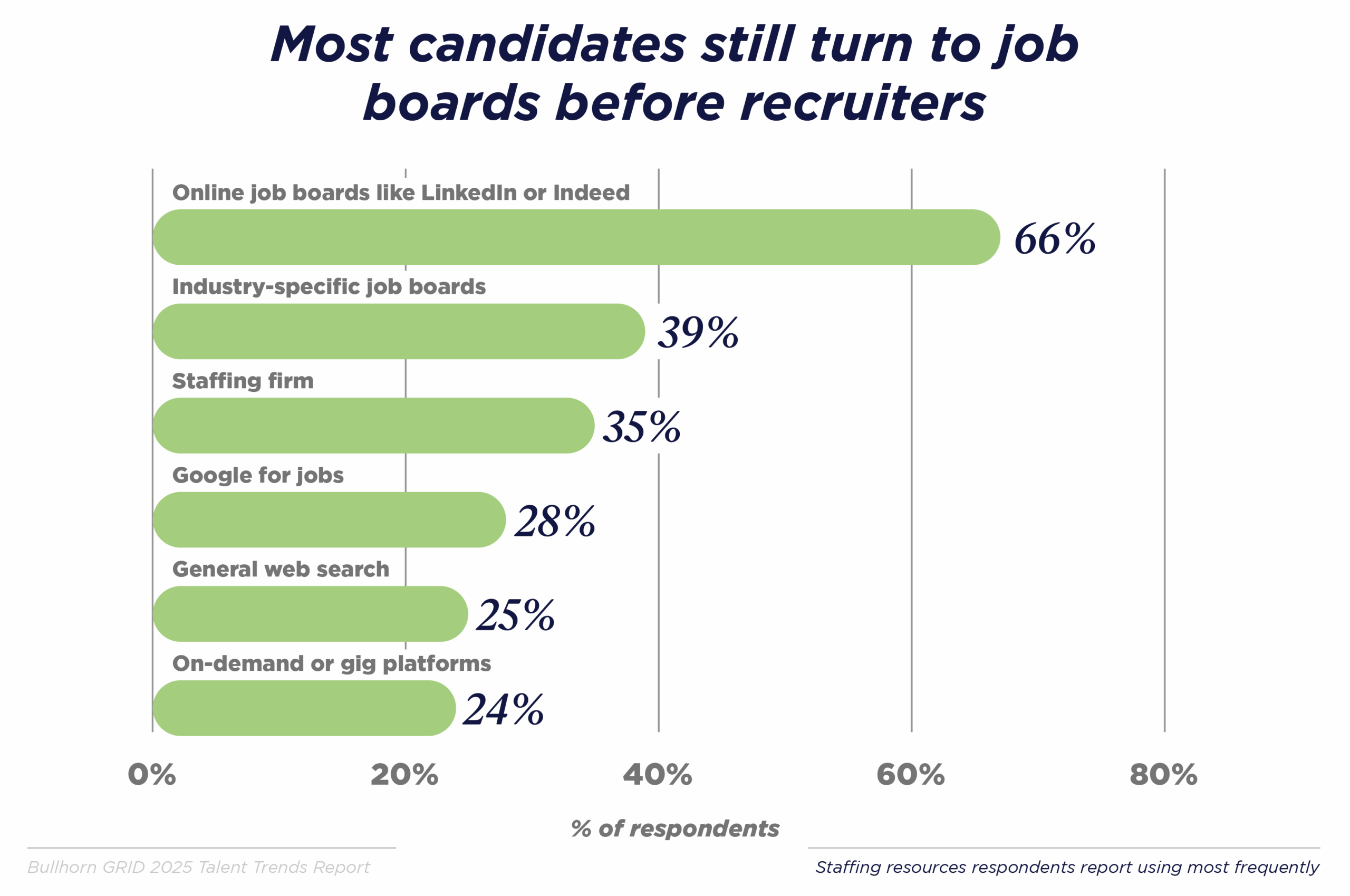
What do recruitment firms need to do to improve the talent experience and stay ahead of the competition — not just other firms, but also 24/7 job boards? Invest in AI that works non-stop in the background to amplify and accelerate the work of their recruiters.
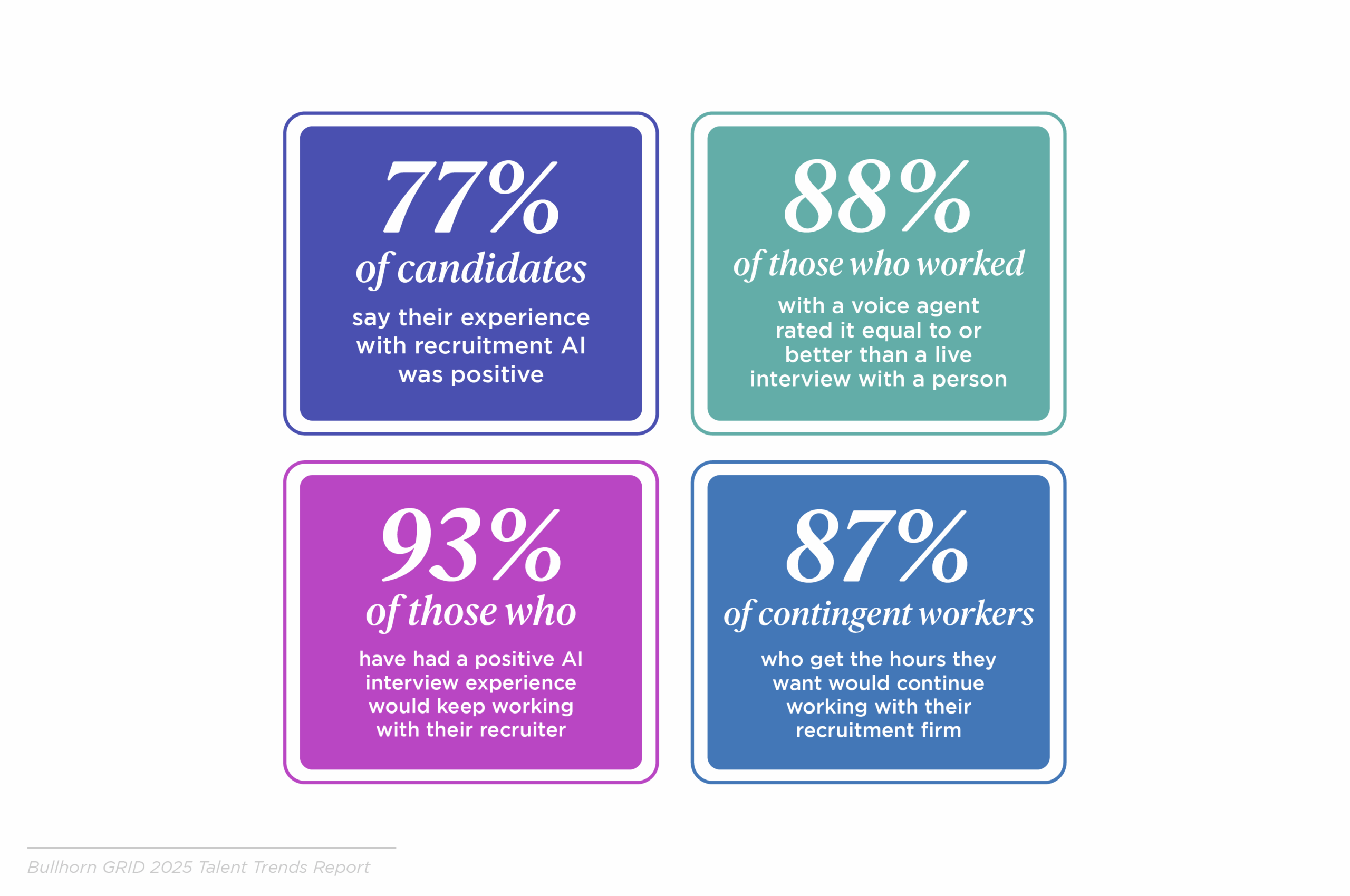
This year’s GRID Talent Trends Survey made one thing clear: AI has already dramatically changed the talent experience for the better. About half of the talent pool have already interacted with AI as part of their job search, and 77% of them had a positive experience. 93% of those who had a positive AI interview experience would keep working with their recruiters, compared to 76% overall and 67% of those who haven’t interacted with an AI voice agent.
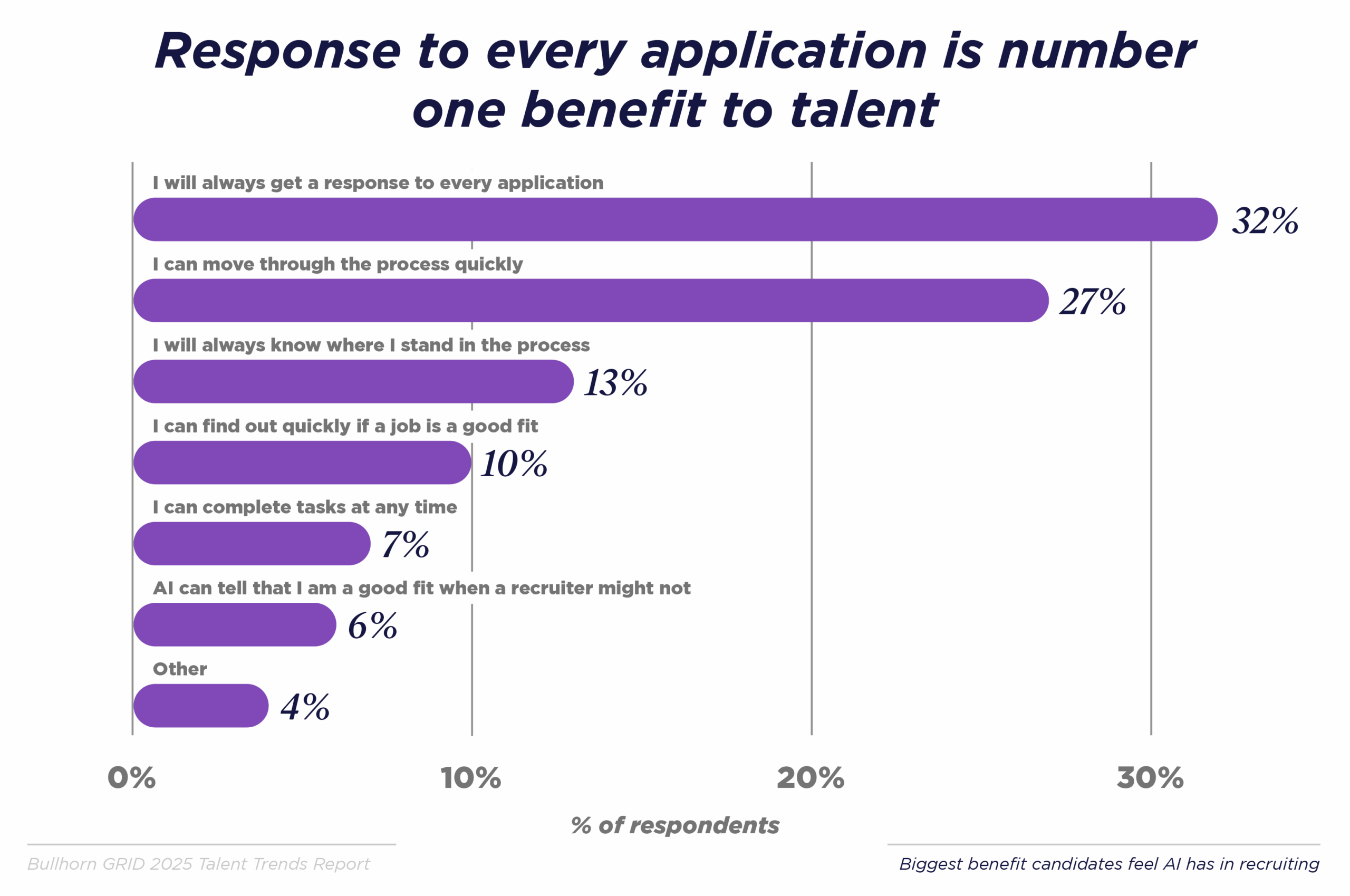
AI eliminates the application “black hole”
Overwhelmingly, candidates say that getting a response to every application submitted will be the biggest benefit of AI in recruiting, with 32% calling this the greatest game-changer. Another 13% cited knowing where they stand in the process as the top benefit of AI. Together, that makes 45% of candidates who feel AI will address the feeling that their application has gone into a black hole. They also value that AI can keep them from wasting their time, with 27% saying it moves them through the process quickly and 10% noting AI can help them easily figure out if they are a good candidate for the role.
When asked about their concerns regarding AI, candidates say they worry they won’t get a chance to speak to a real person or that they will be screened out based on inaccurate algorithms. The good news is that these are concerns the industry can address by building and refining the right algorithms and training models on real, successful placement data.
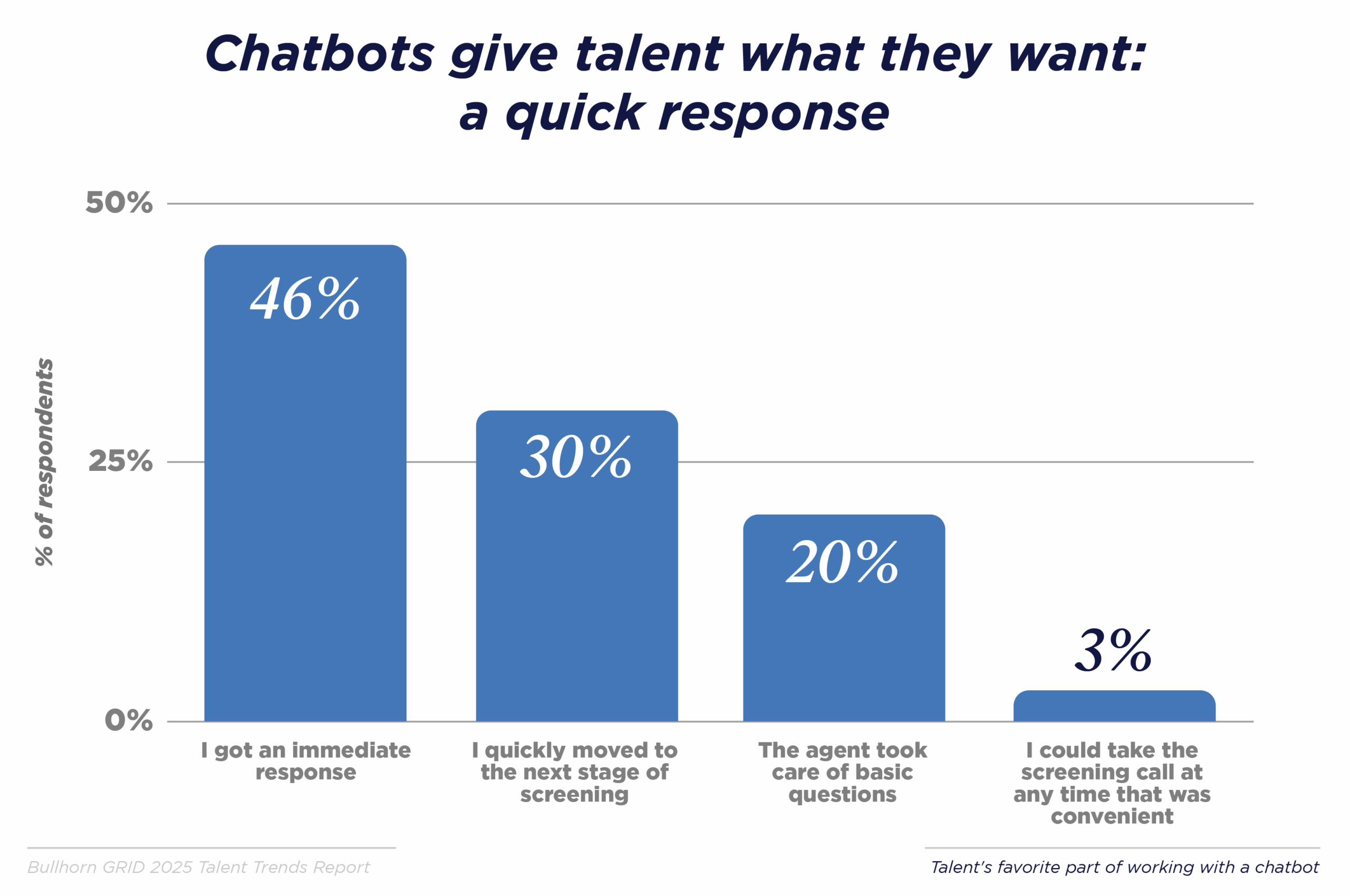
Candidates appreciate the quick response only possible with AI
The number one reason that candidates appreciated a chatbot screening is that they got an immediate response. The second most popular reason was that they moved quickly to the next stage of screening. Combined, more than three-quarters of candidates cited a positive experience because of the speed and responsiveness that resulted from using AI. This is especially important when you consider that 54% of candidates gave up on working with a recruiter because the process was too slow or because there wasn’t enough communication — those are candidates that recruiters could potentially win back in an AI world. One industry leader shared that her firm is already seeing this in practice:
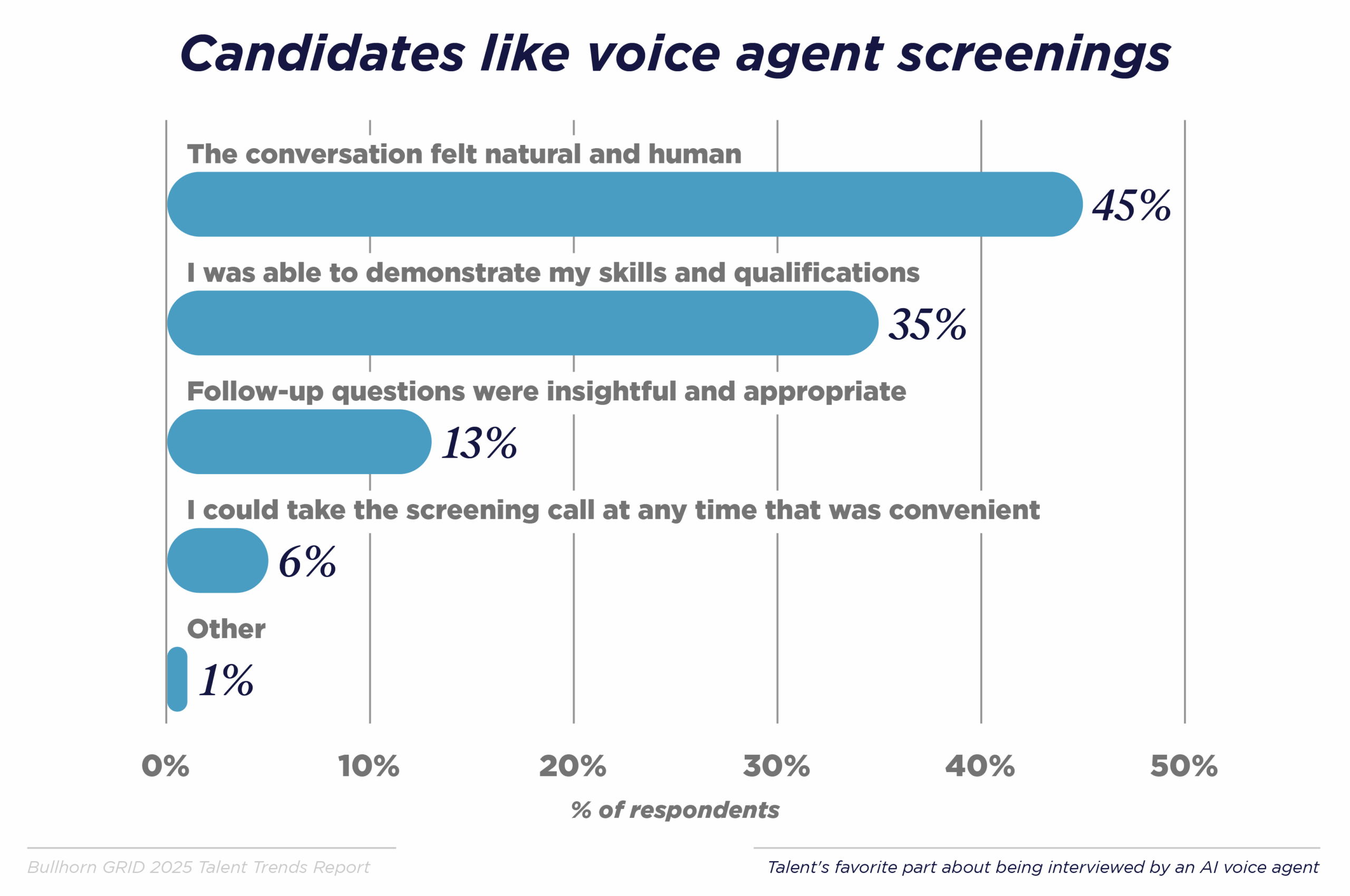
AI voice agents are at least as good as people in early screenings
73% of candidates had a positive interview experience with an AI voice agent, and the number one reason was that the interaction was natural and felt “human.” In fact, 88% of respondents rated the AI interview as equal to or better than a live interview with a person. They also felt like the voice agent gave them a real opportunity to demonstrate their skill and qualifications, perhaps because they were less self-conscious or less focused on interpersonal social cues. This response has been surprising even to some industry leaders we spoke with, one said:
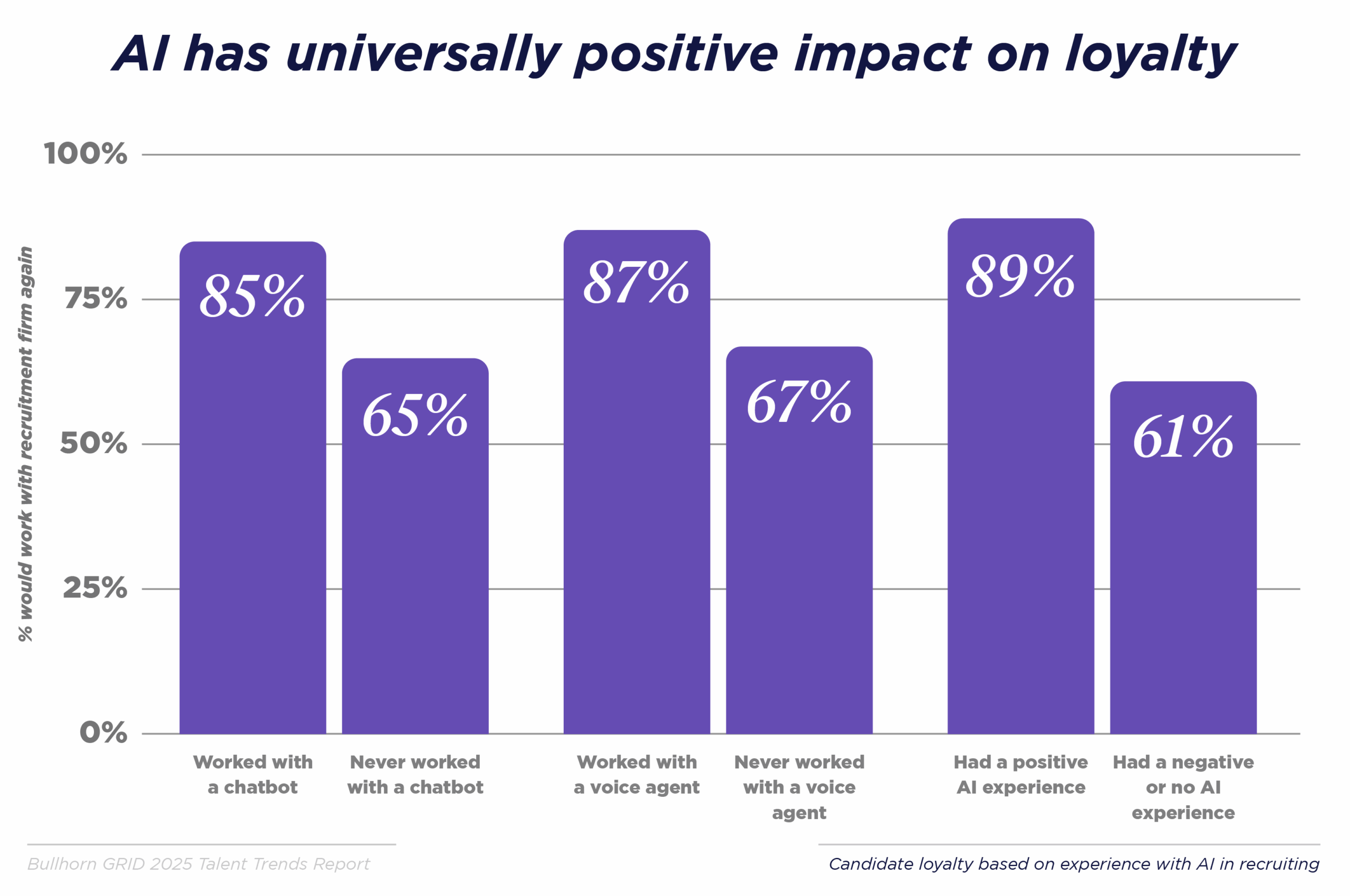
AI increases candidate loyalty 30-45%
The results are in, and it is clear that AI is already having a positive impact on candidate loyalty. Use of AI at all results in a 30% jump in loyalty, and a positive experience with AI boosts loyalty by 45%. This data counters the still-pervasive concern that AI may deter candidates from working with recruiters or make them feel like they aren’t getting enough attention. On the contrary, candidates value the responsiveness AI affords them.
Download report highlights
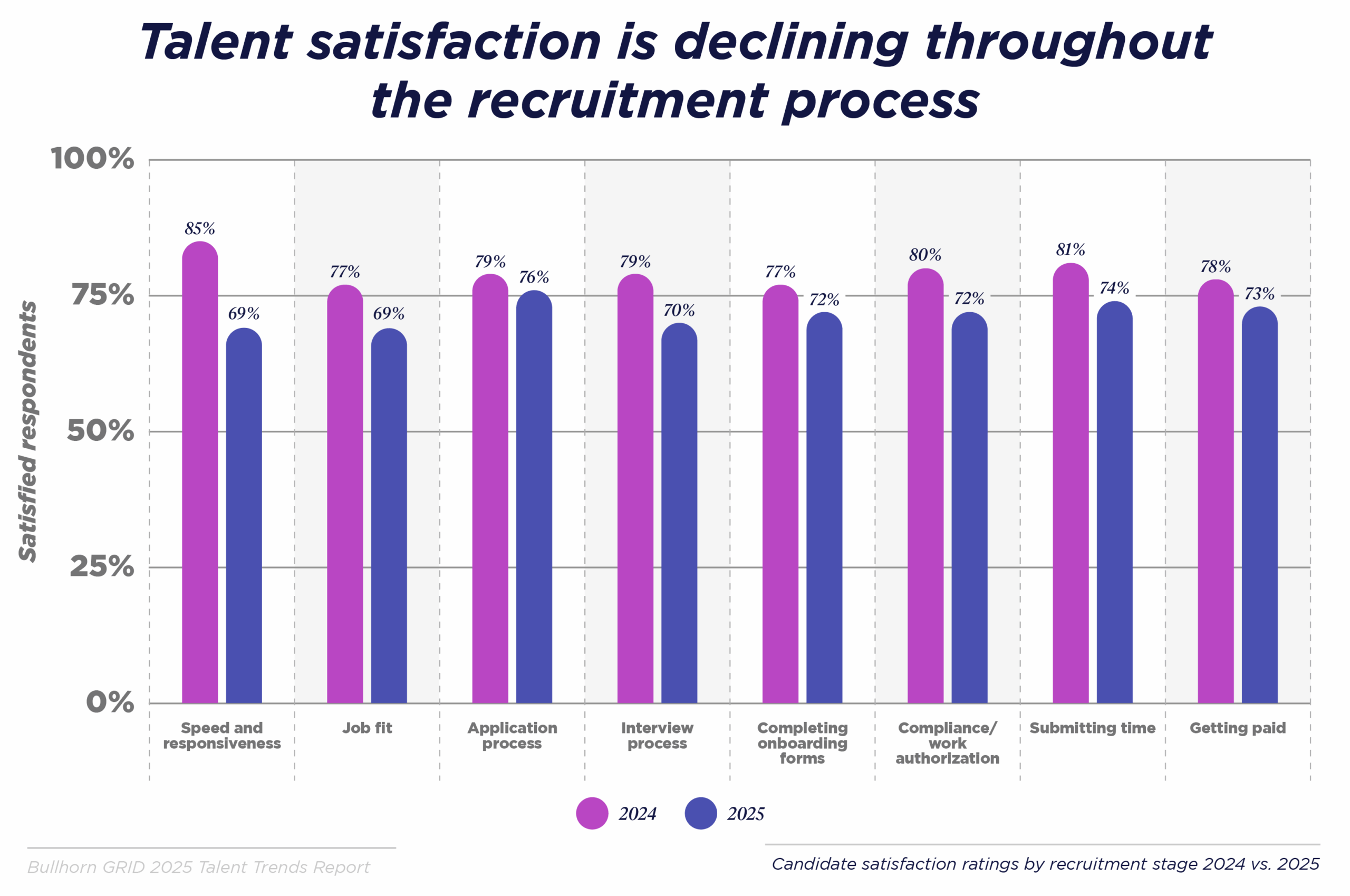
Satisfaction with speed and responsiveness of recruiters falls nearly 20%
When we asked candidates to rank what is most important to them in the talent experience, their top choices were the right job opportunities, number of job opportunities, and fast placement. Candidate satisfaction in these areas has fallen in the last year, particularly as relates to speed and responsiveness. Human recruiters simply don’t have the capacity to provide what candidates want at scale in the early stages of the job search process, leaving firms vulnerable to more losses to job boards.
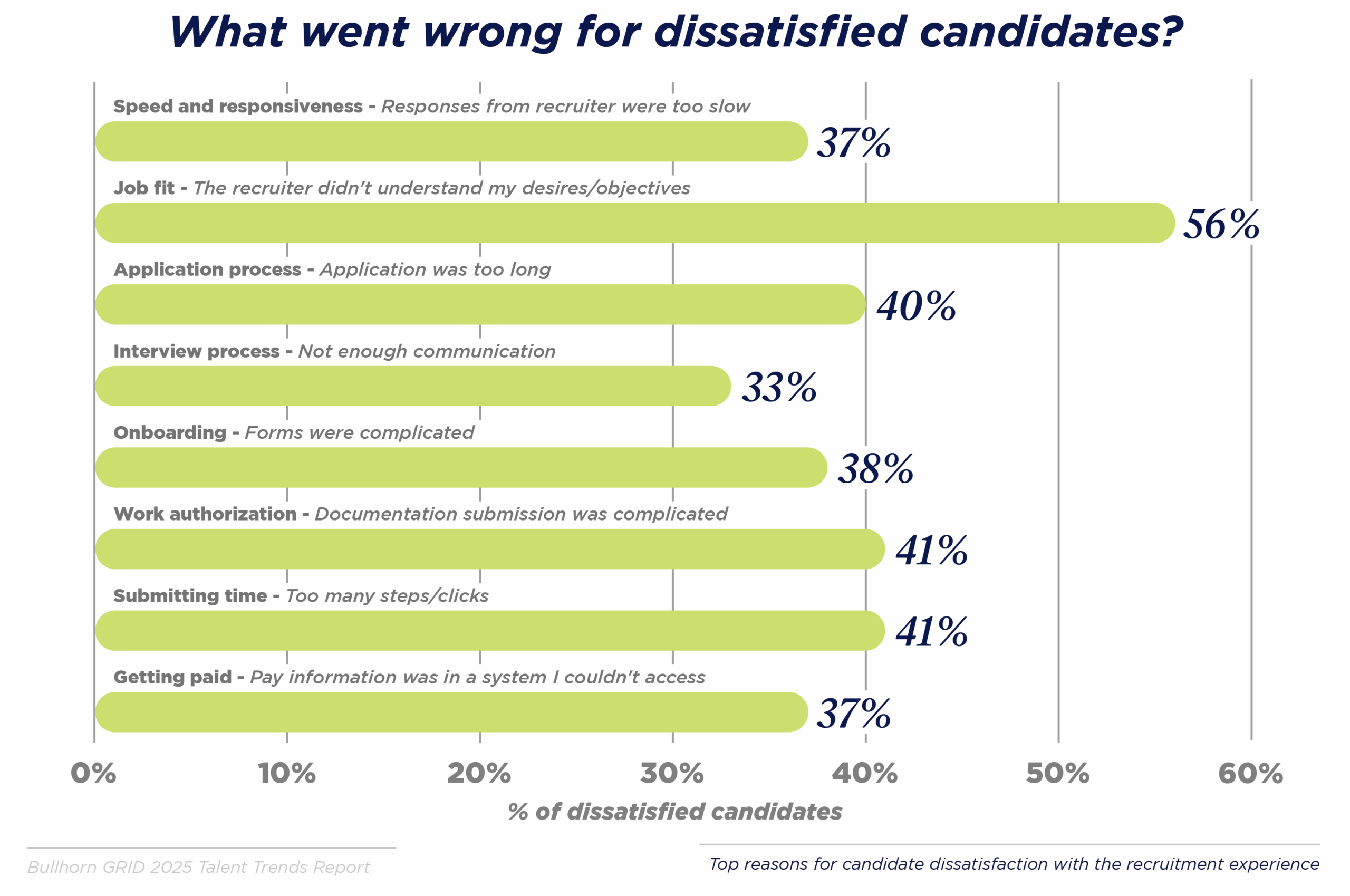
Complicated forms and technology contribute to dissatisfaction
When we looked at the specific pain points that contributed to a negative talent experience, it was clear that candidates found certain systems and processes to be complicated to complete and difficult to access. Forms were too long; websites and apps required too many clicks; there weren’t enough notifications. Streamlining and automating as much of the recruitment journey as possible can address all of these issues. In fact, one notable bright spot is that dissatisfaction with communication during the interview process falls from 40% to 26% for candidates who interacted with an AI voice agent.
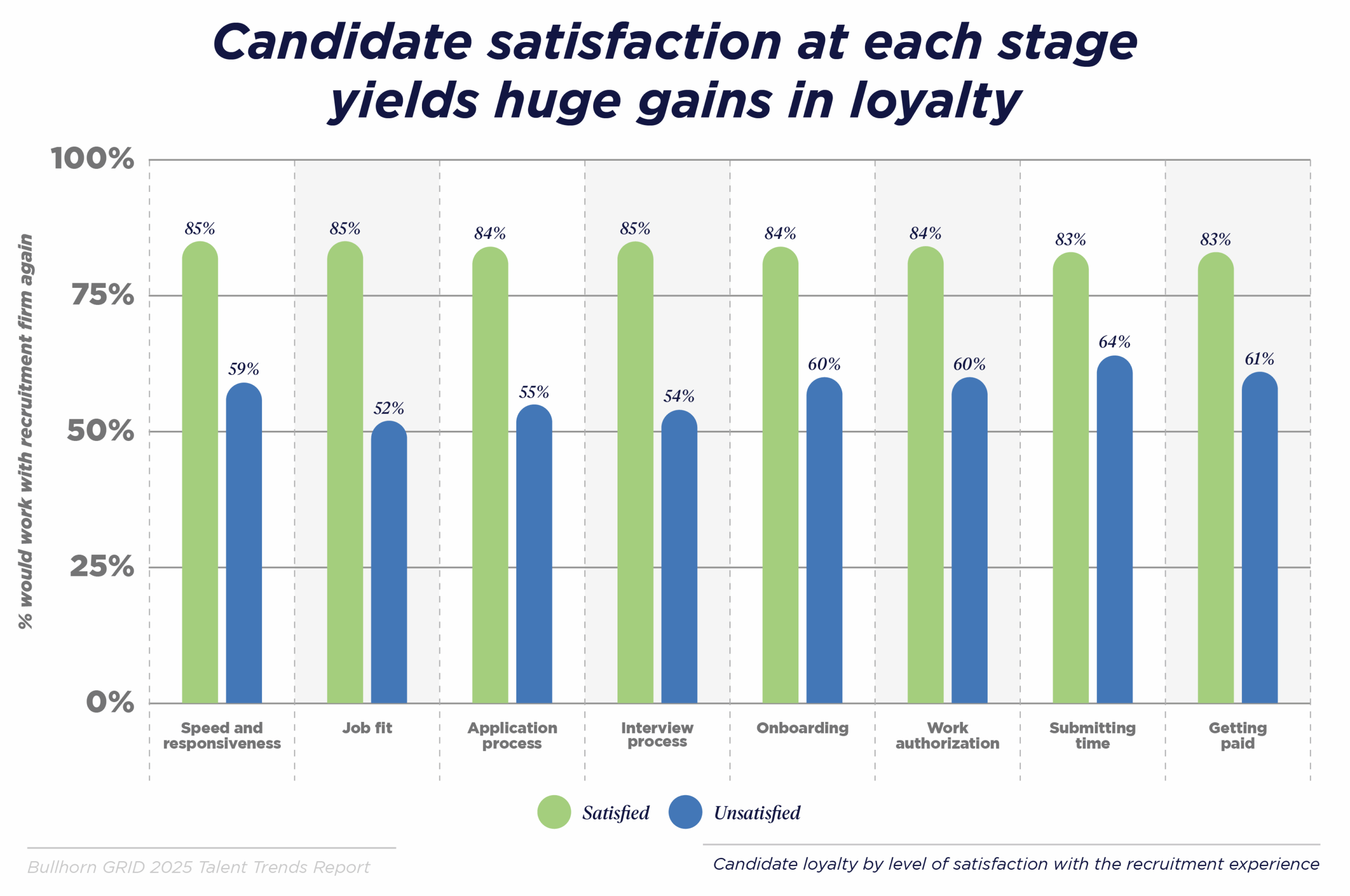
All aspects of the talent experience influence candidate loyalty
It remains the case that each stage of the recruitment process has a huge impact on candidate loyalty. As outlined above, the pain points associated with these stages often have to do with speed and complexity, and in most cases can be improved with automation and AI tools. In fact, 85% of candidates whose onboarding experience was automated would keep working with their recruiter. Given that the GRID 2025 Industry Trends Report found that fewer than 50% of firms are automating many stages of the recruitment cycle, particularly in the middle and back office, there is tremendous potential for easy wins that result in an improved talent experience and, by extension, loyalty – in some cases a 60% increase.
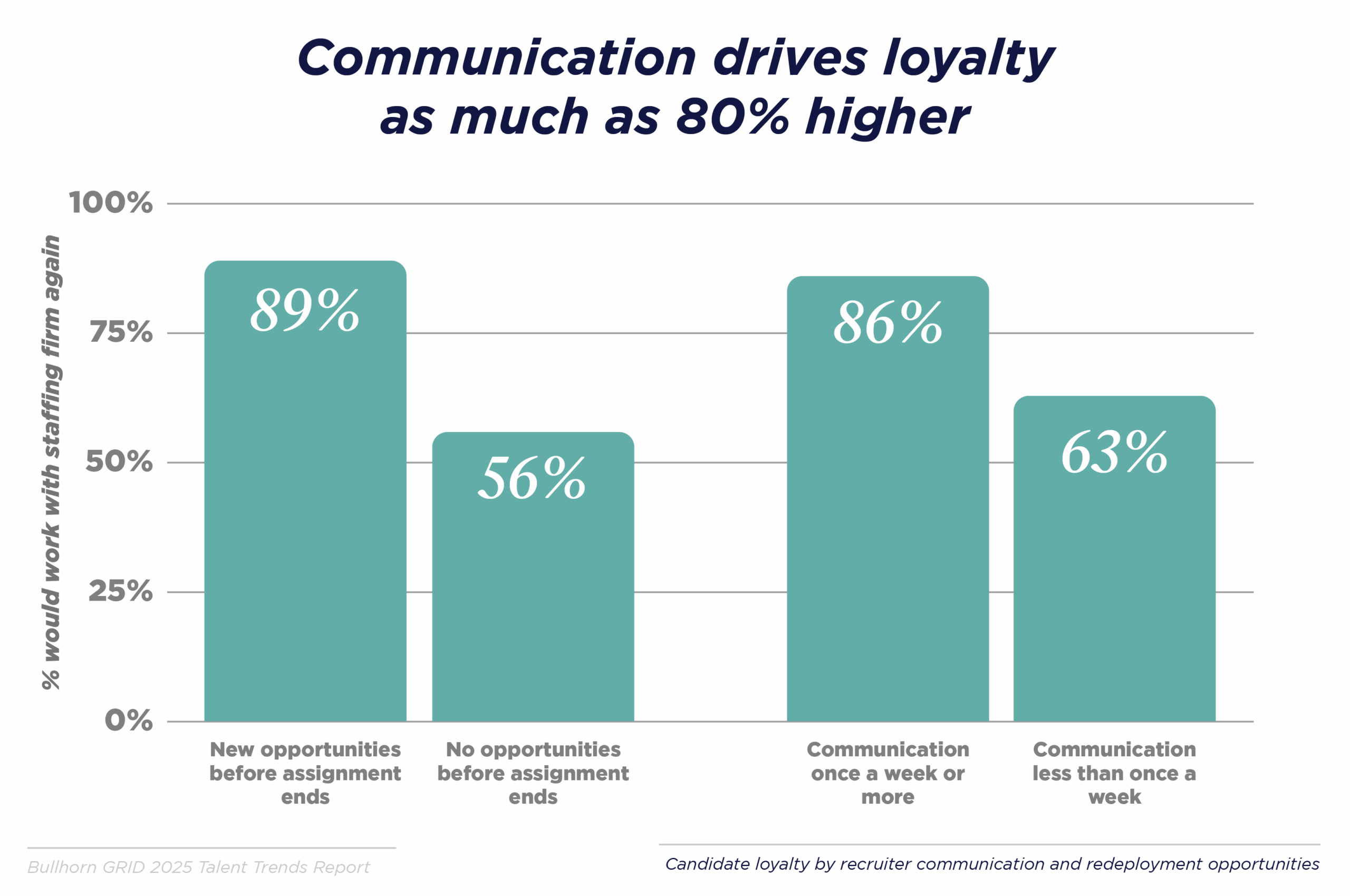
Frequent communication remains key to loyalty
It is a perennial truth that candidates value regular and helpful communication from their recruiters — that is just as true in this year’s Talent Trends Report. They want recruiters to communicate with them more than once a week. And they want recruiters to reach out with new opportunities before they have even finished the previous assignment. Meeting those expectations can result in substantially higher candidate loyalty — as much as 80% higher.
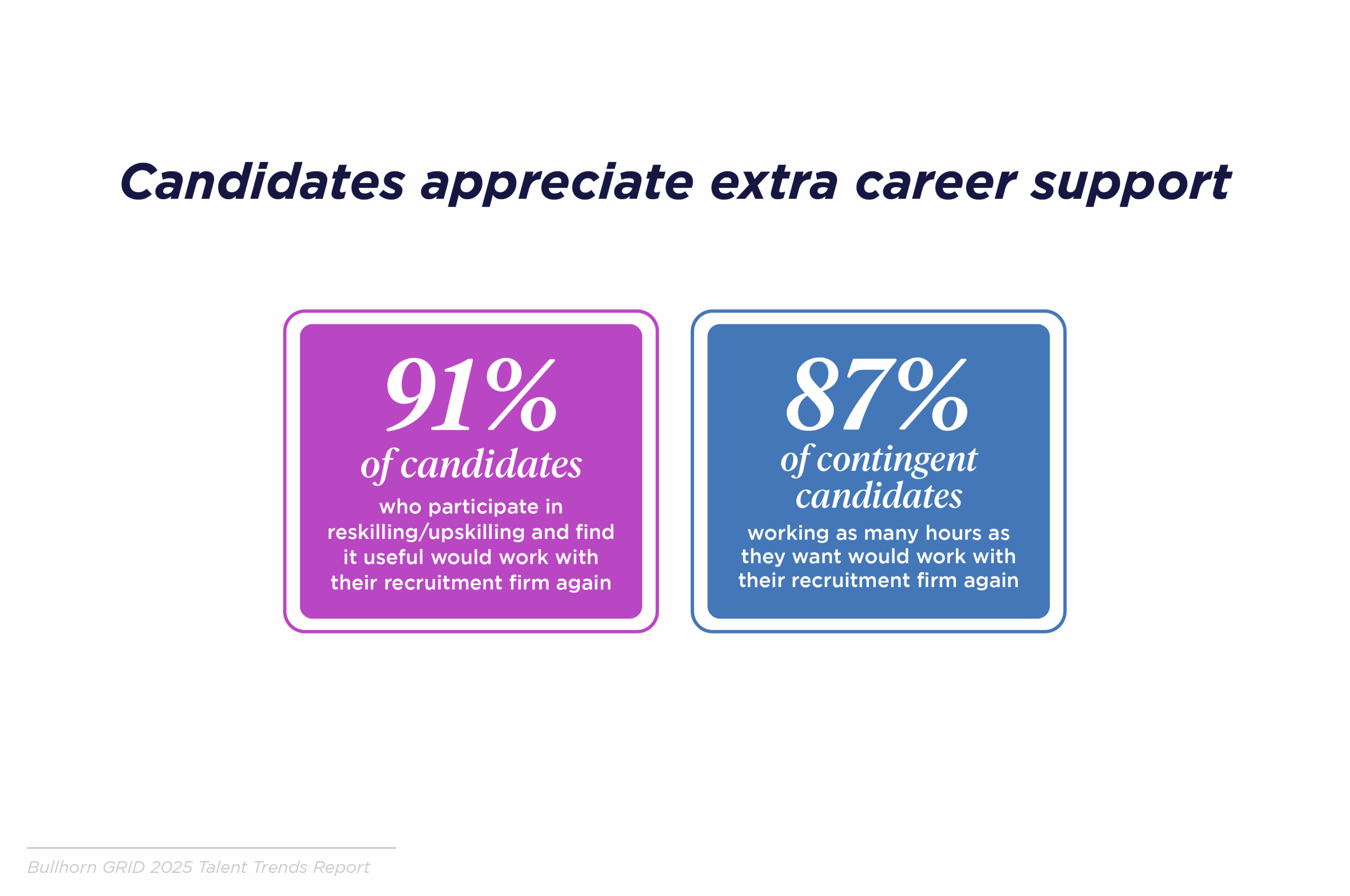
91% of candidates who upskill remain loyal to their recruiters
About half of candidates have participated in reskilling or upskilling programs offered by their recruitment firms, and these programs have a significant impact on loyalty. 91% of candidates who take advantage of reskilling or upskilling programs would continue working with their recruitment firm, compared to 63% of those who didn’t. And firms are coming up with more and more niche reskilling programs: one firm interviewed shared that they have created a highly successful off-shore welding program that now has a lengthy waitlist thanks to word-of-mouth referrals among the talent community. These are services job boards just can’t offer.
And 87% of candidates working as many hours as they want are loyal to their recruitment firms, compared with 68% of those who wish they were getting more hours. Understanding what candidates want and helping them grow to achieve their goals never fails to keep talent engaged. Another aspect of this extra support for candidates is being able to offer options that might not have been possible without AI matching, expanding the candidate’s horizons. One industry executive described it this way:
Ultimately, to cement loyalty and stay ahead of job boards, firms need to do two things: attract more talent to begin with and satisfy even more of the talent they engage by:
- Tackling the demand problem by using digital and AI tools to provide faster service at the top of the funnel to compete with job boards.
- Deploying all available AI resources to improve the candidate experience throughout the process and differentiate from job boards.
- Offer the kind of full-service support that only recruitment firms can provide to keep talent skilled at the right level to meet rapidly changing market and client needs.