
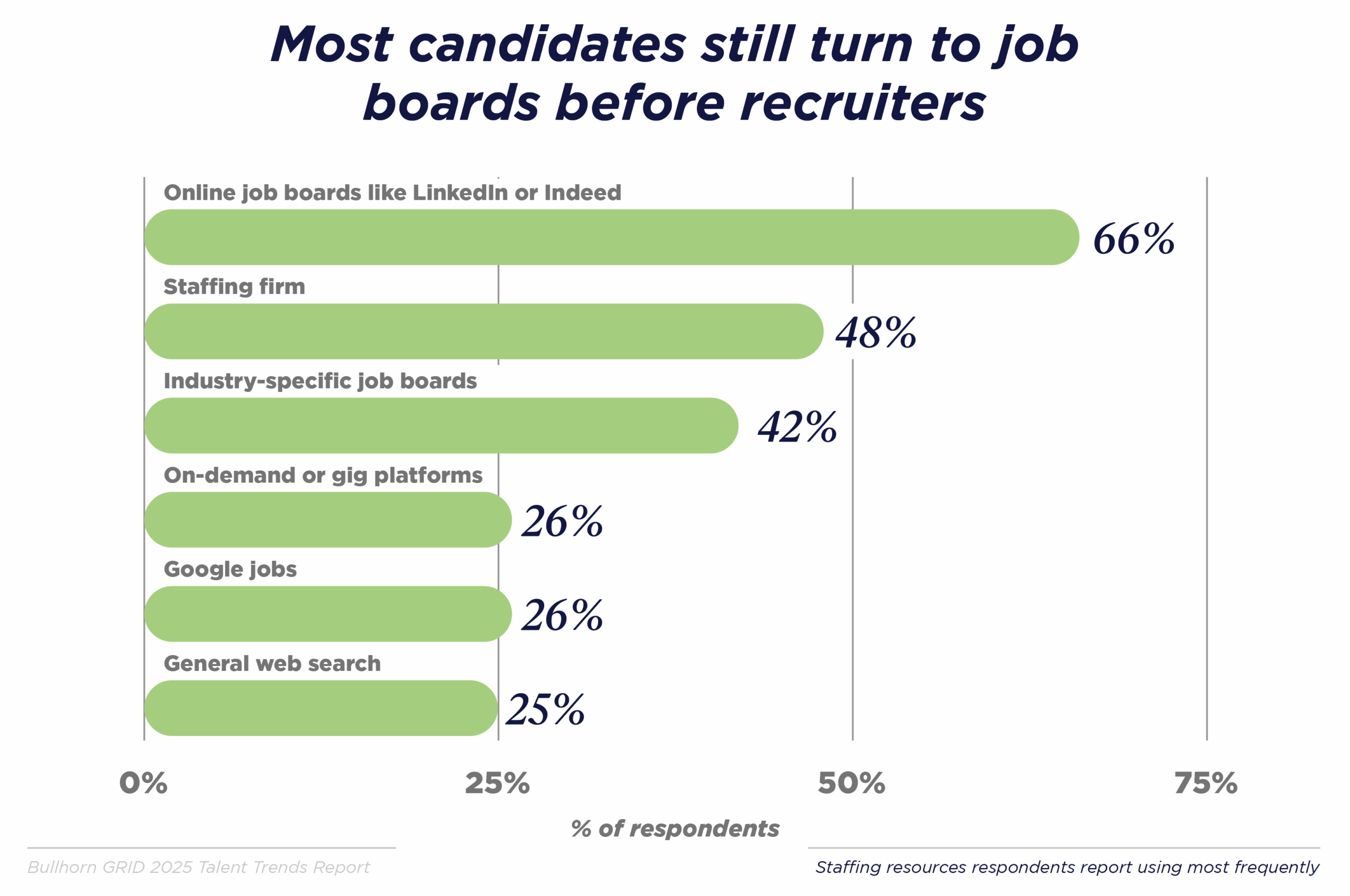
Light industrial workers most likely to turn to job boards
Light industrial workers heavily favor online job boards and gig platforms for their job search, and are more likely to do so than the rest of the talent pool. Whereas fewer than half are working with staffing firms, down slightly from the year before. With the labor market being as volatile as it is, workers are gravitating towards channels that offer immediate visibility into available roles and faster paths to placement.
This reliance creates significant competition for staffing firms. To effectively attract candidates, firms must clearly demonstrate the real, tangible value they offer, such as speed, accuracy, and redeployment support. They must also match the ease-of-use and 24/7 access to information and job applications that candidates find on other job search resources. This accessibility is particularly vital for light industrial workers who may not have the flexibility to take calls or attend interviews while on shift.
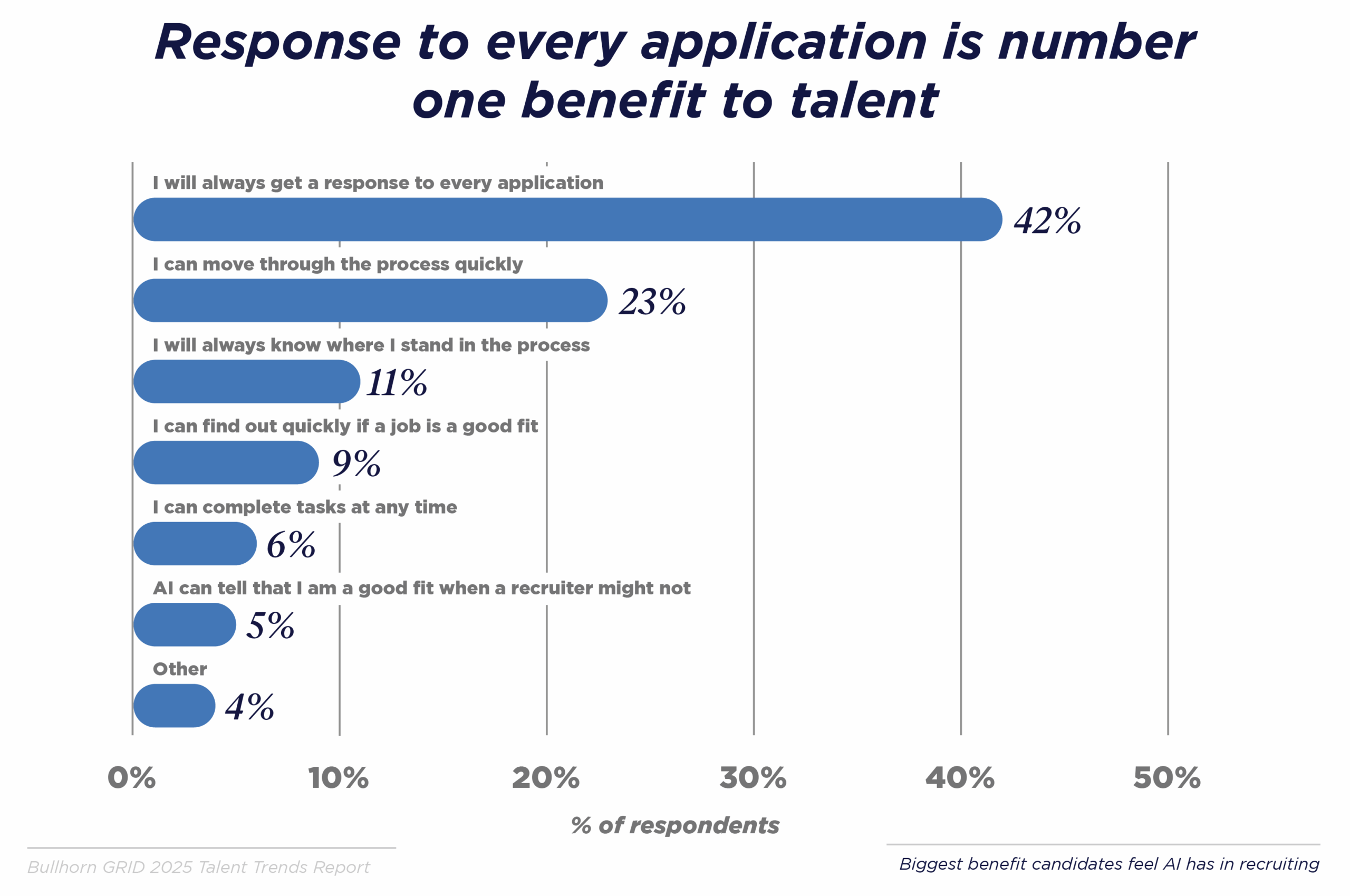
AI eliminates the application “black hole”
Light industrial workers are particularly keen on receiving a response to every application submitted, with 42% identifying this as the most significant benefit of AI in recruiting (compared to 32% non-LI candidates). 11% of candidates also noted that knowing where they stand in the process is another crucial advantage of AI. This means that a combined 53% of candidates believe that AI resolves the frustrating issue of feeling like applications disappear into a “black hole.” They also recognize the value of AI in reducing friction during the recruitment process, with 23% attesting that it moves them through the process quickly and 9% stating that AI helps them quickly determine whether a role is a good fit.
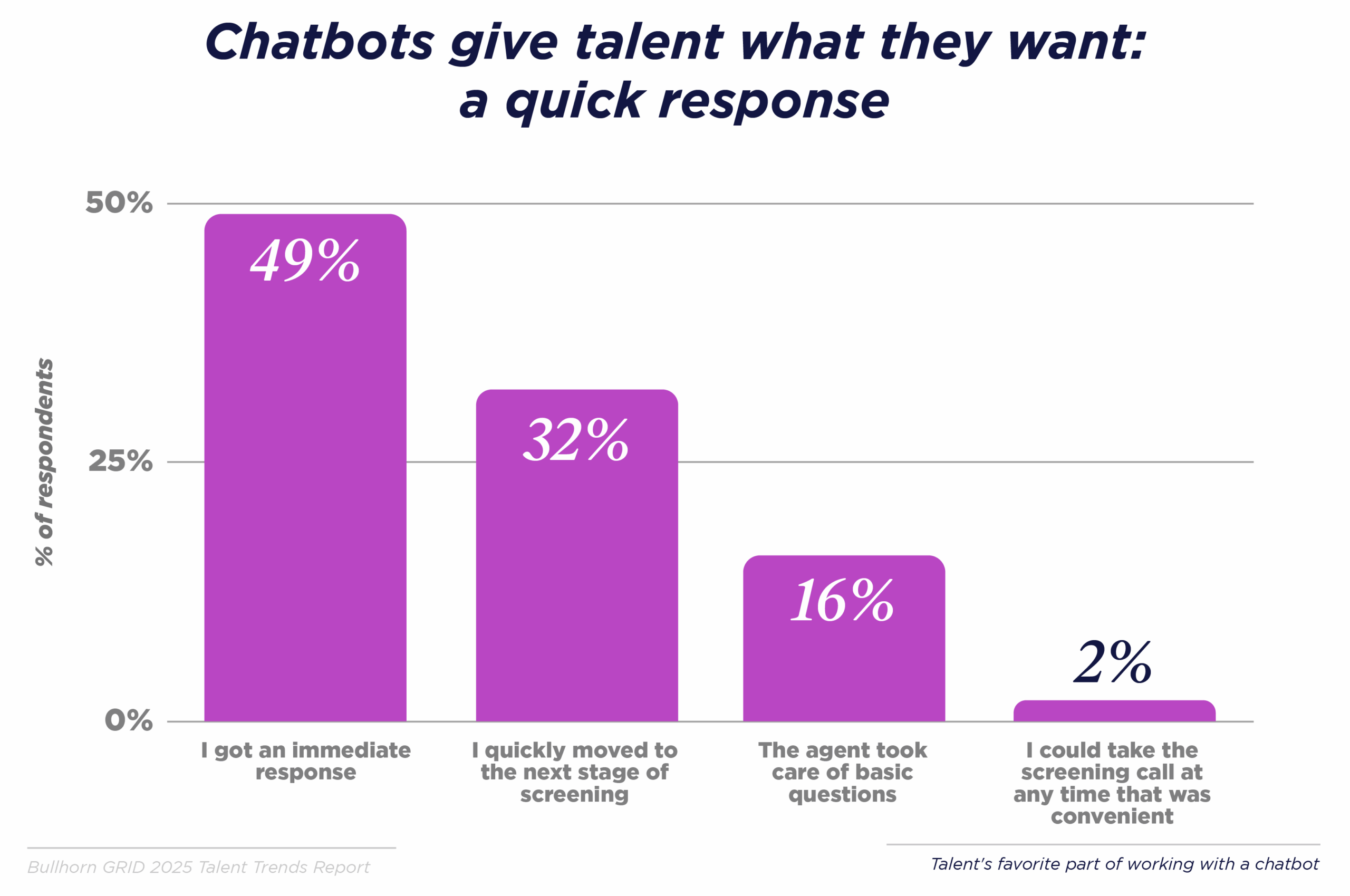
Candidates value quick response only possible with AI
Light industrial workers highly valued receiving an immediate response, with 49% citing that it was their favorite part of working with a chatbot, higher than the rest of the talent pool. Additionally, 32% said moving quickly to the next stage of screening. Together, more than 80% of workers valued speed in the hiring process, which AI-powered tools like chatbots can facilitate.
The preference for human interaction is still evident, yet a growing 16% of workers expressed a liking for agents handling basic questions. While human engagement remains important for complex interactions, a significant and increasing segment of candidates appreciate AI’s ability to streamline processes and provide quick, efficient service for simpler tasks.
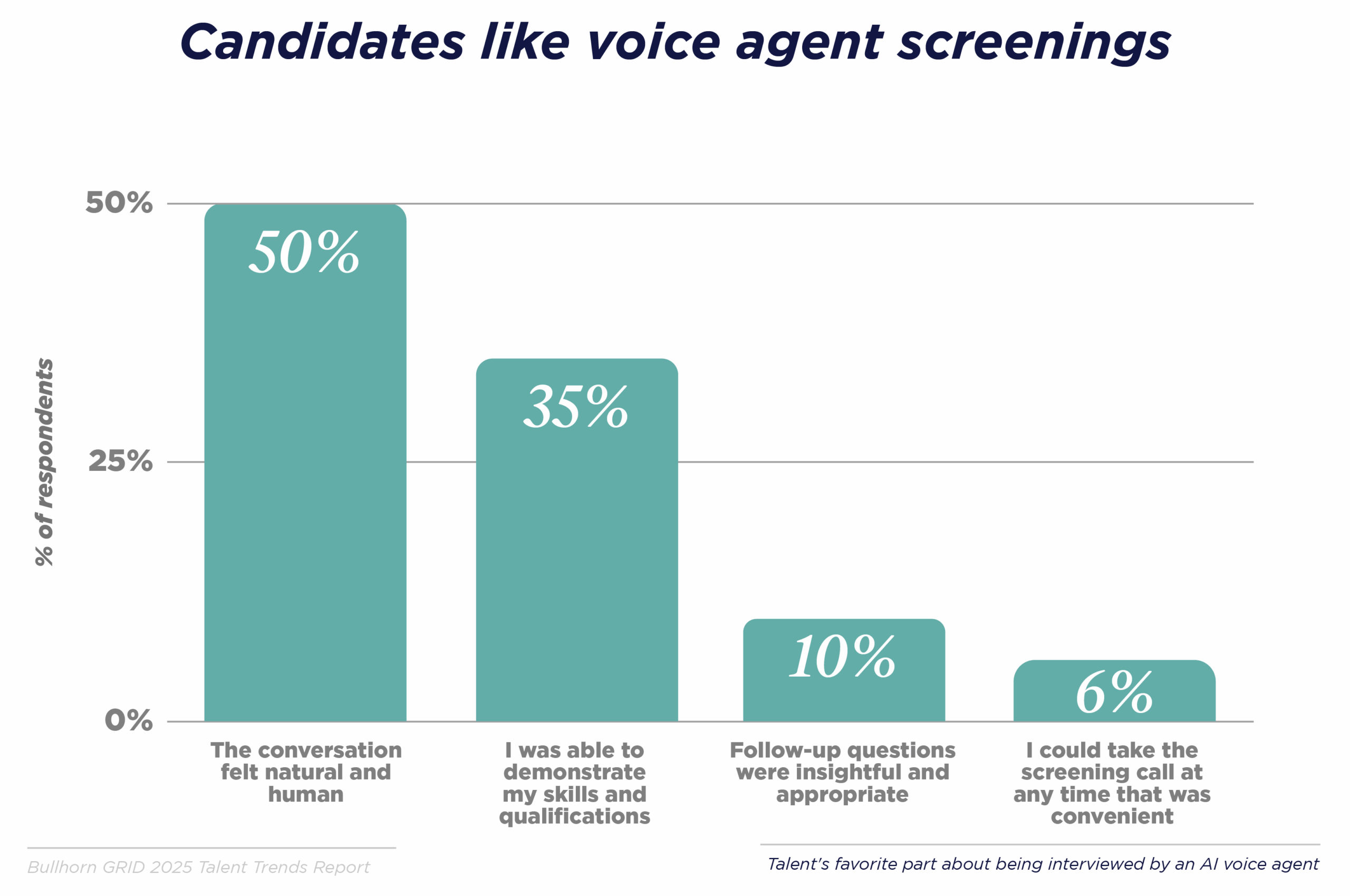
AI voice agents are a welcome addition, not a deterrent for candidates
A significant 50% of light industrial workers found interactions with AI voice agents to feel natural and human, while 35% felt these interactions allowed them to demonstrate their skills effectively. Overall, 75% of candidates had a positive experience with AI-powered tools, with 93% reporting the voice agent was better than or equal to speaking to a human.
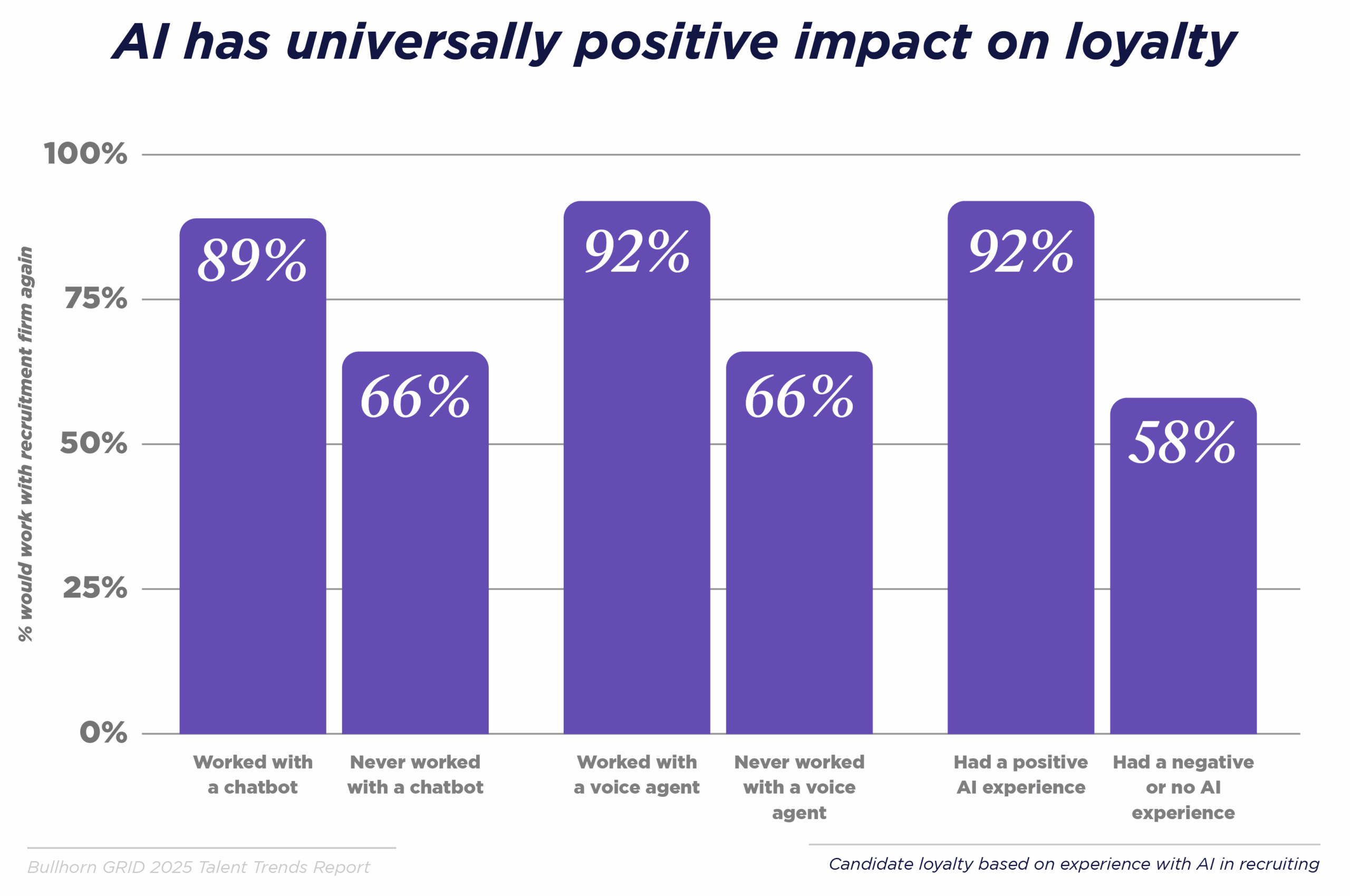
Experience with AI-powered tools boosts candidate loyalty
Candidates who engaged with AI-powered tools showed significantly higher loyalty to recruitment firms. In fact, 92% of light industrial workers with positive AI experiences said they would continue working with their firm, compared to just 58% among those with negative or no AI experience. This reinforces AI’s role as a tool to drive loyalty, and not just productivity.
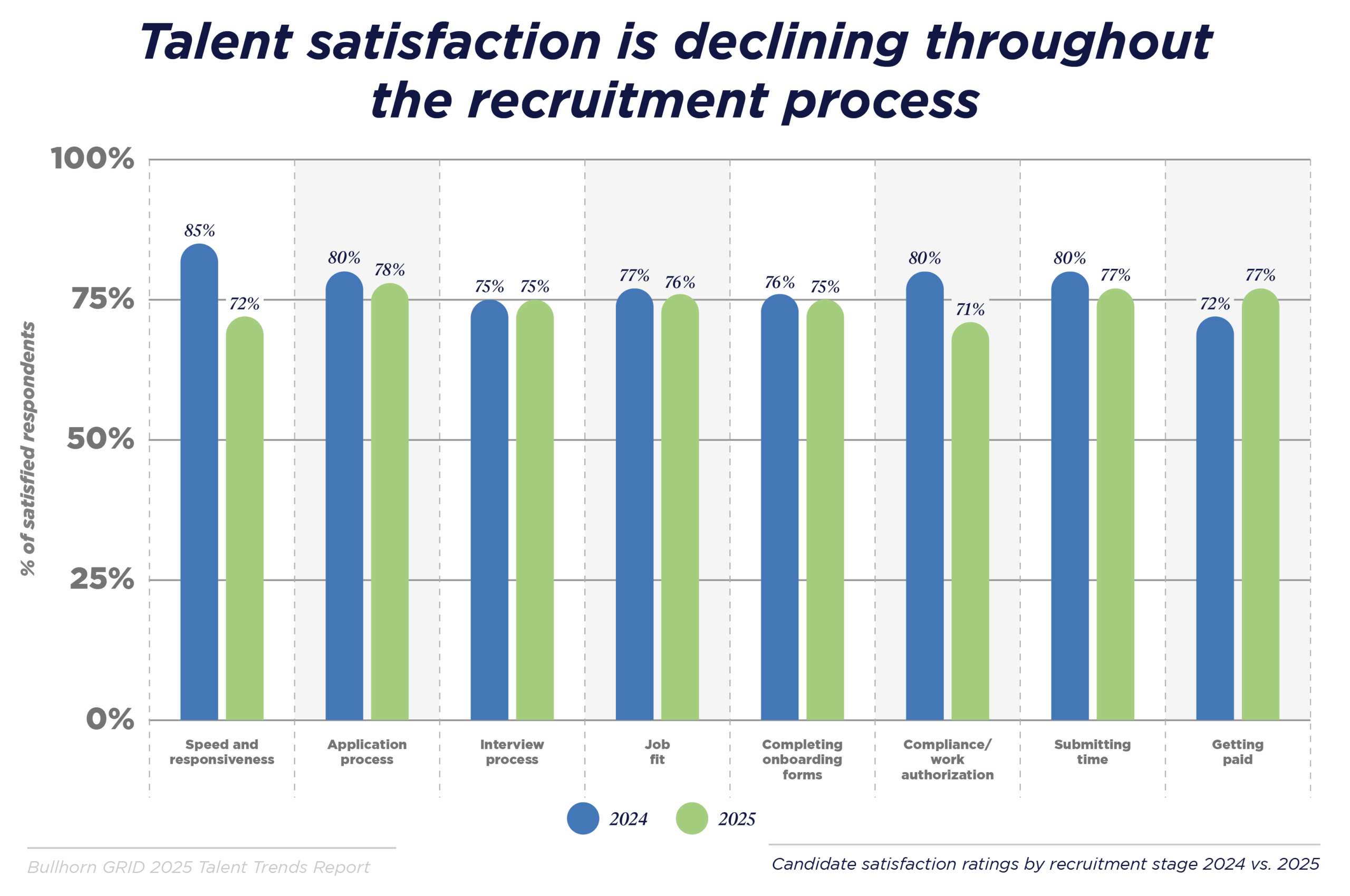
Satisfaction rates throughout the recruitment process remain relatively high between 70-78%, but have declined within the last year. Greater adoption of AI can help reverse this trend by accelerating application and work authorization processes and reducing administrative burden.
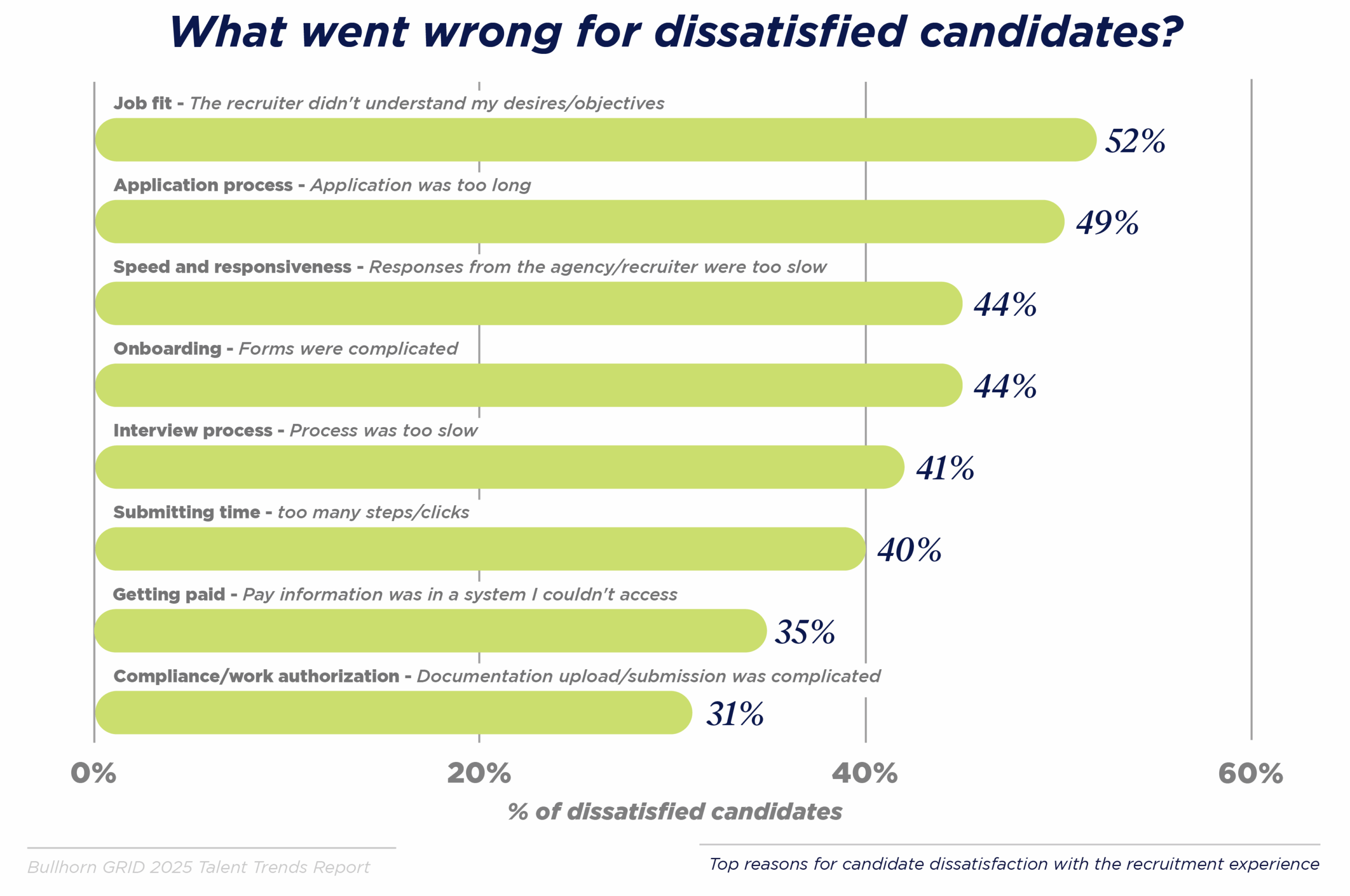
Slow and complicated workflows drive down candidate satisfaction
Many of the breakdowns in worker satisfaction relate to speed or complexity. It’s clear that LI workers find the recruitment process to be cumbersome. Furthermore, over 50% of dissatisfied candidates felt that recruiters did not understand what they were looking for. In a volatile labor market, poor job fit carries higher consequences, leading workers to be disillusioned with the process. AI-powered screening can mitigate this by improving accuracy and reducing wasted time.
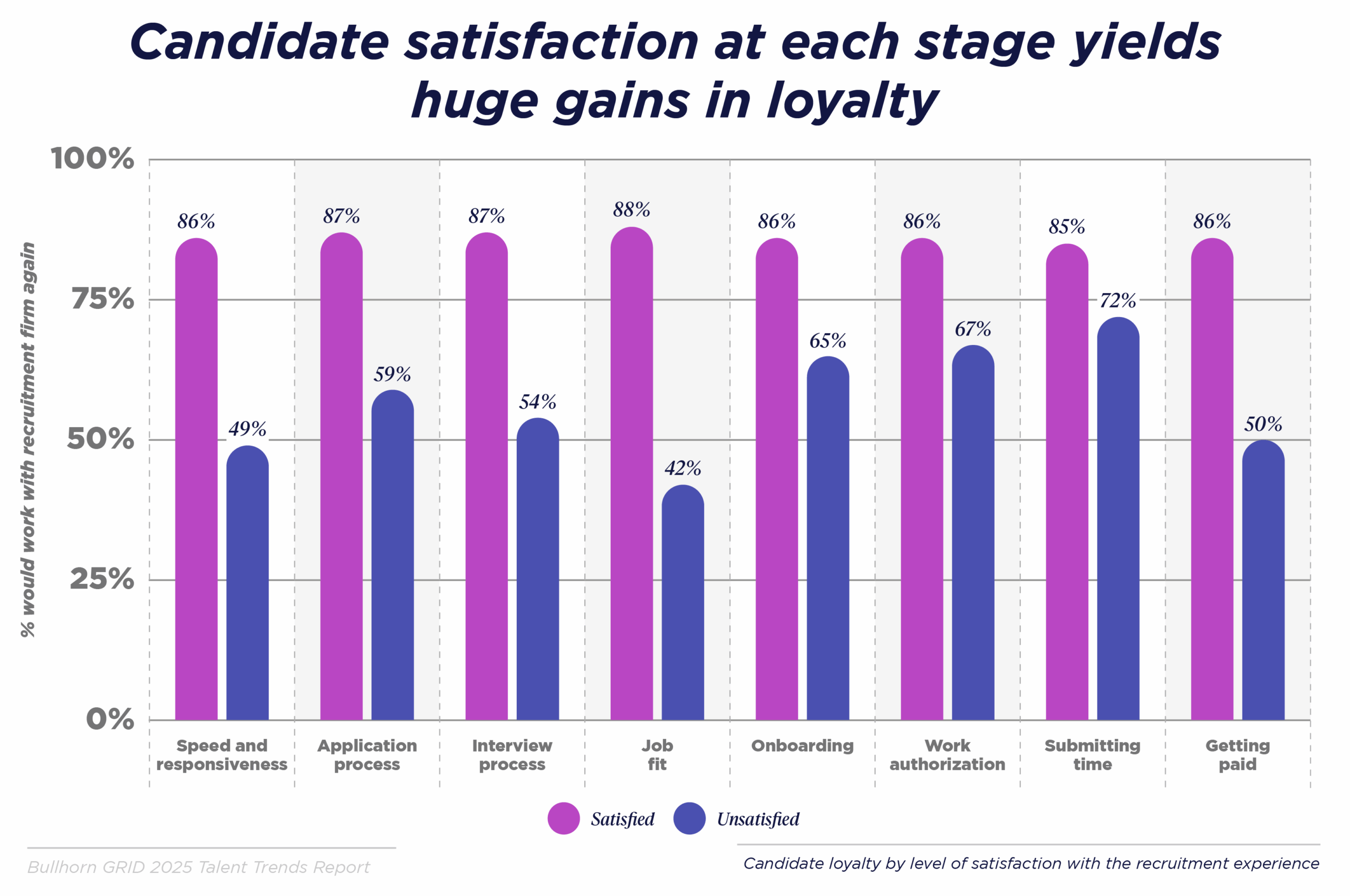
All aspects of the talent experience influence candidate loyalty
Each stage of the recruitment cycle significantly impacts worker loyalty. Correct job matching dramatically increases loyalty with workers 110% more likely to return to the same firm when the fit is right. This is especially critical in a sector increasingly dependent on contingent labor and redeployment. This is where AI plays a vital role, enabling advanced screening for better fit and increasing speed across the entire recruitment lifecycle.
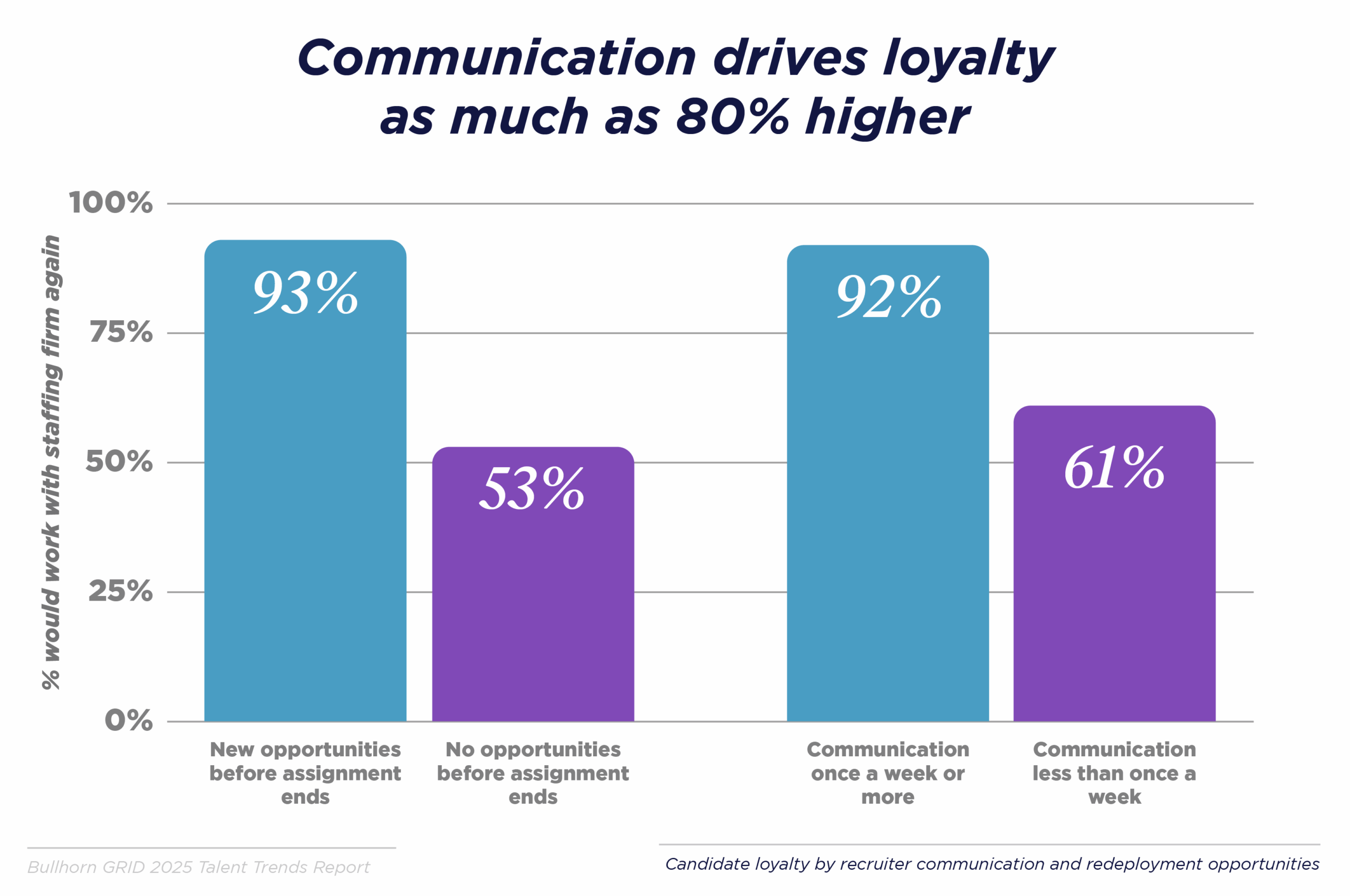
Communication drives loyalty
Light industrial workers overwhelmingly noted that frequent communication (at least once a week) and proactive offers of new opportunities were the biggest drivers of loyalty, even more so than other talent sectors. In fact, reaching out with a new opportunity before the old one ends increases candidate loyalty by over 50%. They value recruiters who remain engaged, understand their specific job needs, and help them find their next role quickly. These tailored interactions and redeployment opportunities are unique to recruitment firms, since these are not perks typically found through job boards or online searches, and can significantly boost loyalty.