GRID 2025 Talent Trends Report: Healthcare spotlight
Healthcare faces an uncertain future, marked by a predicted U.S. physician shortage of 86,000 by 2036, according to a report by the Association of American Medical Colleges, and a registered nurse shortage of over 63,000 by 2030, according to the Health Resources and Services Administration. Healthcare faces a number of competing pressures: rising labor costs, immigration challenges, high levels of burnout, and a workforce that has been slow to adjust to post-pandemic pay rates. The result has been an industry laser-focused on workforce optimization, relying more and more on the flexibility and lower cost of contingent workers. At the same time, inflationary pressures, changing reimbursement rates, and threats to research funding are driving healthcare organizations to lay off employees and reduce hours for contingent workers, impacting the demand for healthcare staffing, even as healthcare remains one of the only sectors of the job market showing consistent growth.
These seemingly contradictory factors make the healthcare staffing industry especially volatile and difficult to predict right now. Moreover, this year’s survey found that 90% of healthcare contingent workers are considering leaving the temporary workforce in the next two years; 56% would prefer to work a permanent full-time job. As pandemic-level pay rates for travel nurses and other temporary healthcare assignments have come down, fewer clinicians are inclined to stay in contingent employment. If healthcare staffing firms are going to stay afloat, they need to make the experience as smooth and painless as possible with desirable assignments, consistent placement, and easy credentialing.
How can they accomplish all of this? For the GRID 2025 Talent Trends Report, we surveyed nearly 400 healthcare workers who have engaged with recruiters in the past three years to understand what they want from the recruitment experience.
 Click on any chart to enlarge

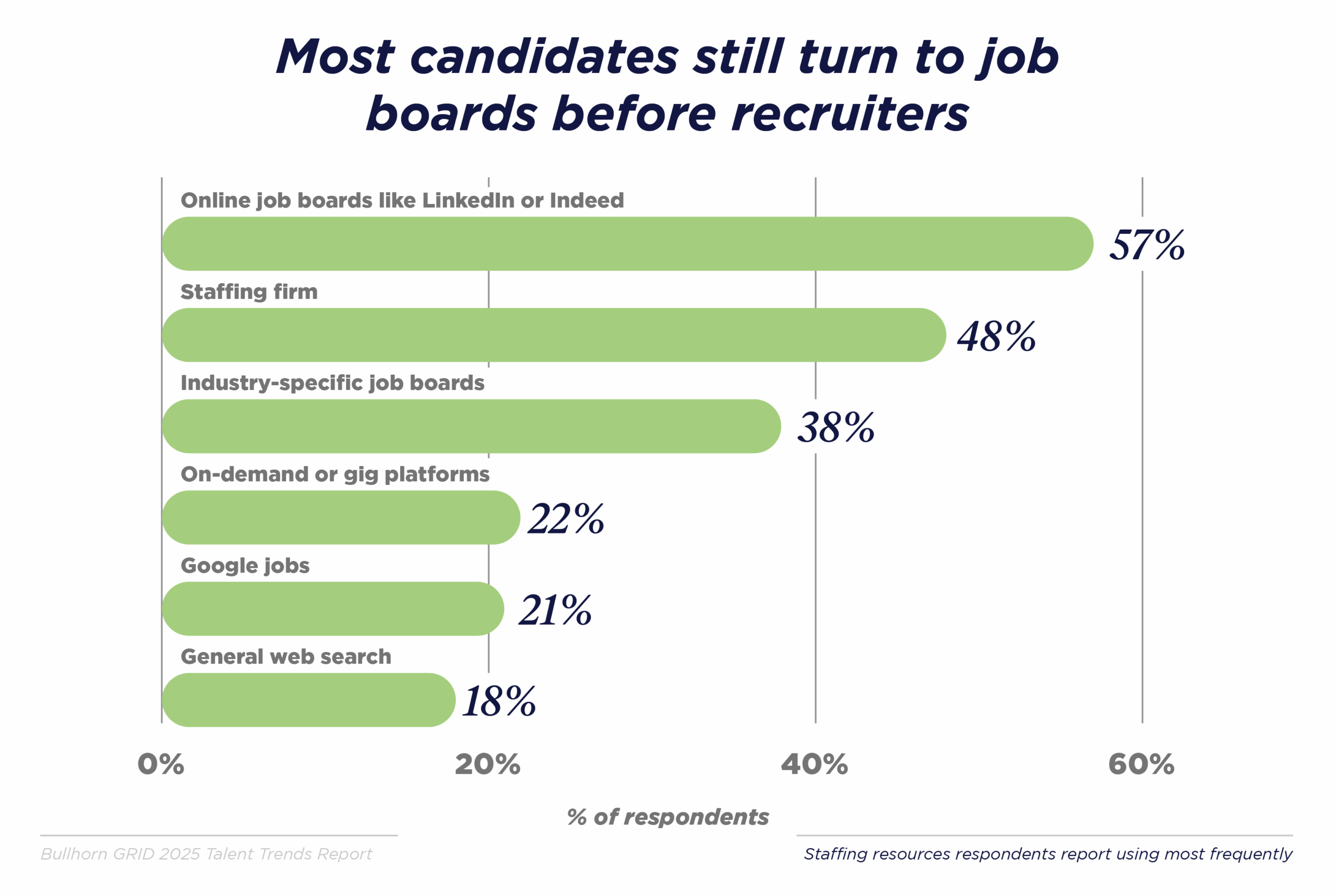
How do healthcare candidates look for jobs?
Fewer healthcare candidates are partnering with staffing firms, dropping from 45% to 40% in the last year alone. They are also less likely to use online job boards than other candidate groups, at 57%. Just over a third of healthcare candidates use industry-specific job boards for their job search, likely because of the specificity of their skill set and licensure.
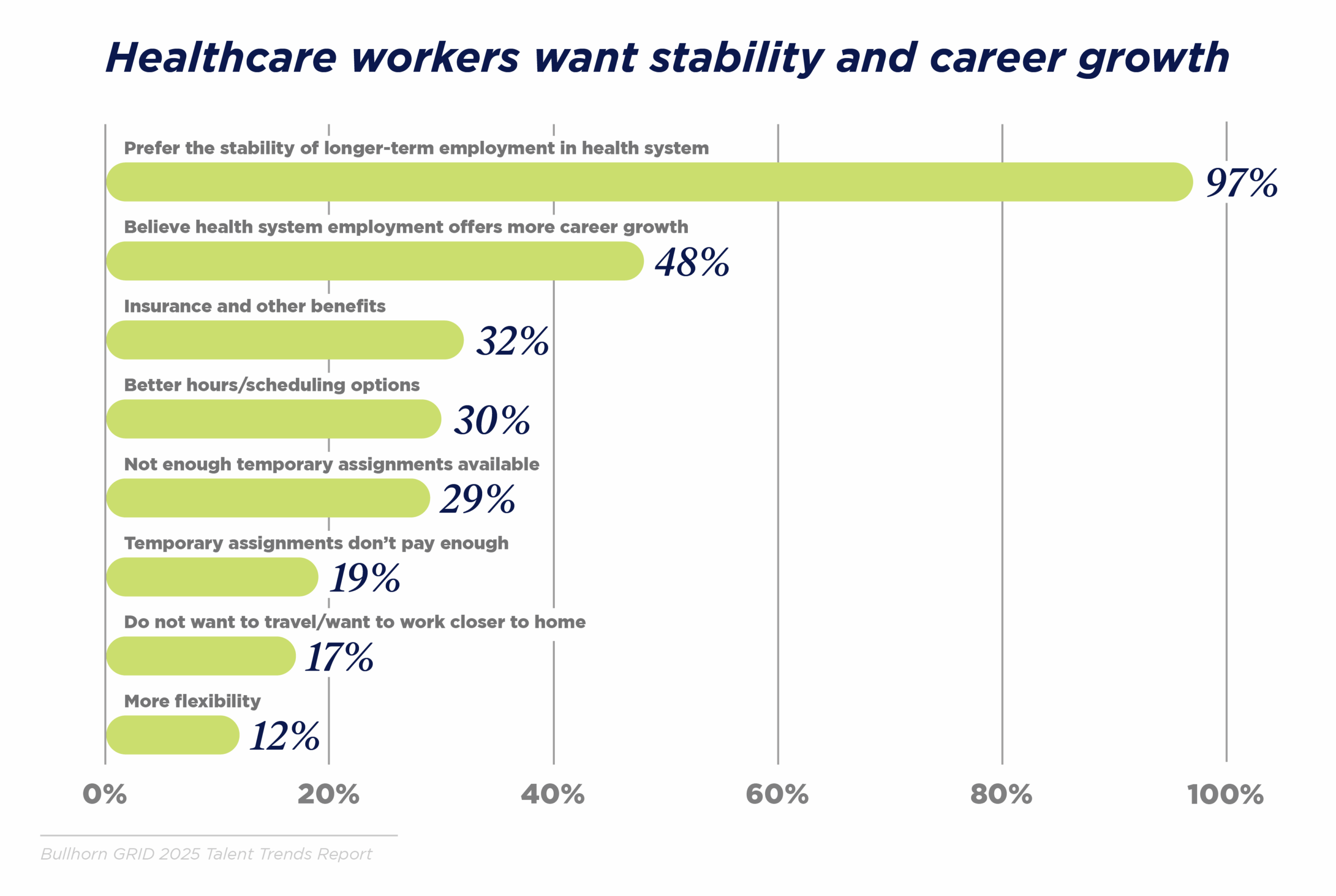
90% of healthcare workers are considering permanent/full-time work in a health system
These preferences regarding job search are tied to what healthcare professionals are looking for in the future — 90% want to leave contingent work for a permanent role in a health system. These candidates say they prefer the stability of longer-term employment within a health system, with rates as high as 99% among per diem and travel nurses. Many also found that there simply aren’t enough temporary assignments available, particularly 54% of locum tenens providers and 52% of travel nurses. This may drive them toward job boards that advertise permanent roles more consistently.
This indicates that recruitment firms need to pivot from traditional methods to improve the talent experience and keep attracting talent. They can stay ahead of the competition and enhance their work by investing in AI-powered tools that work instantaneously to keep healthcare candidates satisfied and loyal.
Leveraging AI to address healthcare recruitment challenges
The top priority for healthcare candidates is speed and responsiveness, mirroring that of the larger talent pool. They want recruitment firms to streamline their processes and make the experience as seamless as possible.
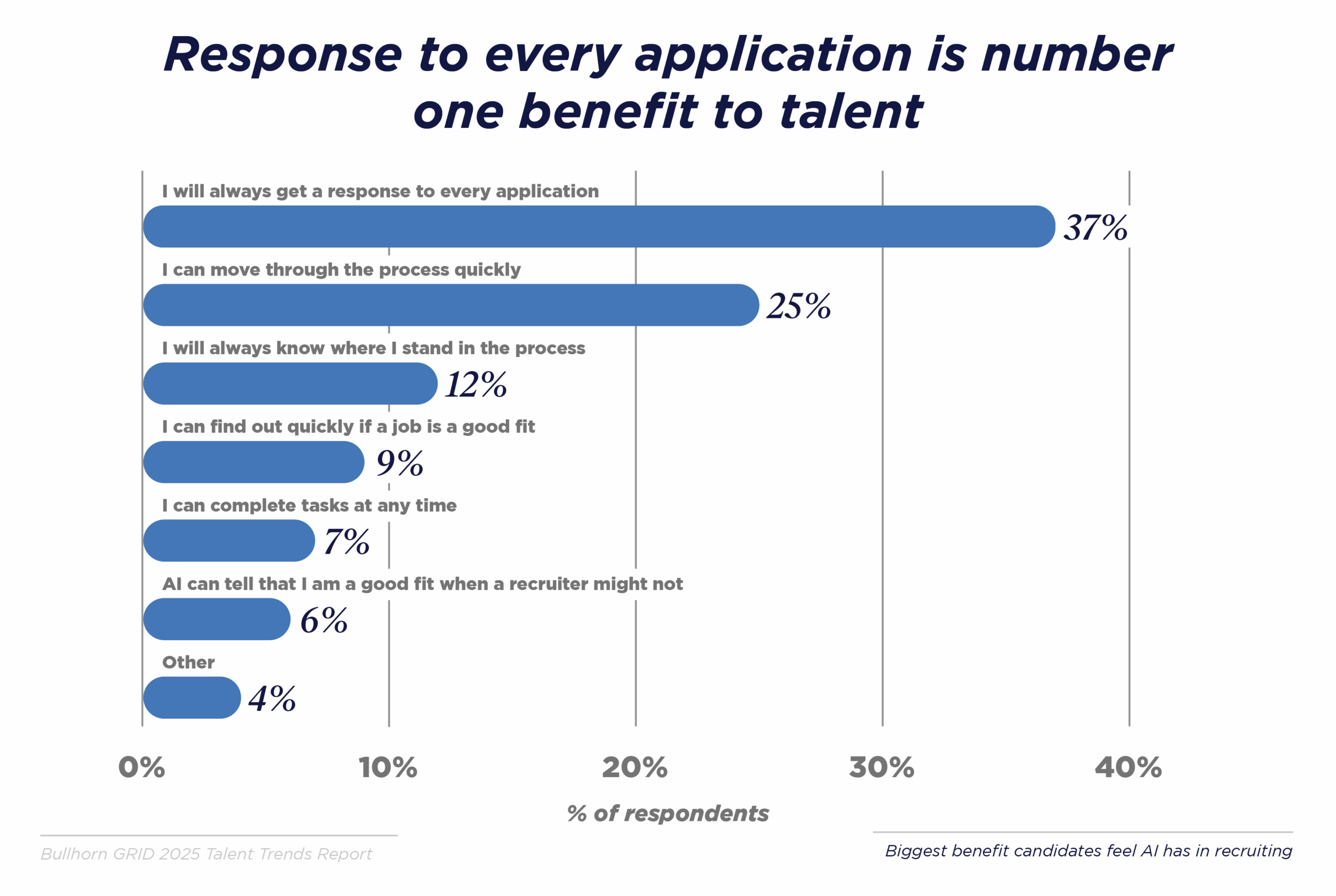
AI eliminates the application “black hole”
Healthcare professionals are particularly keen on receiving a response to every application submitted, with 37% identifying this as the most significant benefit of AI in recruiting (compared to 32% of all candidates). The burnout and bureaucracy often faced in their workplaces are precisely what they wish to avoid when hunting for their next opportunity. In fact, 13% of candidates also noted that knowing where they stand in the process is another advantage of AI. This means that a combined 50% of candidates believe that AI resolves the frustrating issue of feeling like applications disappear into a “black hole.” They also recognize the value of AI in reducing friction during the recruitment process, with 26% attesting that it moves them through the process quickly and 9% stating that AI helps them quickly determine whether a role is a good fit.
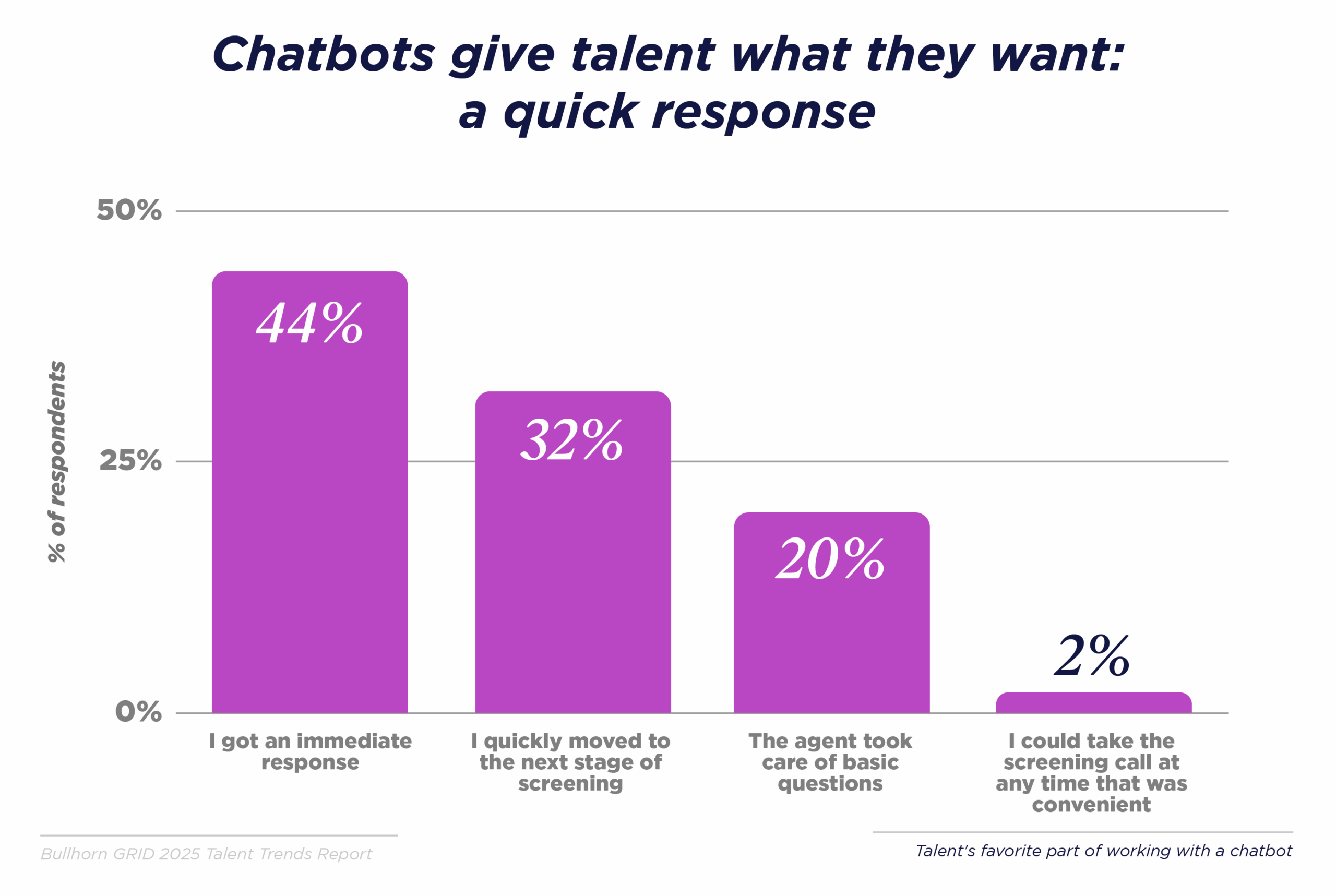
Candidates value quick response only possible with AI
Healthcare candidates highly valued receiving an immediate response, with 44% citing that it was their favorite part of working with a chatbot. And 32% said moving quickly to the next stage of screening. So, over 75% of healthcare candidates valued speed in the hiring process, which AI-powered tools like chatbots can facilitate like nothing else. And AI can take many early-stage tasks off recruiters’ plates so they can focus on more strategic tasks.
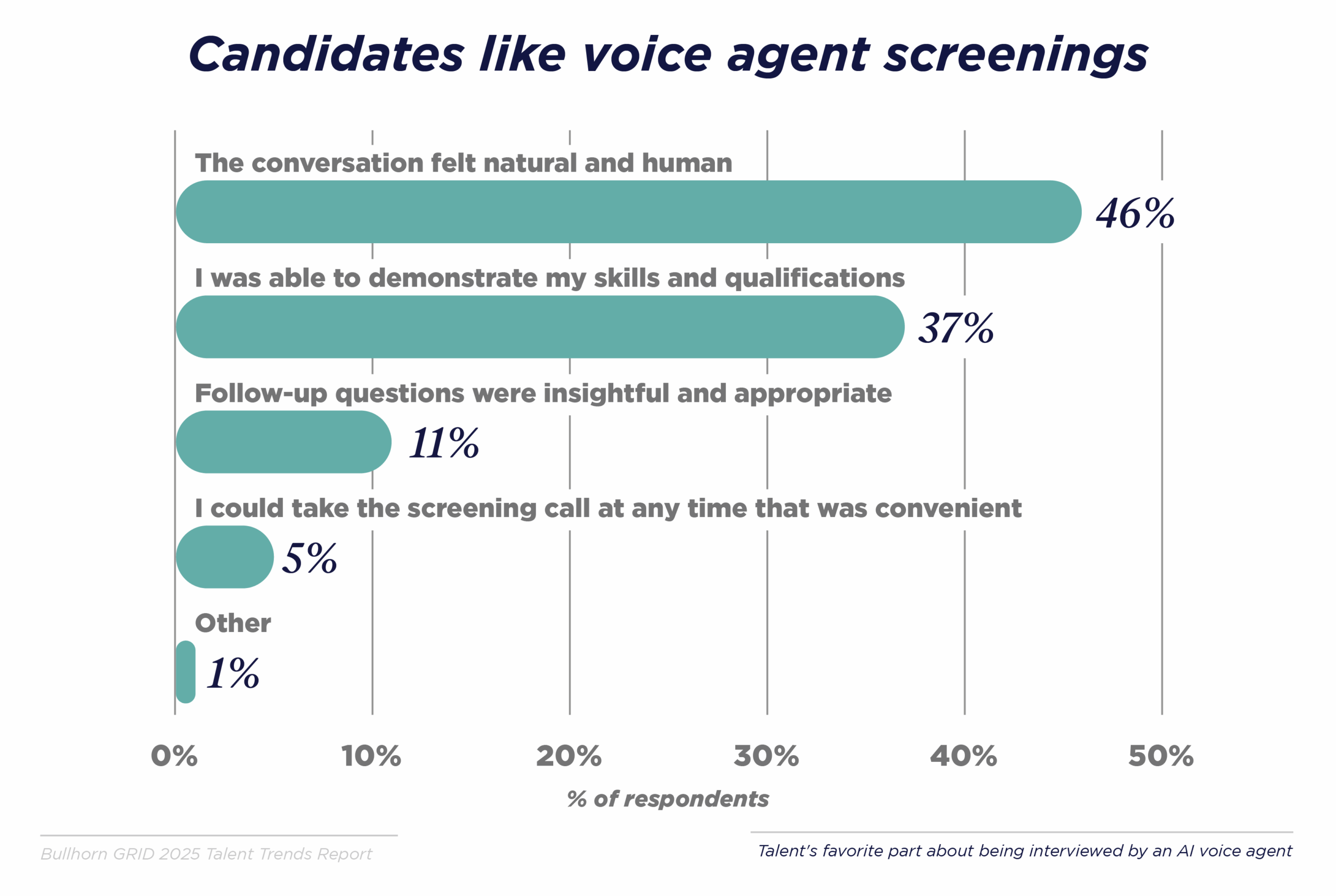
AI voice agents are a welcome addition, not a deterrent for candidates
A significant 46% of healthcare professionals found interactions with AI voice agents to feel natural and human, and 37% reported that these interactions effectively allowed them to demonstrate their skills and qualifications. Overall, 63% of candidates had a positive experience with AI- powered tools. Furthermore, the flexibility offered by AI to take calls at a time convenient to them is a valuable selling point for healthcare candidates who often have challenging schedules.
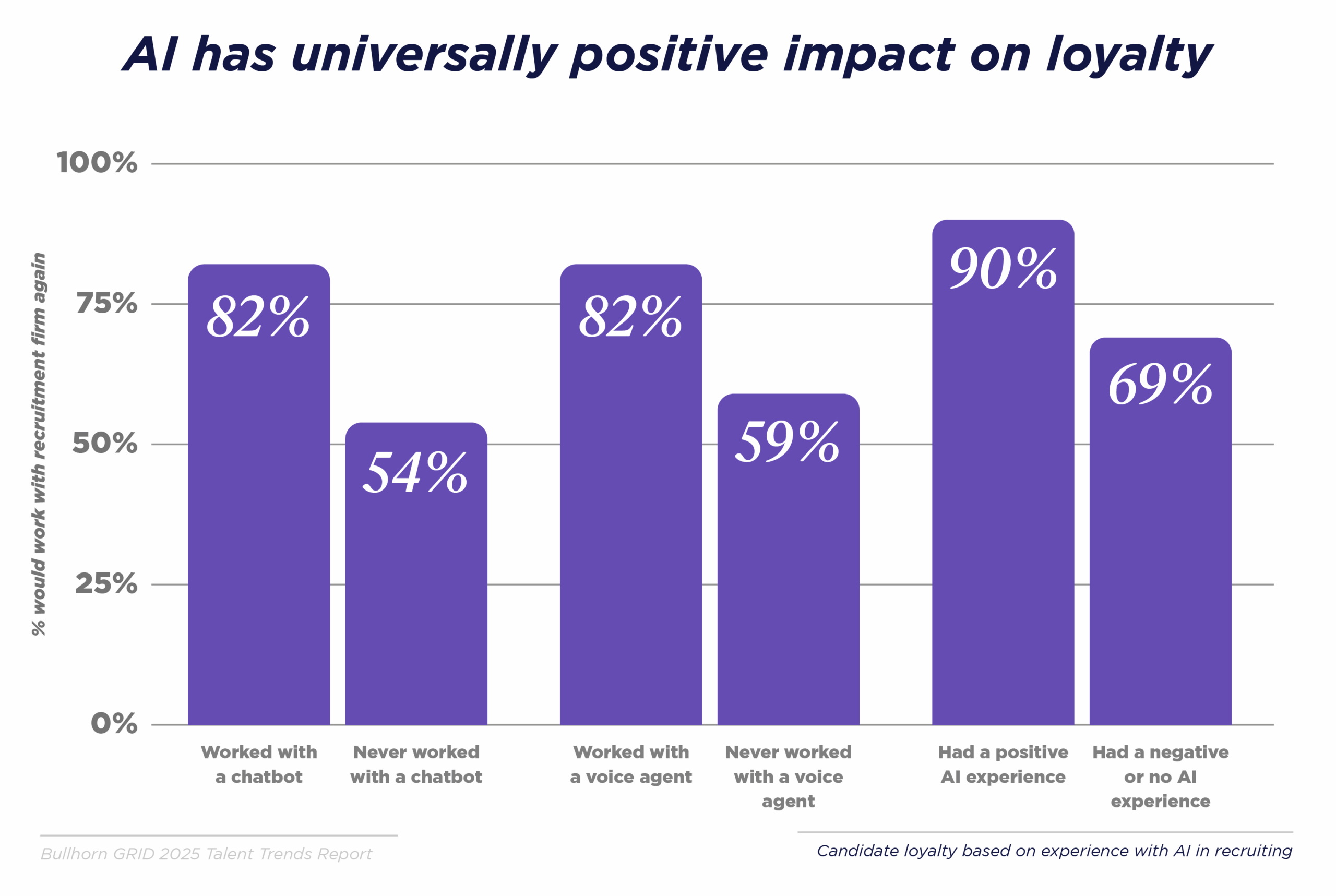
Experience with AI-powered tools boosts candidate loyalty
Across the board, candidates who have engaged with AI-powered tools in recruiting processes demonstrate increased loyalty to firms compared to those who have not. Positive AI experiences actually make healthcare workers more loyal, with 90% saying they would keep working with their current firm, as opposed to the 69% who had a negative or no experience with AI. This clearly reinforces that healthcare candidates value the efficiency and speed of AI capabilities, which serve as a powerful asset to the candidate experience rather than a hindrance. The high levels of positive engagement with AI in just a year also dispel concerns about the difficulties of implementing AI for healthcare candidates.
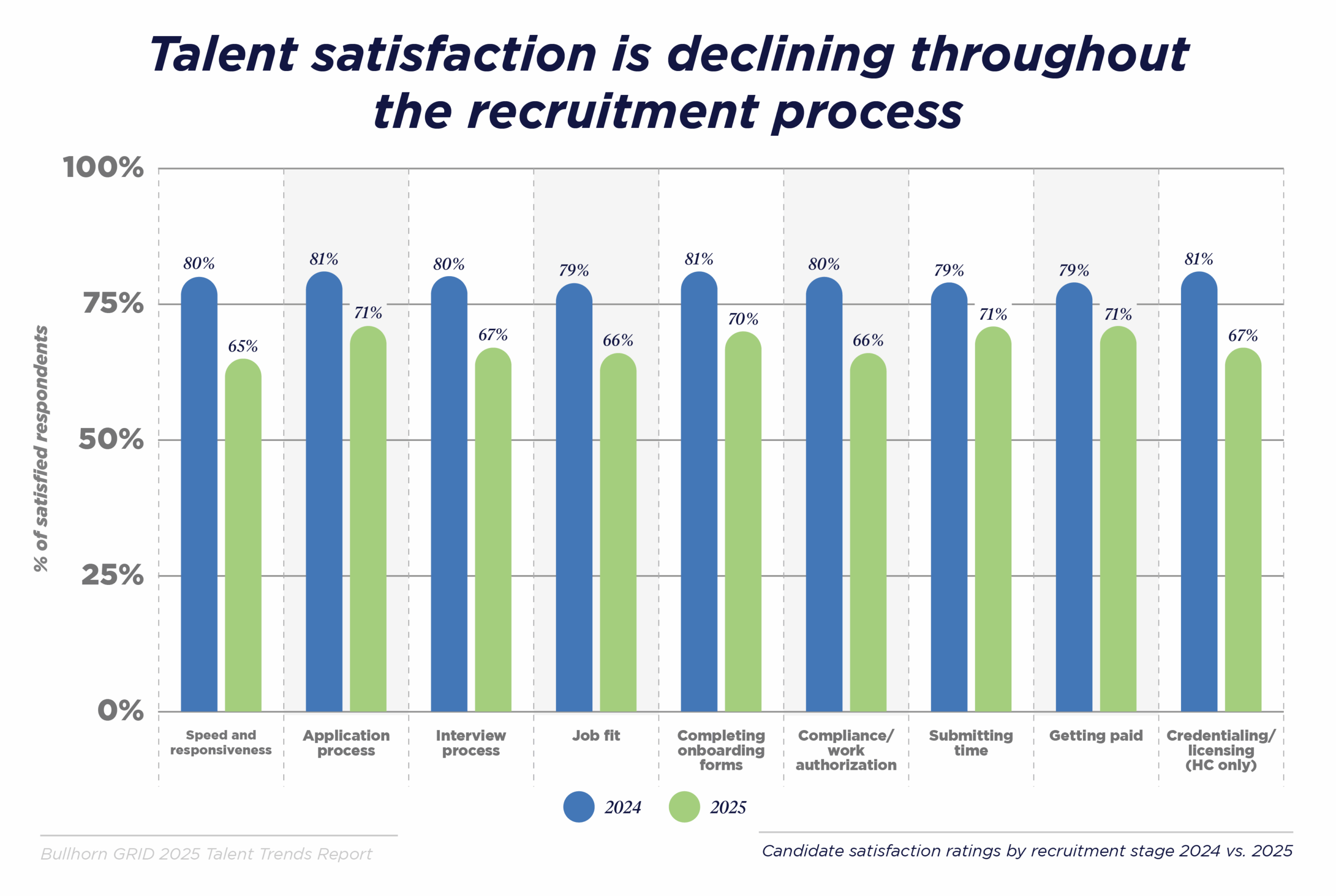
Candidate satisfaction is down during every stage of recruitment lifecycle
Despite recruiters working harder than ever, candidate satisfaction is down across all stages of the recruitment cycle, falling 10-20% in the last year alone. The degradation of the talent experience is a critical issue, with the most significant drop observed in speed and responsiveness, falling from 80% to 65%. Candidates are increasingly frustrated with lengthy application forms, complicated onboarding, and challenges with timely payments or timesheet submissions. Healthcare workers in particular find that needlessly complex and time-consuming administrative tasks add no real value and instead create barriers to what matters most, seeing and caring for their patients. Streamlining these processes through the adoption of AI can help remove friction, reduce administrative burden, and ultimately allow healthcare professionals to secure placements and deliver care faster.
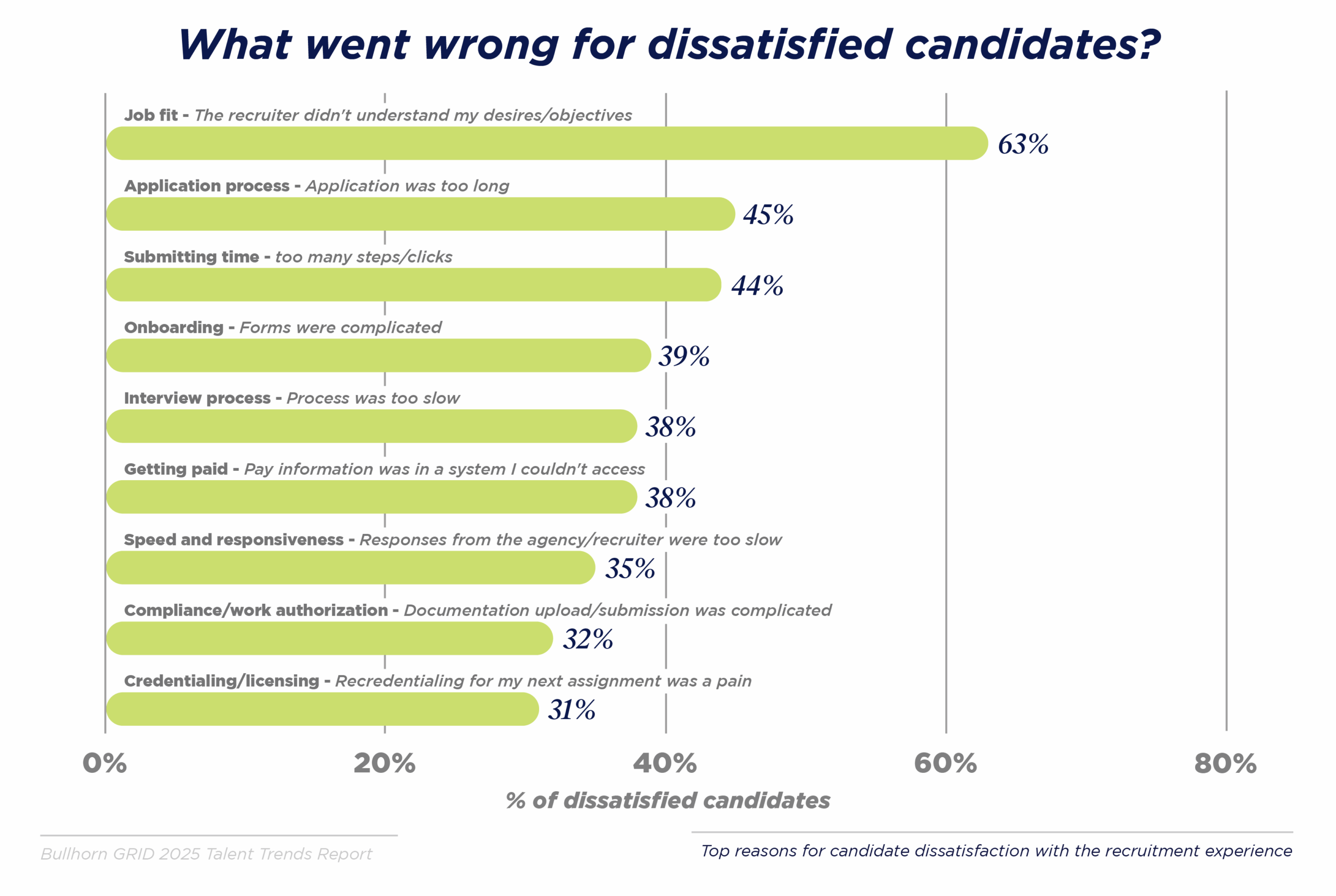
Slow and complicated workflows drive down candidate satisfaction
When examining specific areas of dissatisfaction, it’s clear that candidates find the recruitment process to be cumbersome and difficult. Healthcare candidates particularly want a recruiter who understands their unique needs and the complexities of their highly specific job requirements and skill sets, including the necessity of proper licensing and credentialing. Of the candidates who reported dissatisfaction with job fit, a notable 63% of candidates felt this way because their recruiter did not understand what they were looking for in a placement. Additionally, 45% of dissatisfied candidates cited lengthy application processes, slow interview timelines, and complicated onboarding procedures as reasons for their unhappiness. Streamlining and automating as much of the recruitment journey as possible can address these issues.
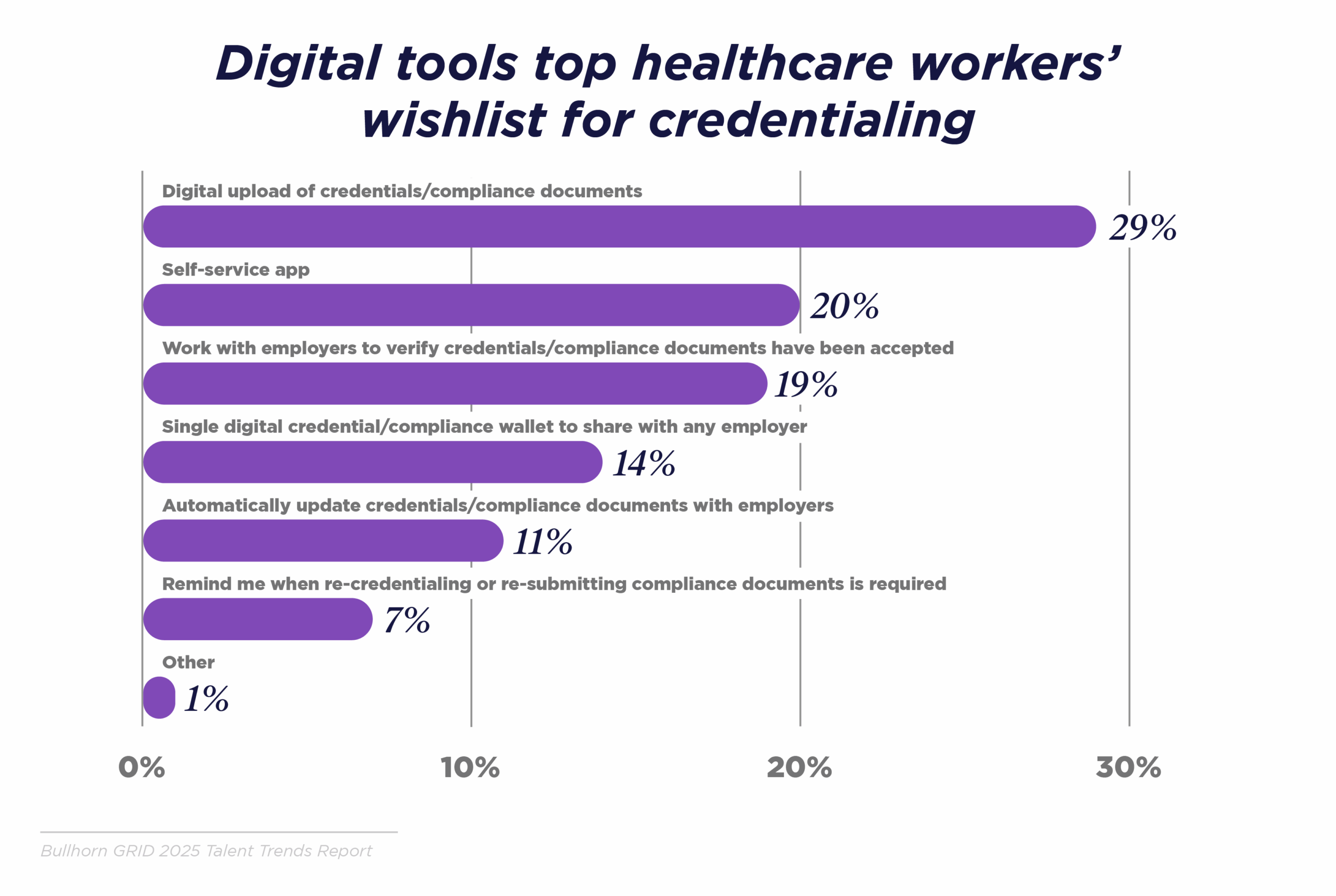
Credentialing needs to be easier and more accessible on the go
Similarly, healthcare workers want the credentialing process to be more automated, making it a 24-7, self-service tool they can access whenever they need. And they want to be prompted with each next step in the workflow. They want the experience to be as frictionless as possible.
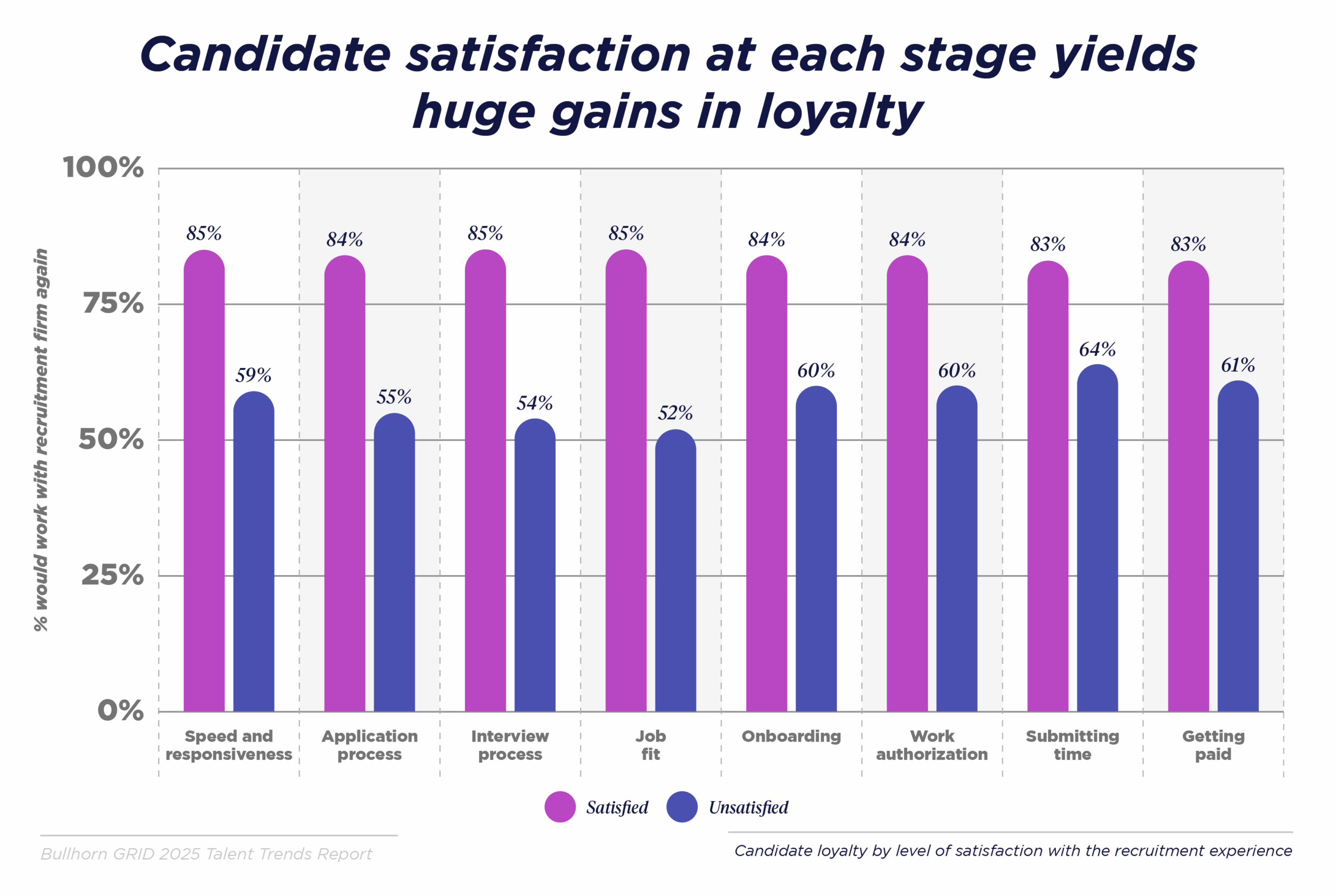
All aspects of the talent experience influence candidate loyalty
Each stage of the recruitment process profoundly impacts loyalty, and healthcare candidates followed the overall trend in experiencing the same declines in satisfaction across the broader talent pool. For healthcare workers, as with all other candidates, areas that fell short when working with recruiters can often be mitigated with AI tools.
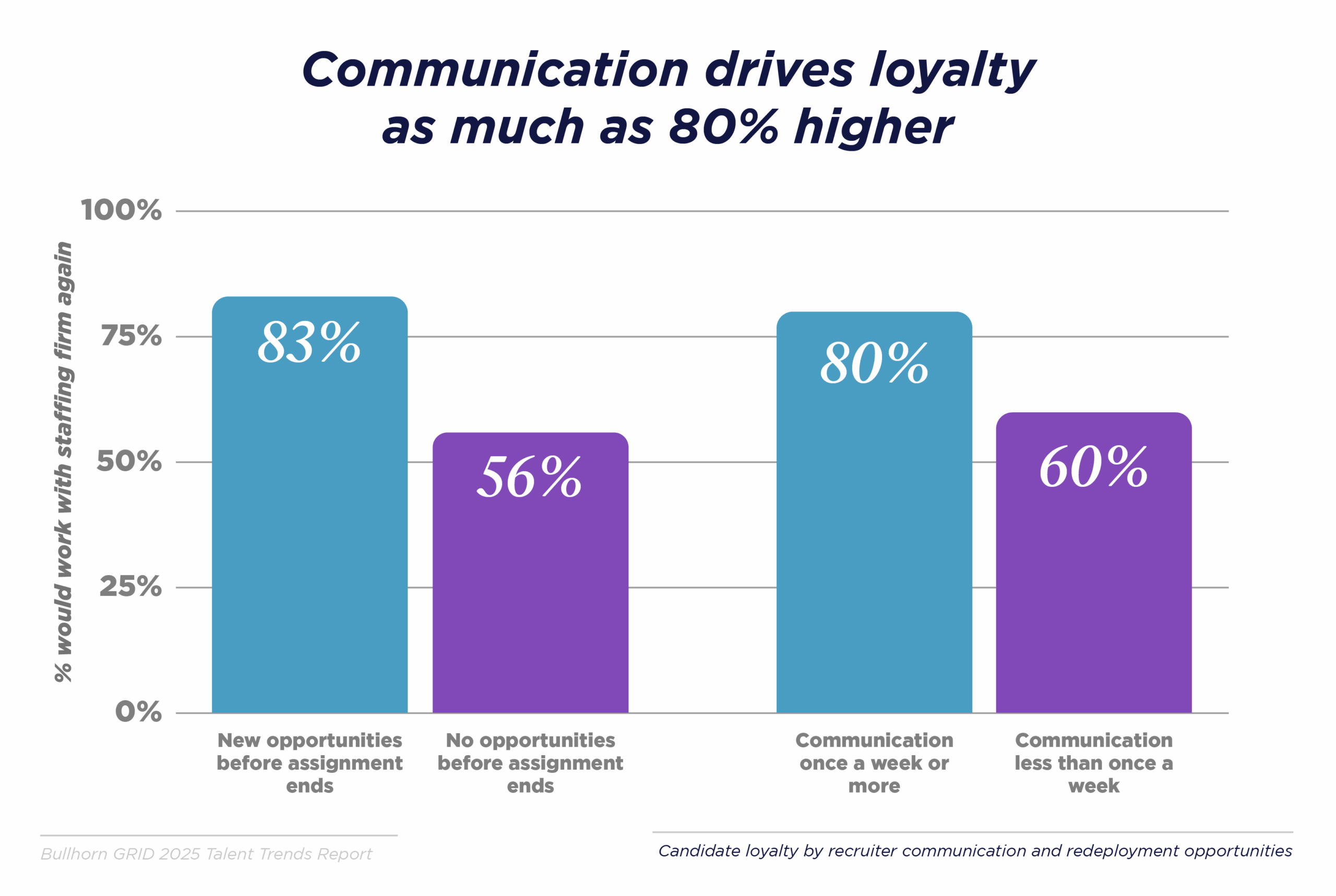
Communication drives loyalty
Healthcare candidates consistently rank frequent communication (at least once a week) and proactive offers of new opportunities as the biggest drivers of loyalty. They value recruiters who remain engaged, understand their specific job needs, and help them find their next role quickly. These tailored interactions and redeployment opportunities are unique to recruitment firms, since these are not perks typically found through job boards or online searches, and can significantly boost loyalty.