Light industrial spotlight: Industry trends report
 Click on any chart to enlarge

Firms are optimistic for 2025, but hedging their bets
As 2024 drew to a close, most firms remained optimistic about the future, with more than two-thirds predicting that revenue will increase in 2025. As 2025 has progressed, however, first quarter earnings calls suggest the recent economic volatility is tempering some of that optimism, and many firms now predict the recovery may not mean a full return to historical, pre-pandemic norms. However, it is encouraging that the SIA | Bullhorn Staffing Industry Indicator has remained stable so far this year. Commercial staffing hours in particular have slowly been trending upwards, nearing their 2024 mid-year levels.
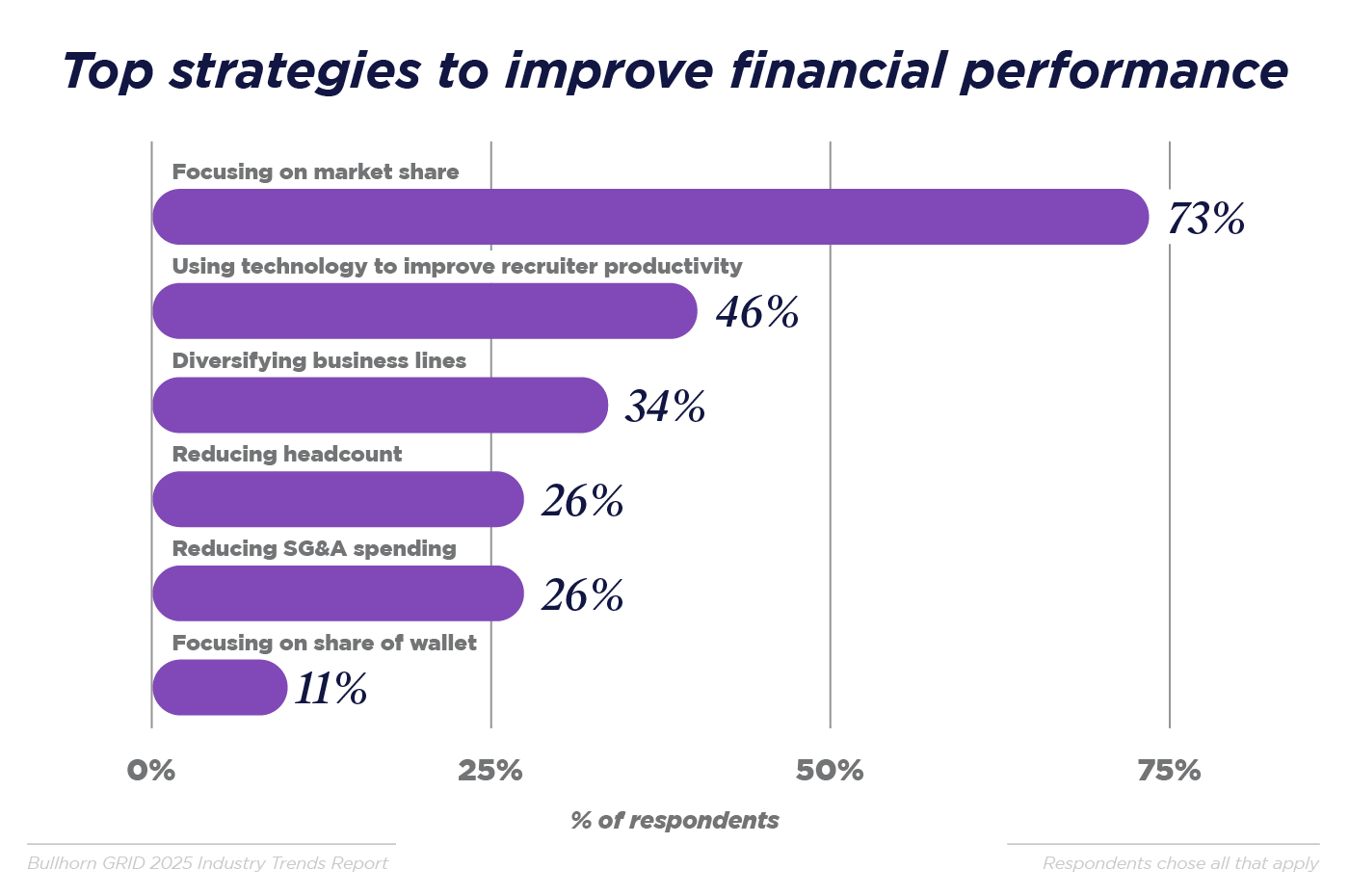
Given the potential for a new reality, it is worth looking at how firms are positioning their businesses for success while facing an uncertain future. Although attracting new clients is the number one priority across the board for 2025, firms have learned they cannot rely solely on revenue from new clients to drive performance; they need to find other ways to add value through new solutions and services. 73% are focused on increasing market share to be well positioned when the market turns upward. The next most popular strategy for driving financial performance is using technology to uplevel recruiter performance. This is not surprising given the crucial need in the light industrial space to focus on volume and speed — this is how firms are protecting both their top and bottom lines in spite of market uncertainty.
Key insights
The 2025 GRID Industry Trends Report found that the most successful firms took advantage of their existing resources, doing more with what they already have. In particular, a few common strategies differentiated them from the rest of the market:
Upgrading automation across the entire workflow to enhance recruiter efficiency
Deploying AI throughout their business
Delighting talent with faster, more accurate placement
Automation correlates with revenue growth
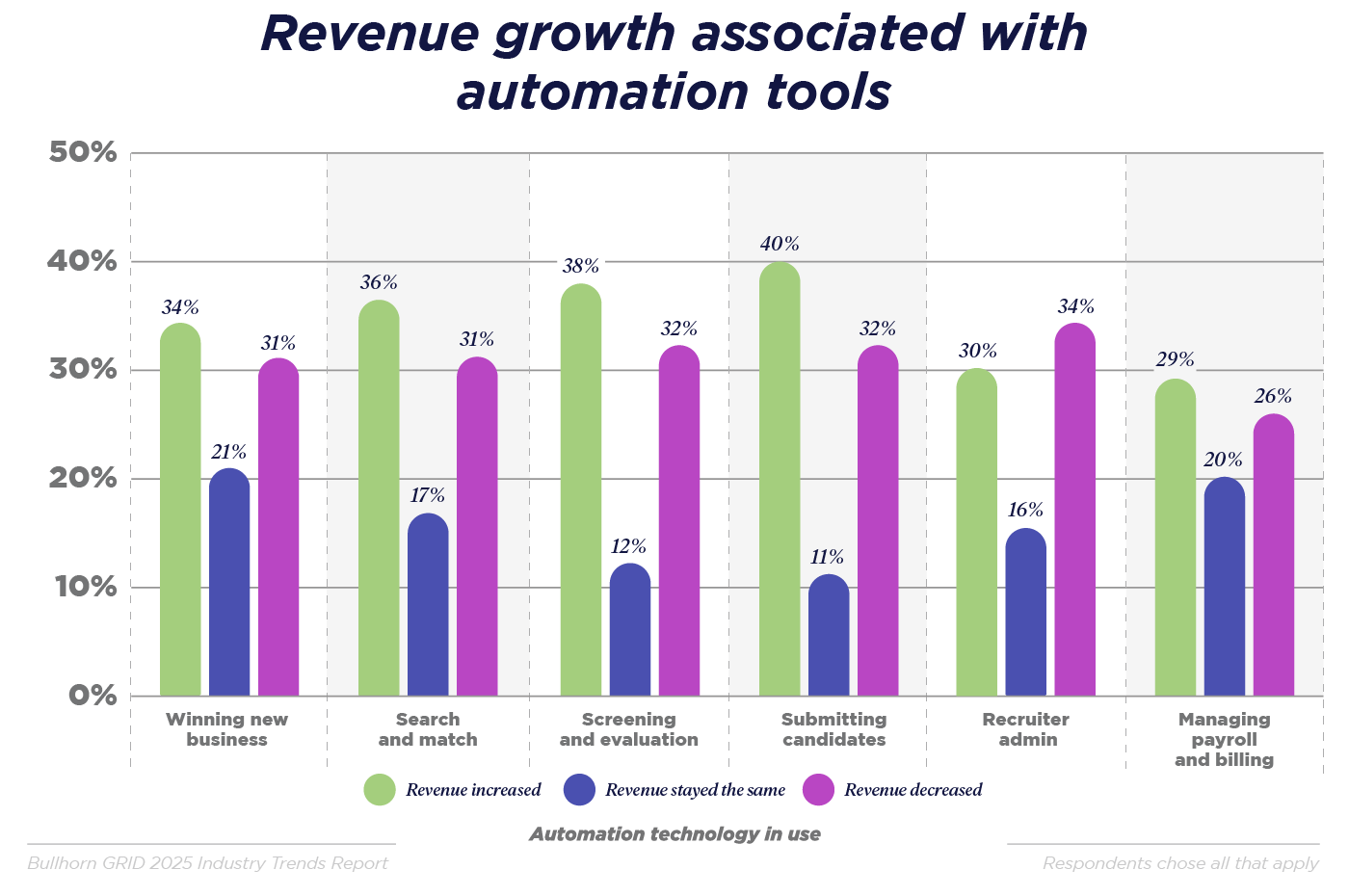
This year’s survey shows that automating key tasks does correlate with revenue growth — perhaps especially in these challenging economic conditions. The top-performing firms were 61% more likely to be in the advanced stages of digital transformation than those that saw the biggest losses, with automation being a crucial aspect of this digital transformation. And firms that automated key tasks were as much as 48% more likely to have seen revenue gains this year.
Still a long way to go in automation
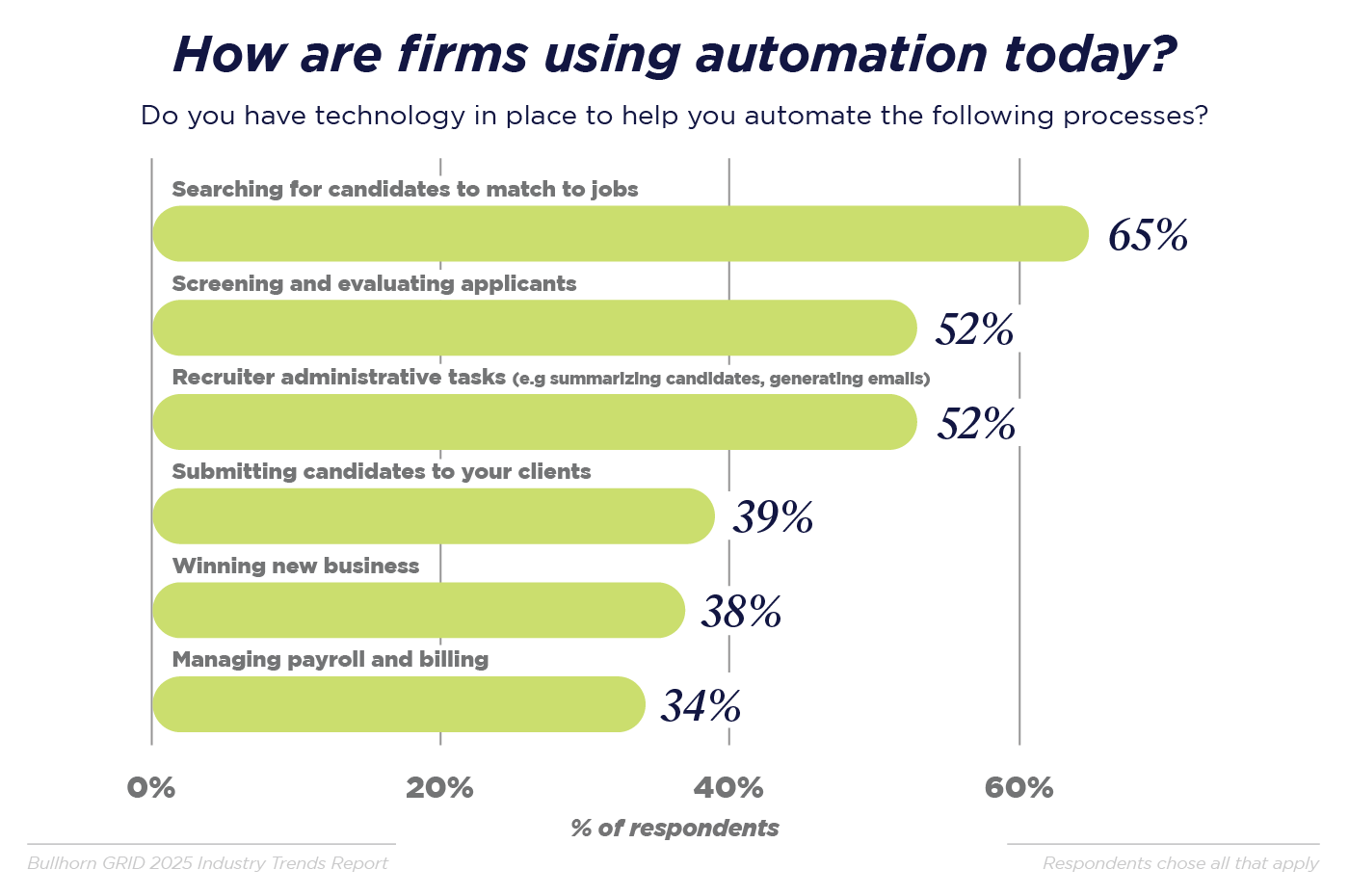
In spite of the operational and financial benefits, a substantial percentage of firms still don’t have technology in place to automate tasks like search and match or candidate screening— and there is an even bigger gap for sales and middle office. Although it is worth noting that light industrial firms are well ahead of the rest of the industry when it comes to automating screening and submitting as befits its focus on speed and volume.
Overall, these results align with the finding that digital transformation efforts have largely stalled as the recruitment industry has slowed down. For the first time since 2023, the number of firms that say they are in the advanced stages of digital transformation has actually fallen, from 28% last year to just 19% this year. This likely reflects the advent of AI technology that has upped the ante on what digital transformation entails. Now that the recruitment industry appears to be stabilizing at lower volumes and a slower pace of growth, productivity and efficiency will be more important than ever. Technologies like these will offer an opportunity for teams to work more efficiently as the economy stabilizes. And firms that were in the advanced stages of digital transformation were 61% more likely to have seen revenue growth in 2024.
Shift scheduling and pay/bill apps are most used by light industrial firms
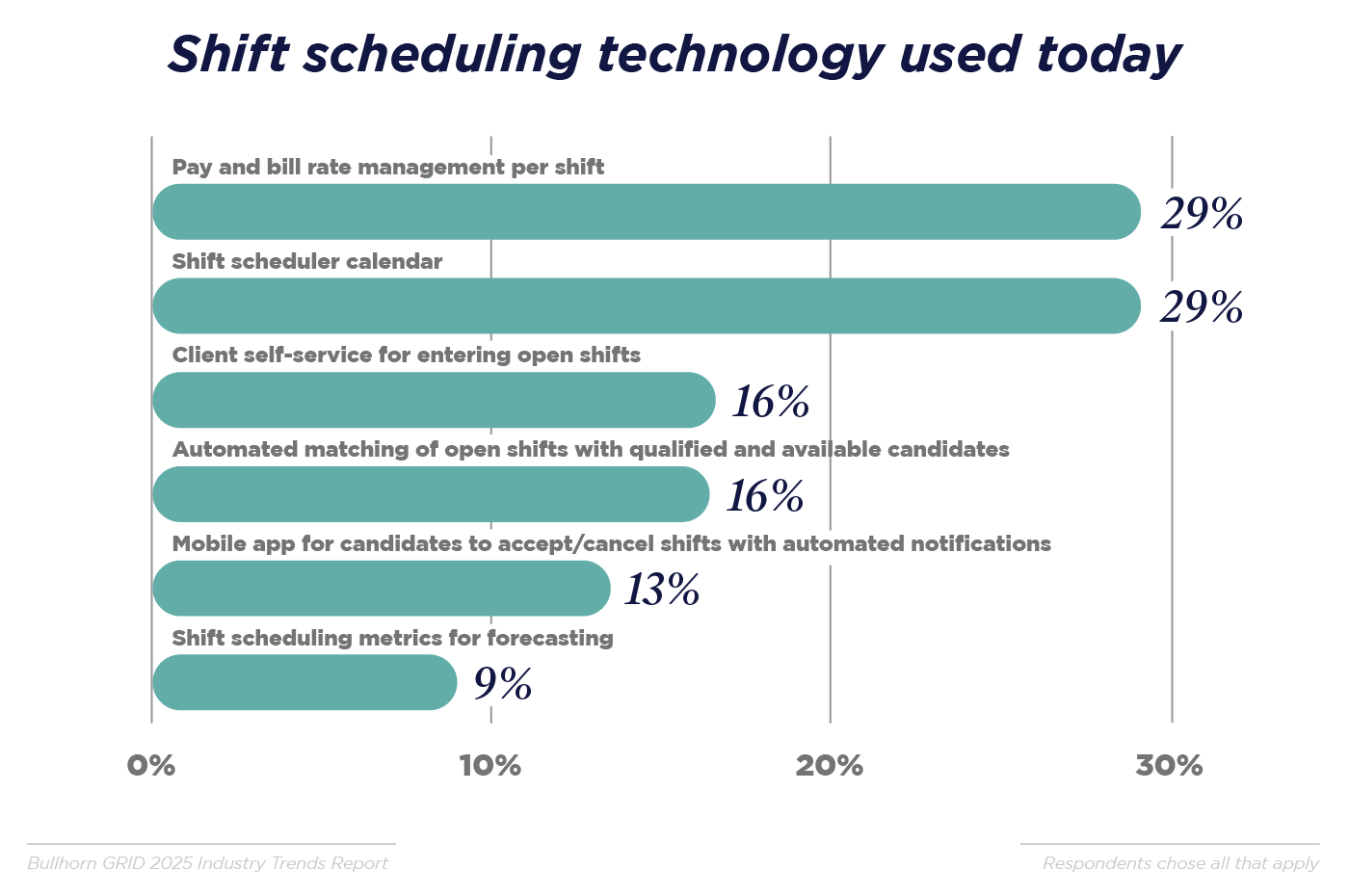
Today’s firms are leaning on automated tools to schedule, reschedule, and manage shift placements — but perhaps not heavily enough. 43% of firms that use a shift scheduler calendar saw revenue growth in 2024 as opposed to only 27% of those who did not use this technology. As firms aim to scale up without adding headcount, these sorts of tools will be increasingly important, but less than one-third of firms are using any of these tools. And not even 10% are using them to analyze and forecast to improve scheduling efficiency in the future.
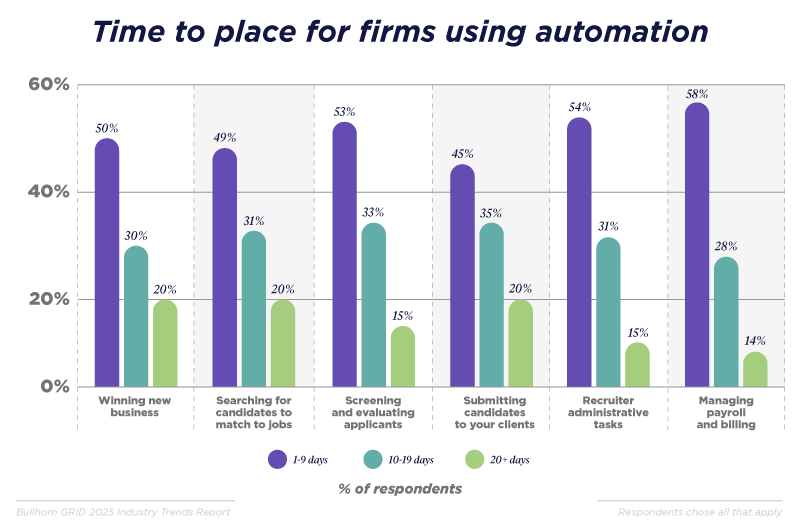
Automation critical to faster placement time
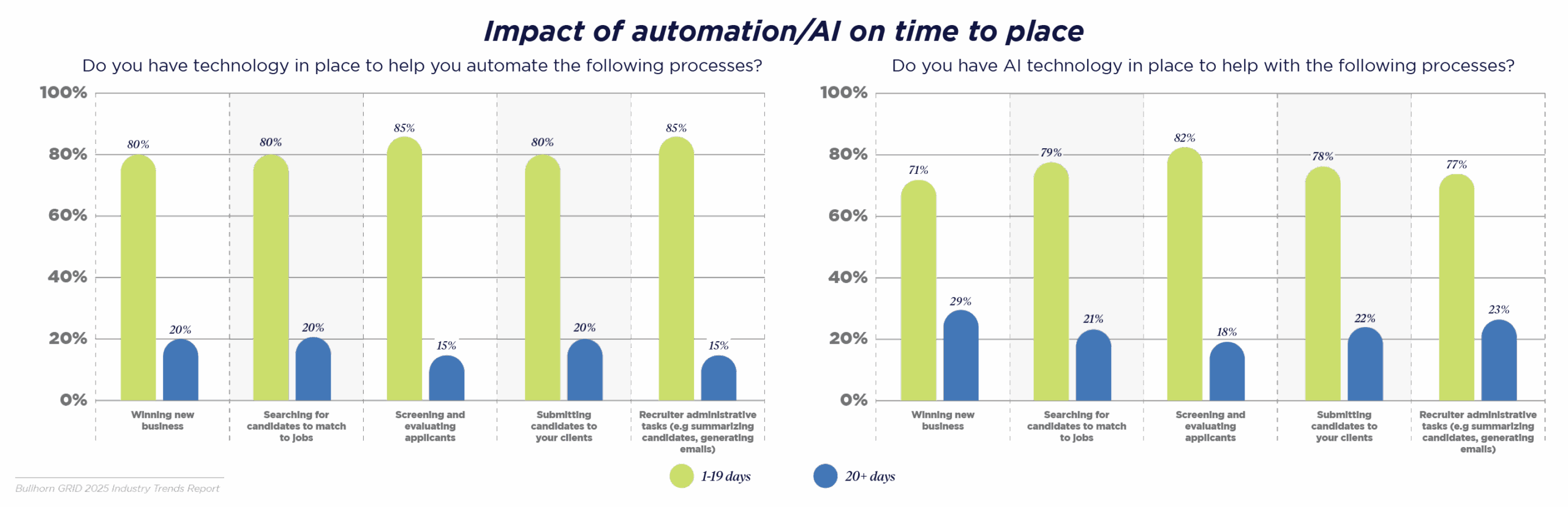
Automating key tasks in the recruitment process clearly results in faster time to placement. Firms that have automated searching for candidates are almost 1.5 times more likely to have an average placement time under 10 days, rather than 20+ days. Across the board, automation seems to mean faster placement times, and that is with current automation tools — AI recruitment agents are only going to widen the efficiency gap.
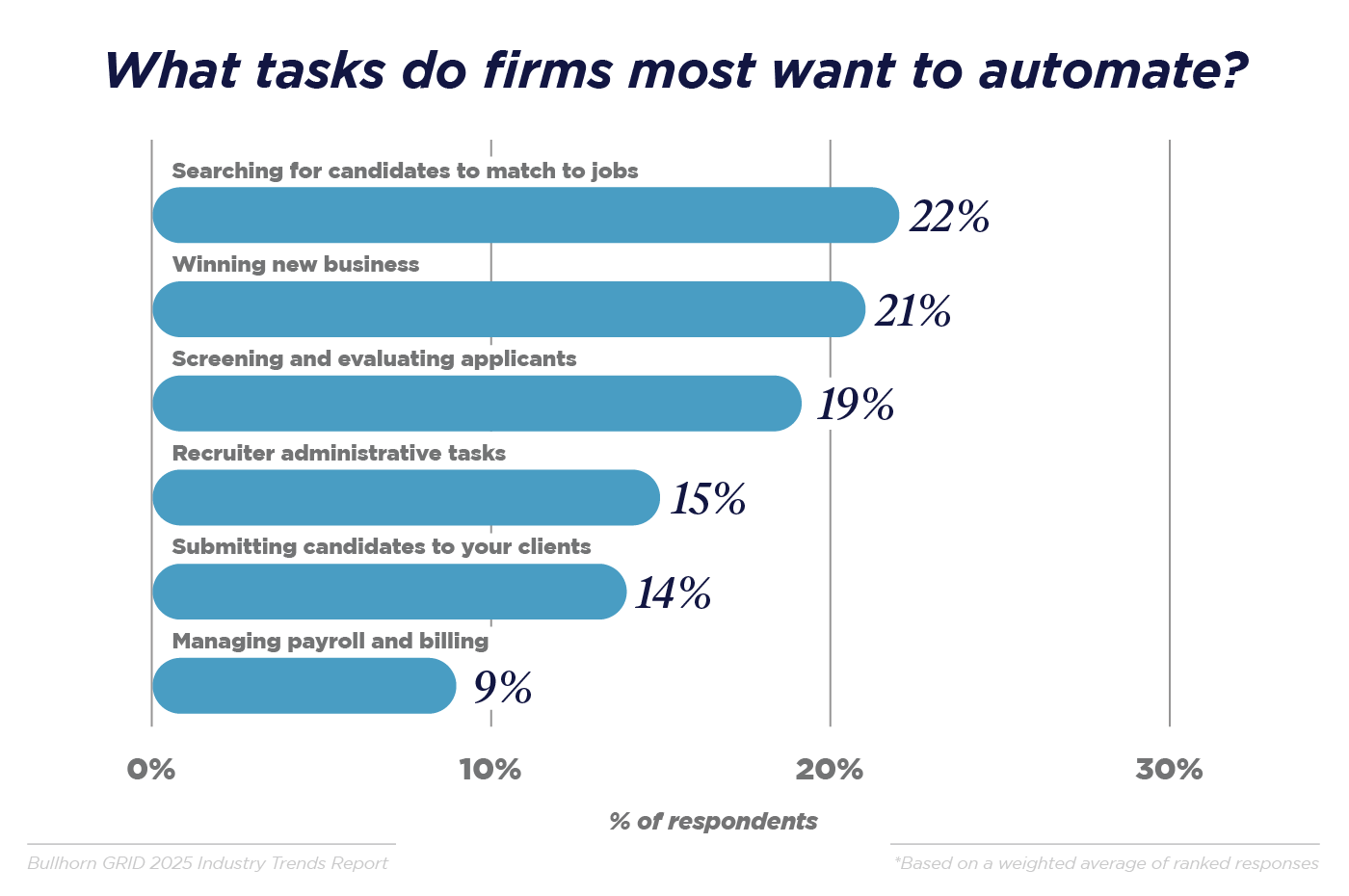
Search and match tops the automation wishlist
When asked to rank which of their day-to-day processes they would most like to automate, firms chose searching for candidates and matching them to jobs. A close second was winning new business — this is not surprising given the current market and what respondents said about their priorities for 2025. Across the recruitment industry, search and match is largely seen as the most valuable use case for both automation and AI. Again, this is not surprising since respondents also list this as the most time-consuming task performed by their recruiters; the survey found that a recruiter spends 14.8 hours per week searching for the right candidates, based on a weighted average of the survey responses.
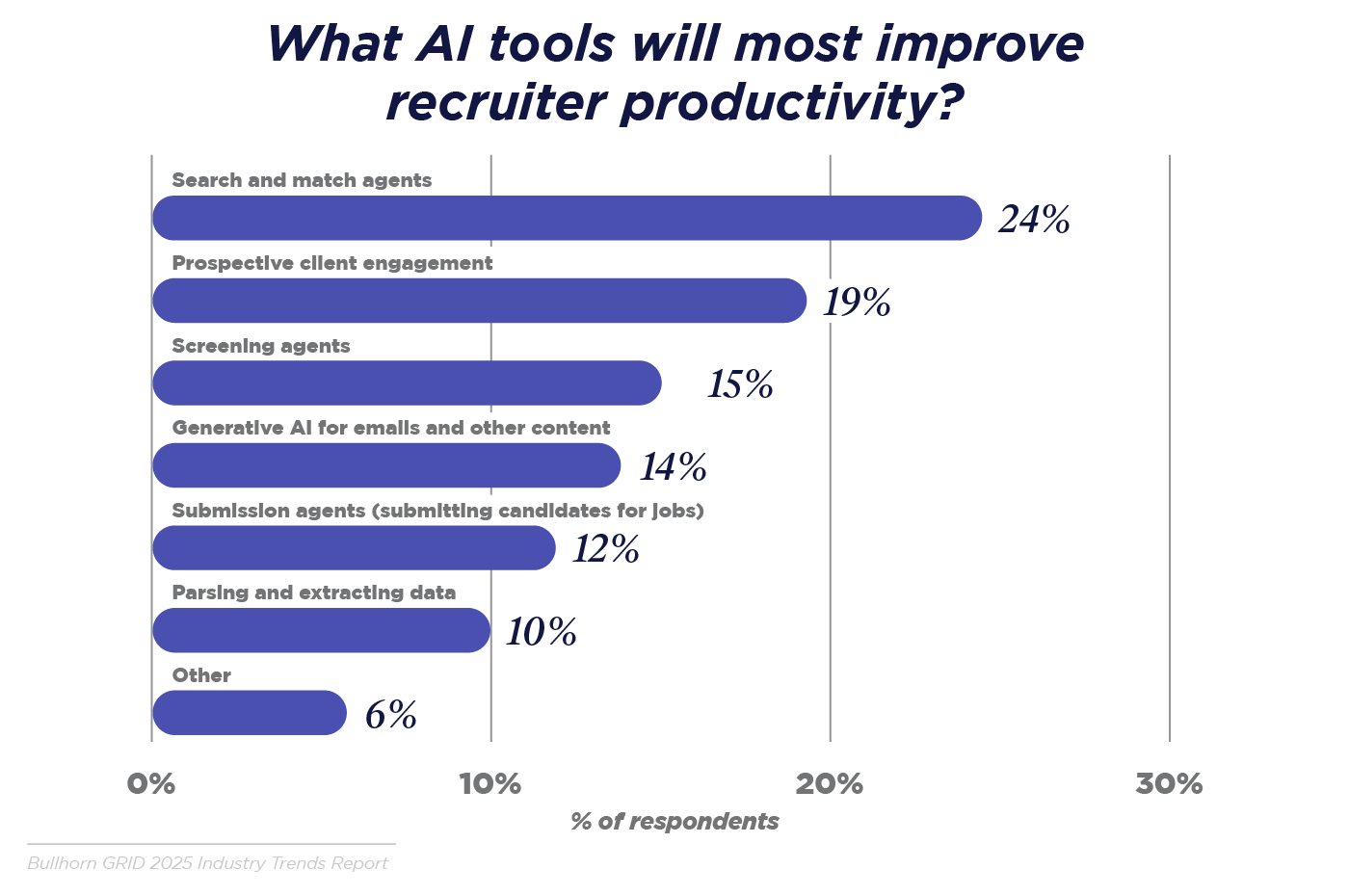
Recruiter admin and search/match are top use cases for AI today
A little less than half of firms have been using AI tools like ChatGPT to help with recruiter tasks such as generating emails and summarizing candidate skills. And half of firms are already experimenting with AI to sort through candidate resumes and submissions to find the best ones to screen for individual jobs. In speaking with firms, most feel search and match is likely to be the first and perhaps best use case for AI, especially when recruitment-specific tools trained on their own data are available — 24% of those surveyed listed search and match agents as the future recruitment tool they expected to have the biggest impact on recruiter productivity, by far the most popular answer.
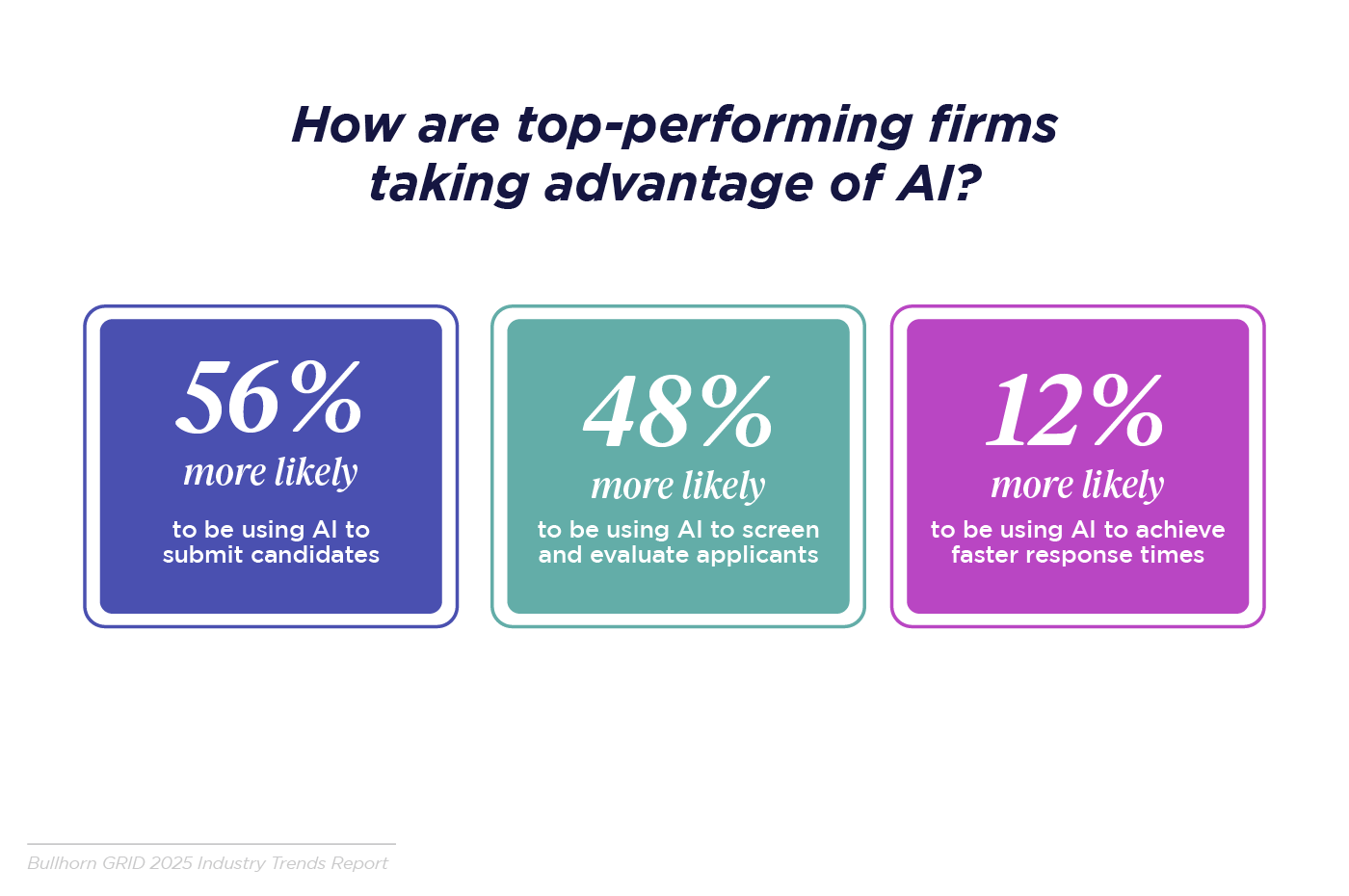
AI adoption correlates with higher revenue
Firms that reported revenue gains in 2024 were more likely to already have AI in place to help with key tasks like matching candidates to jobs and screening candidates. And those choices are already yielding clear benefits. As AI for recruitment becomes more sophisticated, these differences will likely become even more stark, especially with 30% of firms saying recruiter productivity is the biggest obstacle to reducing expenses.
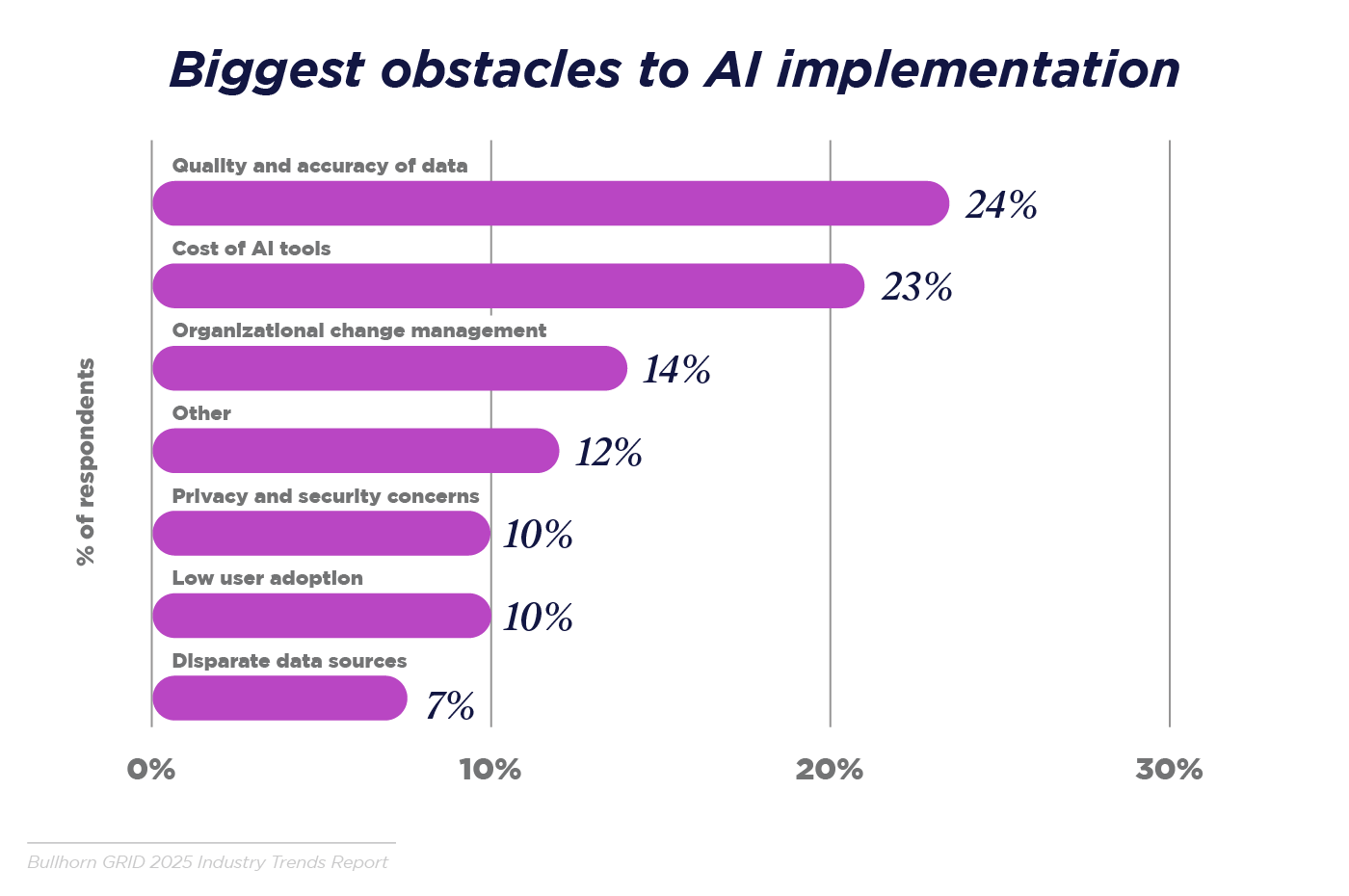
31% of firms say data limitations are the biggest barrier to AI benefits
When asked what stands in the way of widespread AI implementation, firms overwhelmingly cite data-related concerns, either siloed systems (7%) or the underlying data hygiene (24%). This echoes anecdotal feedback from recruitment firms that there is a lot of data clean-up and data governance work that needs to be done to really reap the rewards of AI in recruitment. It is likely that this work, driven by AI, will be the push the industry needs to make significant progress on its digital transformation journey. It is worth noting that light industrial firms are more concerned about cost and change management than the rest of the recruitment industry.
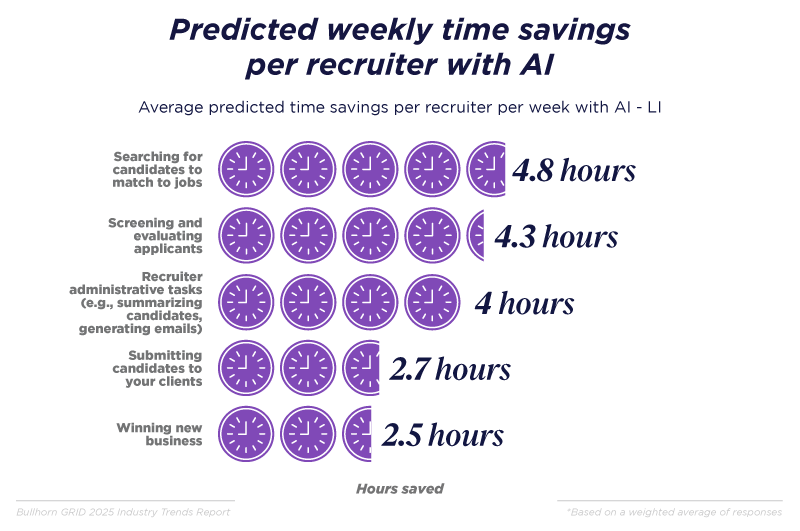
Firms predict AI search and match could save each recruiter 4.5 hours per week
When asked how much time recruiters currently spend on common tasks and how much time AI could save them, it is clear that firms expect a significant impact from AI tools. With responses suggesting 4.8 hours per week time savings from search and match, and 4.3 each for screening and administrative tasks, the effect adds up quickly. Screening agents are expected to save more time for light industrial firms than any other part of the recruitment industry.
Firms predict that AI infused throughout the recruitment workflow could result in an extra 18 hours per week for each recruiter — and we think that estimate may actually be low. The operational and financial benefits to be gained align perfectly with the value firms indicate they expect to see from AI, with 21% saying they hope to see increased recruiter productivity and 21% looking to scale without adding headcount.
Firms are clear that AI must enhance, not replace, the human aspect of recruitment
A recurring theme across all our conversations with recruitment executives this year was the importance of balancing technology with the human touch and specialized expertise. Several of the executives we spoke with made it clear that, in order for AI to work for them, it would have to be highly customizable and trained on their data, allowing each firm to leverage its own “secret sauce,” while accelerating and streamlining their workflows. Additionally, everyone was clear that AI is a tool to speed up how quickly recruiters can connect with the right candidates, so they can focus on the relational work that made them want to join this industry in the first place, preserving the differentiator that really attracts and engages talent for the long run.
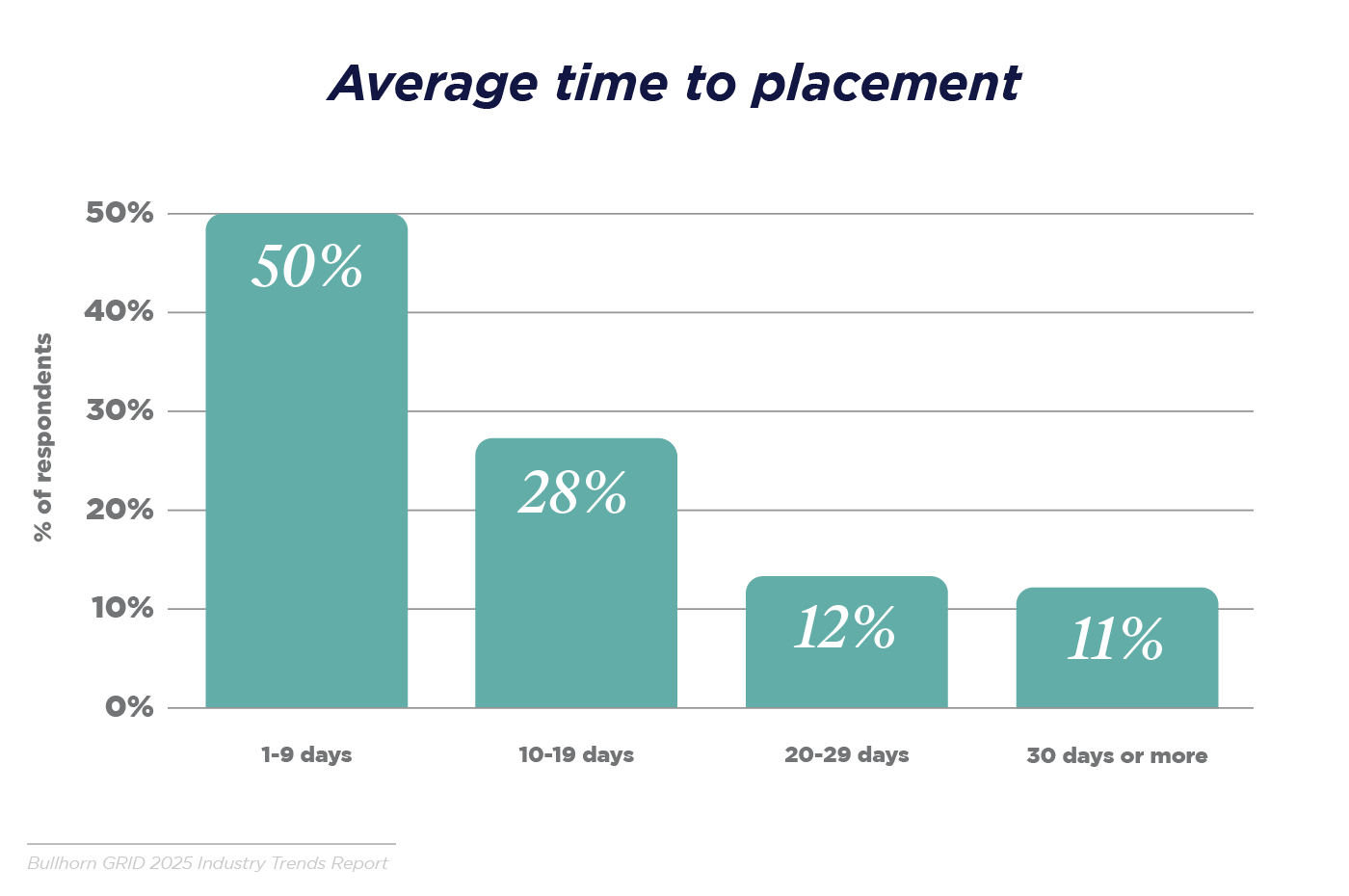
Keeping time to place under 10 days leads to revenue gains
According to the 2024 GRID Light Industrial Talent Report Spotlight, 78% of candidates want to be placed in less than 20 days — and 37% in 1-9 days. But how are firms doing at meeting that benchmark? 78% report an average placement time of less than 20 days, and 50% in 1-9 days. Revenue winners are 52% more likely to be under the 10-day day threshold.
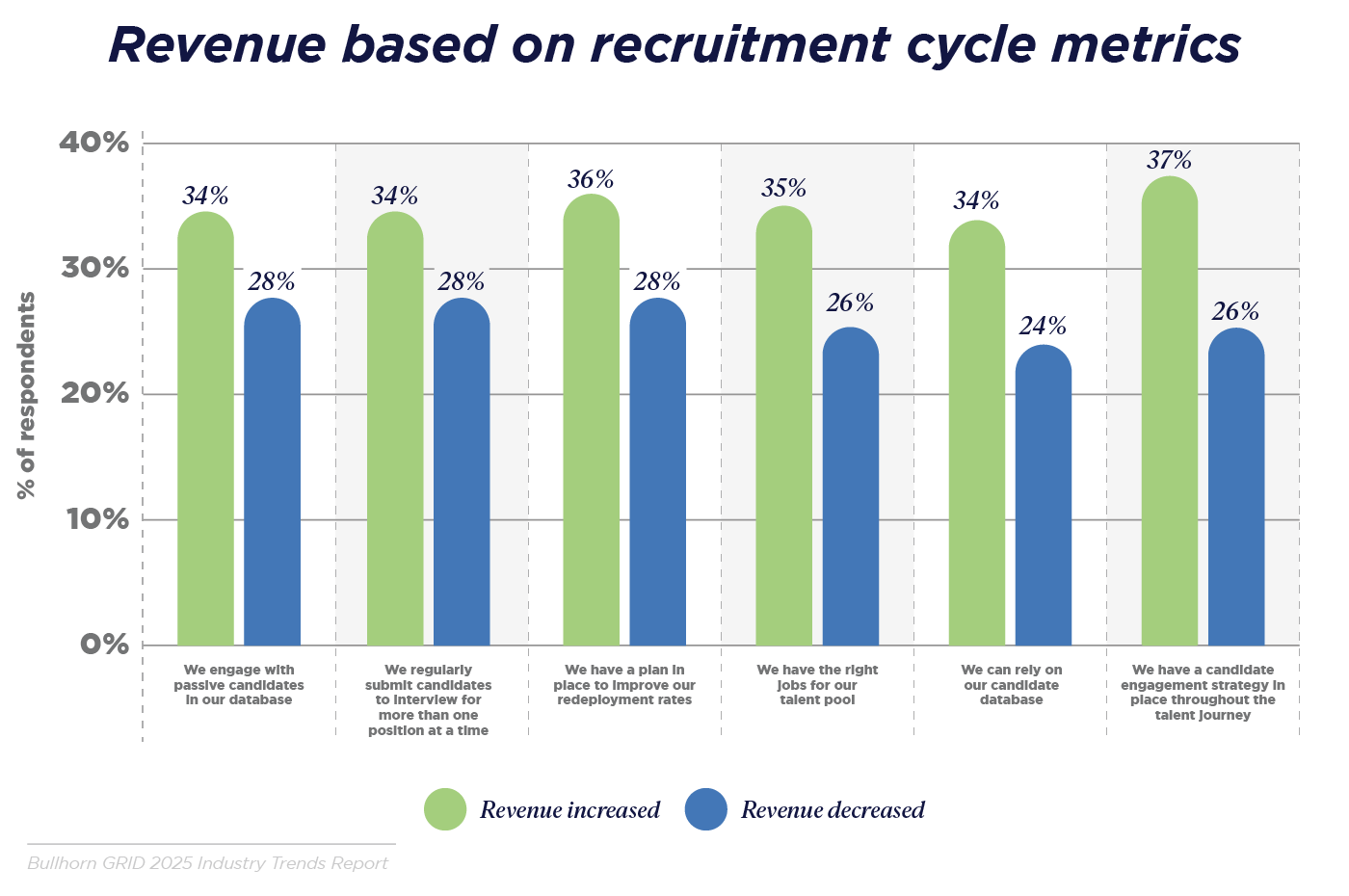
Firms that delight talent throughout the cycle are twice as likely to see higher revenue
Engaging candidates, having the right job matches, and readily redeploying top candidates clearly result in satisfied talent, but also yield decisive revenue gains. In every category, these engagement and productivity strategies make significantly more likely that firms saw revenue gains in 2024 — sometimes as much as 40% more likely. The win-win is clear — and AI agents are just going to make these gains even easier to achieve.
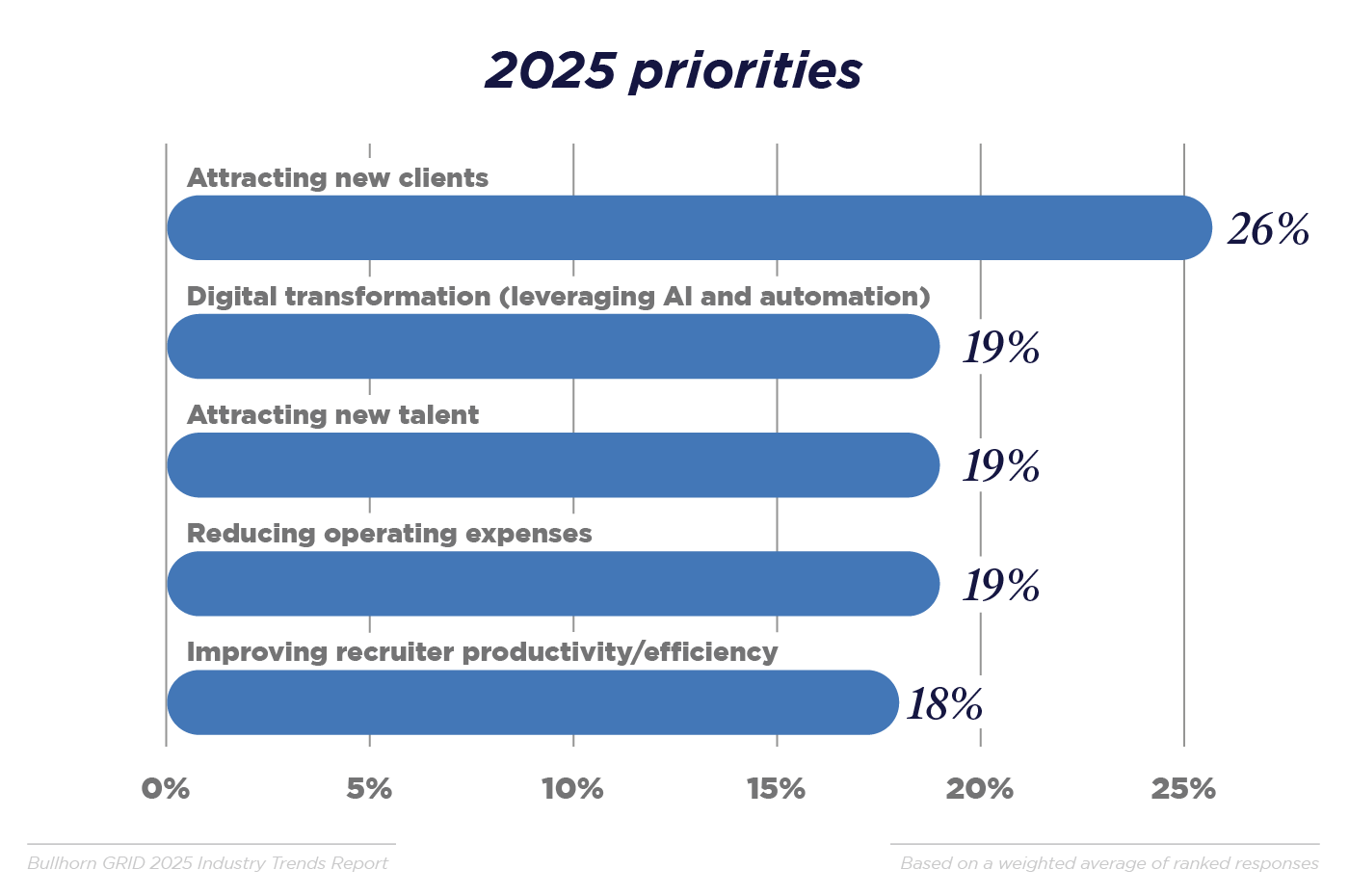
Attracting new clients remains top of the list
As has been true for the past two years, the top 2025 priority for a quarter of firms is attracting new clients, which is not surprising as the recruitment industry seems to be plateauing at a lower level than a few years ago. The next two priorities also remained the same as in 2024: attracting new talent and digital transformation. As we have seen in the rest of this report, AI and automation remain some of the best ways to achieve these goals.
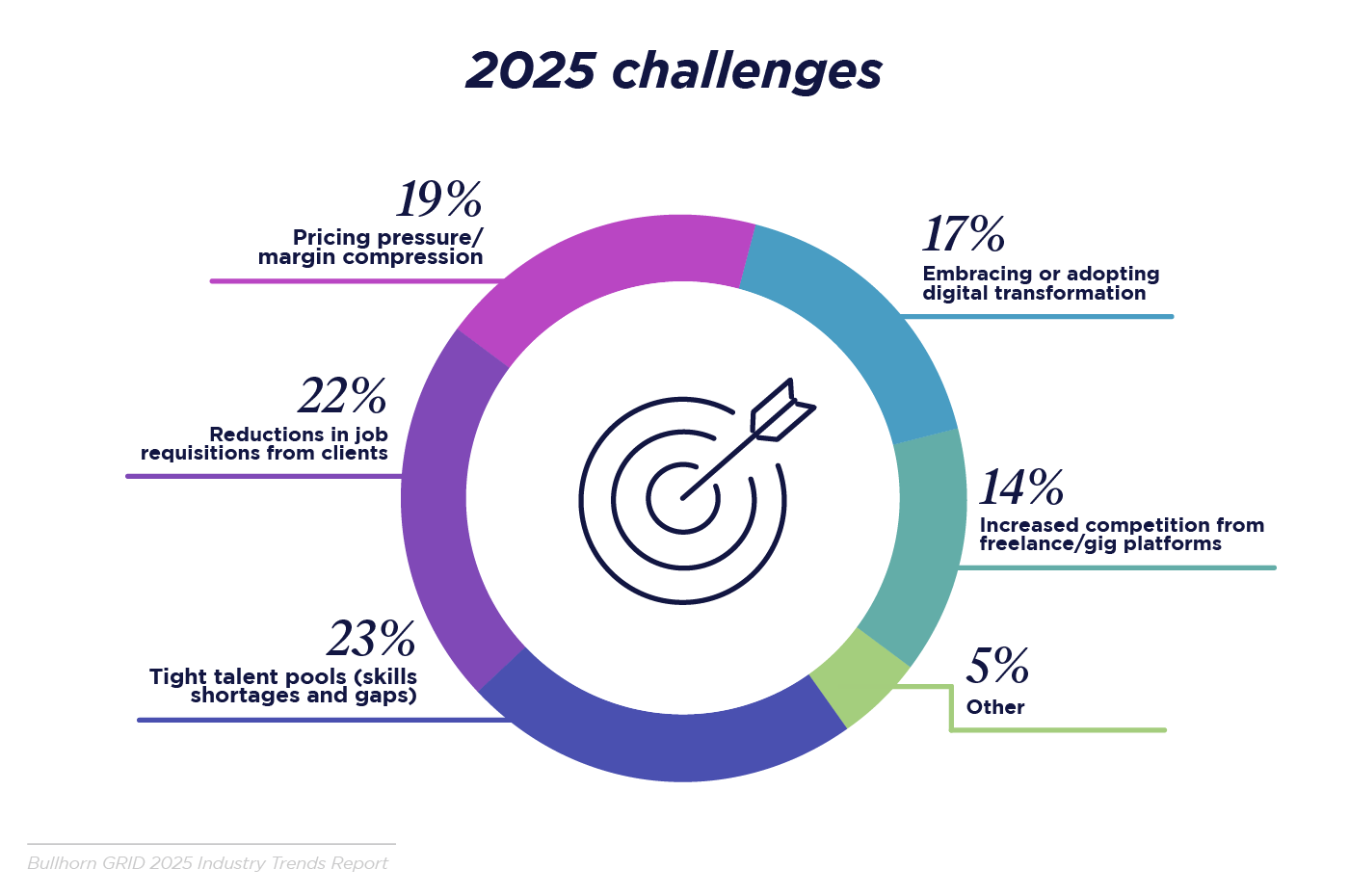
Tight talent pools remains highest concern in spite of fewer jobs
Falling job volumes and tight talent pools tied for the top challenges facing light industrial recruiting in 2025 — an apparent contradiction that has persisted for two years now. Even in the face of fewer job requisitions, there are still not enough candidates with the right set of skills to fill the jobs that are out there. This market context, which includes significant pricing pressure from clients, makes it even more important for firms to rely on technology to achieve the productivity and efficiency recommended in the rest of this report, especially when it comes to placing unskilled commercial workers.