




















The role of recruiters in the age of AI
The recruitment landscape is evolving at a breakneck pace, driven by the advent of AI. Keeping up with the latest innovations in technology isn’t just about speed; it’s about evolution, empowering every recruitment professional to achieve more.
With this industry-wide shift comes a change in the role of the modern recruiter. What will the day-to-day work of your recruitment and sales teams look like, powered by AI? What does AI look like when integrated into your teams’ workflows? How can you measure the success of the next-generation recruiter?
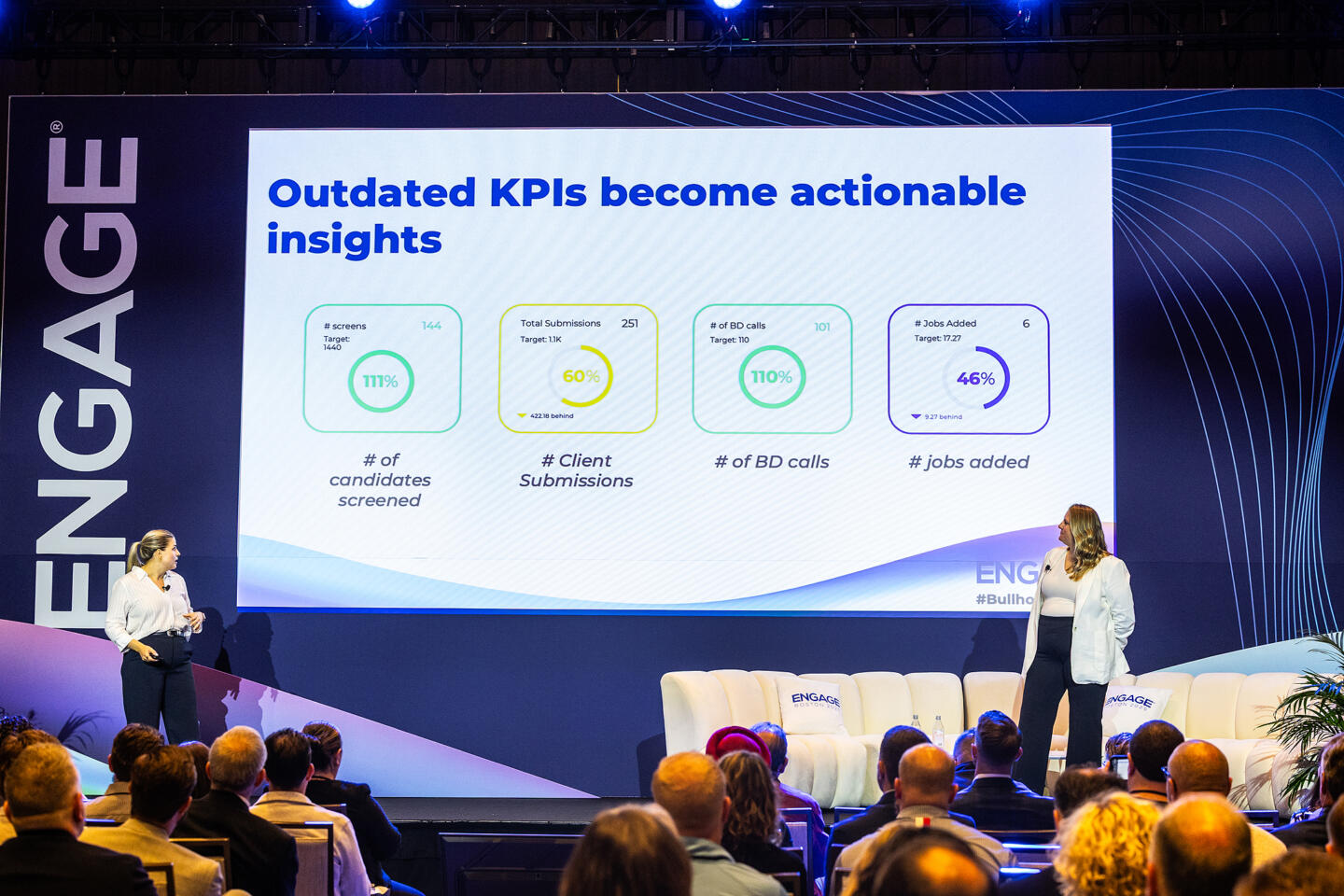
Bullhorn AI experts Laura Bumby and Nicole Krensky dove into these questions and more at Engage Boston 2025. Below, read their thoughts on the evolution of AI, the three pillars of AI adoption, and the KPIs your team should track to drive success.
A new era of empowerment
Think back to 19th-century Northern England, where weavers, fearing the introduction of automated knitting machines, destroyed the very tools that could enhance their craft. Followers of a leader known as “Ned Ludd”, these skilled workers — now better known as Luddites — lashed out due to fear that stemmed from a lack of support and understanding. Fast forward to today, and we see a similar sentiment around AI in staffing. Many firms are experimenting, but only a fraction are fully committing. Why? Often, it’s the fear of the unknown, the worry that technology will replace human skill.
But what if, instead of being thrown a new tool and told “use this,” recruiters were brought along for the journey? What if they were shown how AI amplifies their existing talents, allowing them to focus on the high-value, human-centric aspects of their role? That’s the promise of the next-generation recruiter. It’s about leveraging innovation to empower, not displace.
Now is the time to embrace innovation. Attracting clients remains paramount, candidates expect placement in less than 20 days, and recruiters are spending too much time on inefficient tasks, according to Bullhorn’s GRID research on both talent and recruitment professionals. AI-powered recruitment tools are designed to address these challenges head-on, transforming the recruitment funnel and the very nature of a recruiter’s day.
From top-of-funnel chaos to high-value engagement
Today, recruiters often find themselves sifting through a deluge of candidates at the top of the funnel, with only a small percentage ultimately leading to placements. This isn’t efficient. AI tools shift that focus, allowing recruiters to spend more time with the candidates most likely to succeed.
Imagine this:
- The old to-do list: Sifting through irrelevant emails, writing offers for candidates already placed by competitors, manually entering notes, explaining job descriptions already online, and endless scheduling back-and-forths. This is the manual, low-value work that bogs down even the most dedicated recruiters.
- The new to-do list: Reviewing AI-matched talent, preparing for client calls with enriched data, interviewing pre-screened and self-scheduled candidates, and monitoring and refining autonomous AI activities. This is where the magic happens – where human expertise is applied to pre-qualified opportunities, leading to significantly higher placement rates and more impactful conversations.
This shift isn’t just about automation; it’s about orchestration. Recruiters will become skilled managers of AI, directing its energies to handle the repetitive, time-consuming tasks, freeing themselves to focus on building relationships, negotiating, and strategizing.
The three pillars of success: Context, action, and impact
To truly embrace this new era, firms should rely on three key pillars:
1. Context: Assessing your existing workflows
Before diving into new technology, take a critical look at your current operations.
- Where are your recruiters spending their time today? Is it at the top of the funnel, drowning in unqualified candidates, or are they engaging with high-potential talent?
- Where do you want human expertise to shine? Identify the tasks that absolutely require human intuition, empathy, and strategic thinking.
- Where can AI be most beneficial? Pinpoint the workflows that are repetitive, data-heavy, or require rapid processing that AI can handle with ease.
Every staffing firm is unique. Start small by experimenting with a single recruiter or a specific job type. Perhaps begin with AI-powered screening or content generation. The goal is to understand how AI and human expertise can best work together in your unique environment.
2. Action: Amplifying your recruiters
Staffing professionals are agile by nature, but agility alone isn’t a strategy—it’s a reaction. The next generation of recruiters requires a mindset shift driven by tangible results.
- From Boolean wizards to relationship builders: No longer do recruiters need to be master Boolean searchers. AI recruitment tools can handle the initial candidate search, allowing recruiters to focus on what they do best: building trusted relationships.
- Automated follow-ups, deeper connections: With user-driven AI and desk-level cadences, manual follow-ups become a thing of the past. Recruiters can now strategically engage with candidates and clients at key touchpoints, nurturing relationships rather than just chasing leads.
- Smart search and match: Instead of relying on outdated spreadsheets or memory, recruiters can leverage intelligent search and match capabilities to instantly identify the best-fit candidates, empowering them to act swiftly and decisively.
The key to driving this change is demonstrating results. When your teams see the tangible benefits — more impactful conversations, faster placements, and less administrative burden — they will embrace the evolution. Start with the most impactful functionality for your organization, whether it’s enriching job descriptions or candidate profiles, and iterate as you go.
3. Impact: Redefining your metrics
As your recruiters become more efficient and impactful, the traditional KPIs will need to evolve. It’s not just about raising the bar; it’s about redefining what success looks like.
Here’s how some standard metrics transform into actionable insights:
| Standard metric | New actionable insight |
|---|---|
| Number of candidates screened | Percentage of submissions screened by AI screener, and the placement rate from those screened submissions. |
| Number of client submissions | Interview-to-placement conversion rate with a specific client. |
| Number of business development calls | Identification of current or past clients with placement history but no recent contact. |
| Jobs added | Categorization of jobs added with no interviews booked (e.g., “A-level” jobs with no activity). |
These new metrics help identify untapped opportunities, pinpoint where resources should be directed, and ultimately, unlock revenue without necessarily increasing headcount.
Embrace the evolution
The biggest takeaway? Just get started. Don’t wait for perfect data or a flawless plan. The rapid adoption of AI tools proves that results drive engagement. Embrace experimentation, communicate openly with your teams, and gather feedback.
Think of AI not as competition, but as a tireless, incredibly capable teammate. AI isn’t replacing humans; it’s replicating the skills of top performers and making them accessible to everyone. It’s a tool that empowers recruiters to be even better at what they do — to focus on the human connection that only a person can truly master.
The next-generation recruiter is here — and ready to embrace the next wave of innovation by collaborating with AI, orchestrating its power, and unlocking unprecedented levels of success.