




















Momentum slows in May, but temp hiring holds its ground
After a strong start to 2026, May arrived with a more cautious signal. Both temporary and permanent hiring pulled back during the month, and the data points to real pressures on employer confidence, including inflation, geopolitical uncertainty, and a general reluctance to commit to new headcount without a clearer picture of the second half of the year.
Bullhorn Insights’ Hiring Outlook draws on proprietary data across thousands of staffing firms globally and tracks the indicators that matter most to staffing leaders, including job order volume, fill rates, and recruiter effort across both permanent and temporary segments. What May’s data reveals isn’t a market in retreat. It’s a market that’s pausing to take stock, even as some underlying indicators remain more resilient than the headline numbers suggest.
Here’s what the data shows, and what it means for how firms should be thinking about strategy heading into summer.
Temp orders pull back, but year-over-year strength holds
Two consecutive months of declines in temporary job orders would normally prompt concern, but context matters here.
Temp job orders are still 3% above their May 2025 level, which means the gains made earlier in 2026 haven’t been fully erased. The month-over-month softening likely reflects clients pausing to reassess rather than pulling back entirely. Inflationary pressures and uncertainty tied to the ongoing conflict in the Middle East appear to be weighing on near-term hiring decisions.
What’s worth watching is that fill rates declined for the first time this year. If clients are slower to commit to new roles and existing openings are taking longer to fill, that combination could put pressure on revenue in the second half of the year for firms that don’t adjust their strategies now.
Permanent hiring slows with less runway to recover
The permanent picture is more subdued. A 7% month-over-month drop in perm job orders, combined with a year-over-year decline of 4%, suggests employers are more cautious now than they were earlier in 2026.
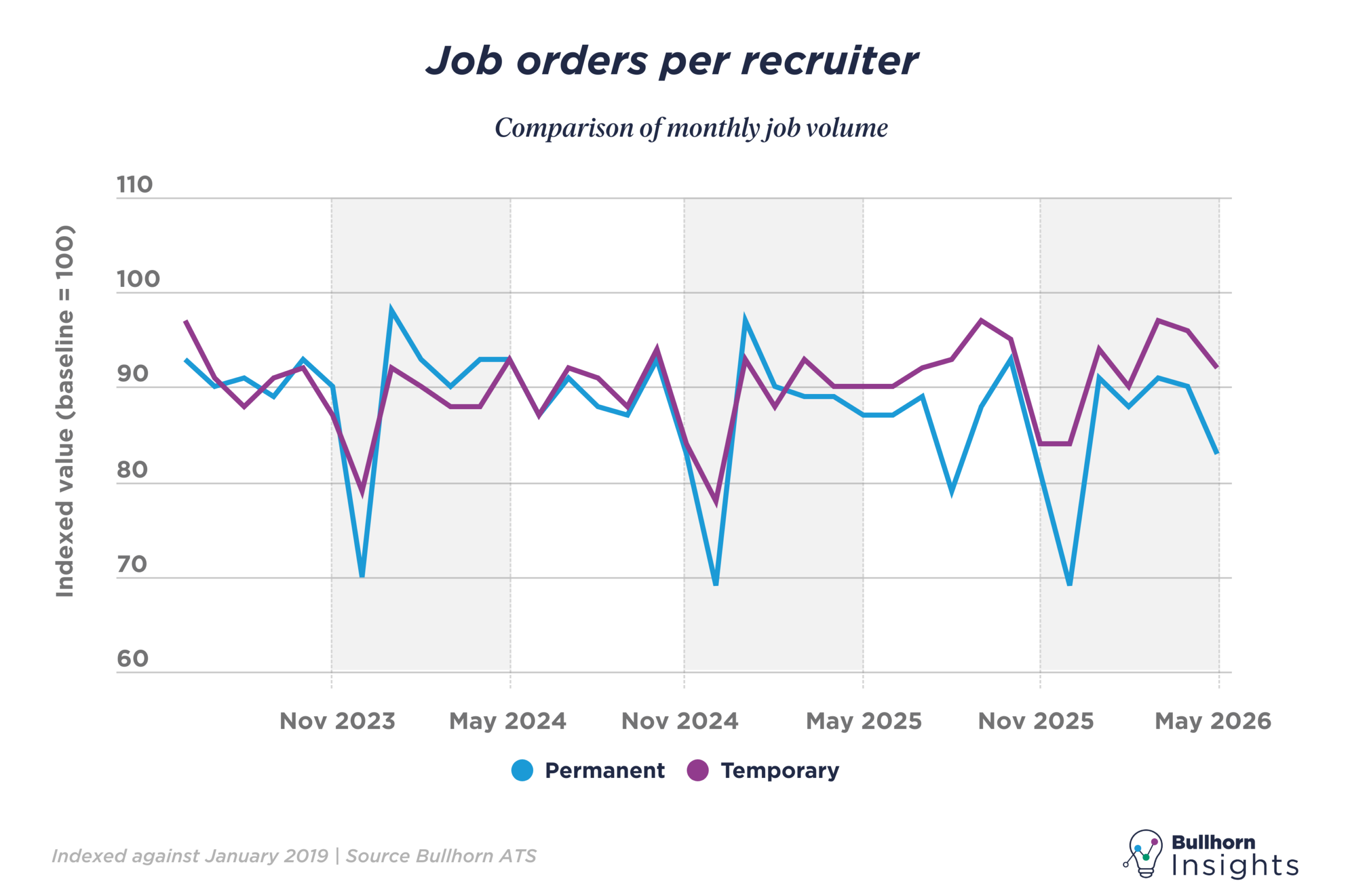
That said, the slowdown isn’t making life harder for recruiters day-to-day. Job fill rates and recruiter effort remained steady in May. Employers are still motivated to close the roles they have open, and recruiters are delivering without having to work significantly harder to do it.
This reflects something that’s been consistent throughout 2026. Employers are opening fewer permanent roles, but when they do, they’re committed to filling them. That’s a different challenge than a market where demand is high but nothing is converting.
What fill rates and recruiter effort are really signaling
Across both permanent and temporary hiring, fill rates and recruiter effort tell the same story right now.
Perm fill rates are still up 11% year-over-year, which reflects how much more efficiently the market has been running in 2026 compared to 2025. Recruiter effort is stable, meaning firms haven’t needed to work significantly harder to keep placement activity going.
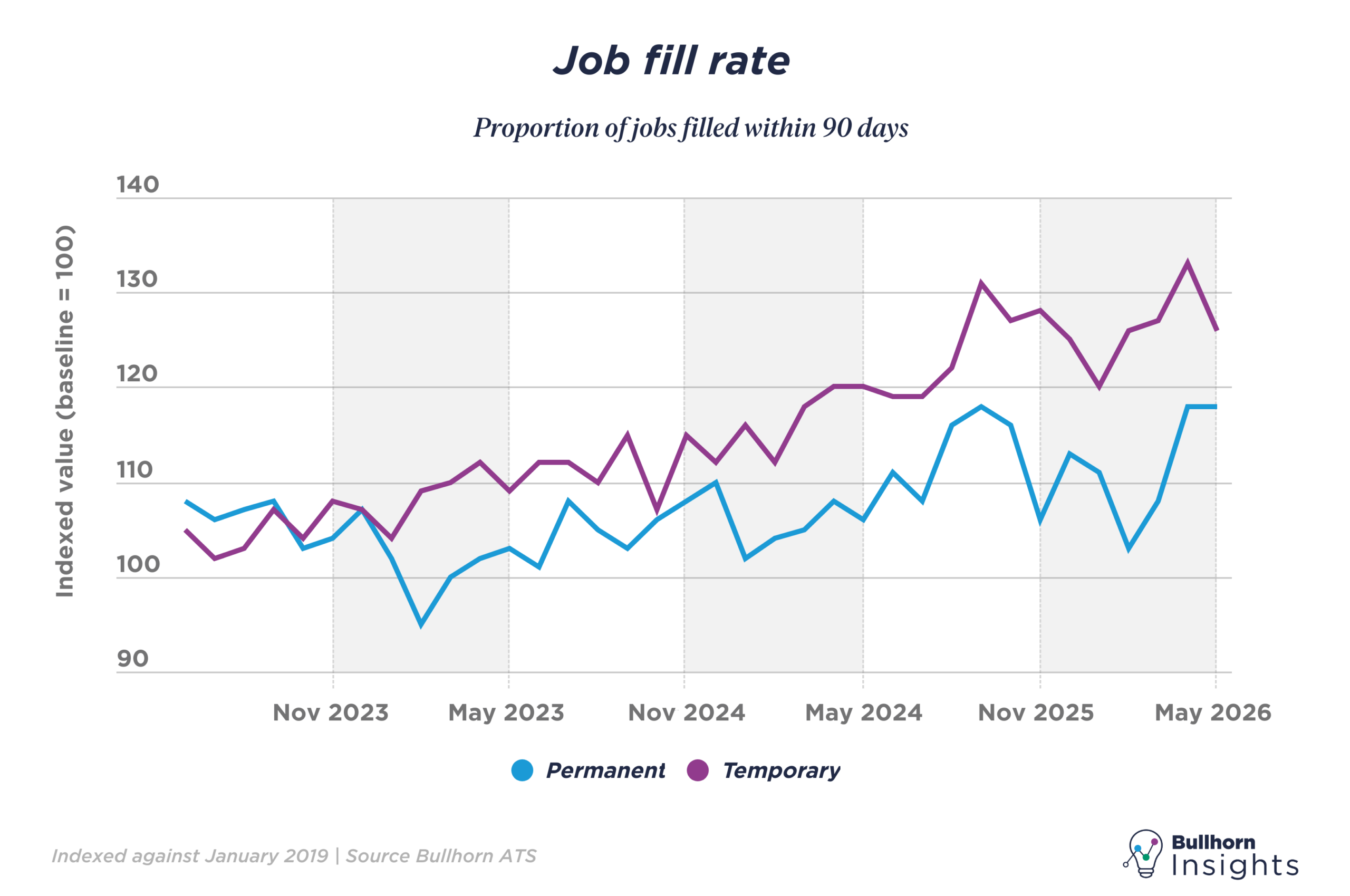
Together, these numbers suggest staffing firms have found a more productive rhythm, even as order volume softens. The firms best placed to handle a slower summer are those that have built efficiency into how they operate, through better matching, faster screening, and more targeted outreach. When volume picks back up, those improvements will matter even more.
Reading the signals, not just the headlines
May’s data isn’t an alarm, but it is worth paying attention to. The softer numbers reflect real pressure on employer confidence, and that pressure isn’t going away quickly. The right response isn’t to wait for broad recovery. It’s to use the data available now to make sharper decisions about where to focus.
Firms with strong temp offerings are better positioned than those relying on perm volume to drive growth. Firms that have invested in recruiter efficiency will feel the impact of lower order volumes less acutely. And firms that track fill rates by segment rather than overall will be able to spot where demand is still moving before their competitors do.
Check back with Bullhorn Insights at the start of every month for the latest Hiring Outlook and the insights you need to stay ahead of the market.