




















From curiosity to commitment: Inside the C-suite AI decision
The staffing industry is full of leaders who are interested in AI. Fewer have actually committed to it. And fewer still have done the hard work of making it operational across their organizations.
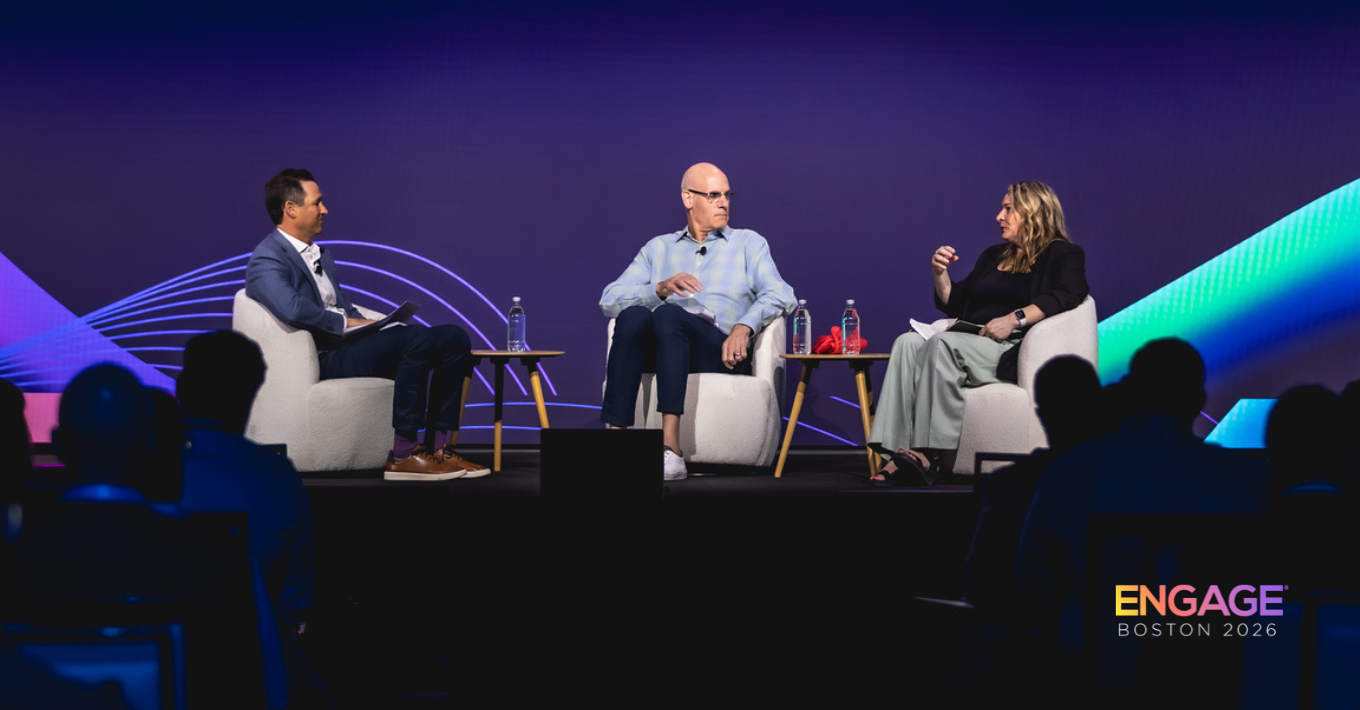
At Engage Boston 2026, Jason Niad, VP of product at Bullhorn, sat down with two executives who have made that shift: Wendy Kennah, COO of Procom Consultants Group, and Neil Bernstein, president and CEO of All Medical Personnel. The conversation wasn’t a strategy overview. It was an unfiltered account of what the C-suite AI decision actually looks like, funding conversations, resistant leaders, and the moments that made each of them certain they were on the right path.
Here’s what they shared.
The tipping point that turned interest into action
For both Kennah and Bernstein, the decision to invest in AI didn’t come from a single moment. It came from several things converging at once.
Bernstein’s path started with his own team. His recruiters were already using ChatGPT to sharpen job descriptions, resumes, and client communications, so the proof of concept was already sitting inside his organization.
But there’s a difference between a public LLM and AI embedded in your ATS with your own data behind it. Seeing Bullhorn Amplify on stage at Engage 2025 showed him what that potential looked like at scale. Approaching contract renewal opened the door to a broader conversation with their account team. Three things lined up, and the decision followed.
Kennah’s path started earlier and more experimentally. Procom began testing AI on document compliance in the summer of 2024, before they were on Amplify at all. Within months, time to onboard dropped 30% to 40% and compliance error rates fell to single digits. Those results didn’t require a business case. They made the next step obvious.
For leaders still evaluating, the lesson from both is the same. Early experiments build the organizational confidence that makes larger commitments easier to justify. When recruiters see results, they want more. When skeptics watch peers succeed, they want in.
Building the internal case for investment
Both leaders were personally sold on AI. Getting their organizations there required more than that. Staffing companies run lean, and new spend needs justification.
The more durable argument came from a strategic conviction both leaders shared: they needed to scale without adding headcount. Framing AI as a capacity lever, not a cost line, proved persuasive across both organizations.
“We wanted to make sure that we could scale without adding the headcount, and the only way we were going to do that was with operational efficiency.”
— Wendy Kennah, COO, Procom Consultants Group
Change management is the real work
Deploying Amplify is a culture shift, not a technology rollout. Both organizations treated it that way from the start.
For Bernstein, his leadership team was a relatively straightforward sell. They’d seen AI tools producing results and understood the opportunity. The harder question was how to bring the broader team along, which both he and Kennah knew would take more deliberate effort than a single announcement.
All Medical Personnel treated it as a company-wide initiative from the start. At their January all-hands kickoff, every employee received a t-shirt printed with “AI Ignite 2026.” Bernstein even made the hard call to transition out a senior leader who wasn’t technically comfortable and couldn’t credibly carry the message to their team.
Procom built a center of excellence where super users developed and tested each prompt more than a hundred times before broader rollout. Getting comfortable users in front of resistant ones moved the needle faster than any top-down mandate. The strategic conviction underneath both approaches was the same.
Both leaders landed on the same sequencing advice: start internal before going external. Resume formatting was their recommended first step, low friction, immediately visible results, and no candidate-facing exposure while the team builds confidence.
Early results that proved the investment right
At Procom, AI-powered document checking during onboarding cut time-to-onboard by 30% to 40% within months of launch. Compliance error rates, previously a double-digit problem, dropped to single digits. Catching issues at the point of document submission, rather than at the end of the process, meant candidates were saving time and improving the talent experience.
On the recruiter side, Procom’s AI-enabled new hires are now reaching their first billable placement in six weeks. Before Amplify, that milestone typically came at month three or four.
At All Medical Personnel, tasks that used to take an hour now take minutes. Recruiters have started naming their Amplify assistants and treating them like colleagues they can push back on and refine. That kind of personal relationship with the tool is a reliable signal that real adoption has taken hold.
What leading firms are building toward
The staffing firms that lead in 2027 won’t look like the ones that led in 2022. The sales motion is changing, the transactional recruiter model is giving way to something more strategic. AI is shifting away from being just a tool to the system of action recruiters run their day through.
Both Kennah and Bernstein see a near future where recruiters start their morning in an Amplify dashboard that already knows what needs attention, what’s closest to revenue, and where follow-up is overdue. That future is already here, and the gap between those building toward it now and those still evaluating will only widen.
Ready to start your AI journey? Click here to get started today.