





















What staffing leaders need to know: September 2026 hiring outlook and job market trends

Together, Bullhorn’s September Hiring Outlook and Job Market Trends data shows hiring expanding across industries and strength in permanent hiring entering Q4.
That growth is taking shape in different ways across the market. Manufacturing and construction continue to lead job opening growth by a wide margin, but the more surprising development this month is the recovery in technology and professional roles after a slow end to the summer. The strength also extends to permanent hiring, with job orders rising, while temporary hiring continues to grow at a slower pace than it has for most of 2026.
Employers are also shifting what they want from candidates. Networking has emerged as the top soft skill in job postings for the first time all year, as modern work, regardless of industry, requires much more collaboration and trust-building. Another trend worth paying attention to is the growing gap between opportunities for experienced and early career candidates.
For staffing leaders, September’s data points to where hiring demand is growing and where opportunity is concentrated entering the final quarter of the year.
Job openings are up across every industry, with manufacturing and construction leading by a wide margin
Every industry saw double-digit, year-over-year growth in job openings in September. That means hiring demand is growing across a broader range of industries, giving staffing firms more opportunities to place talent than they have had for much of the year.
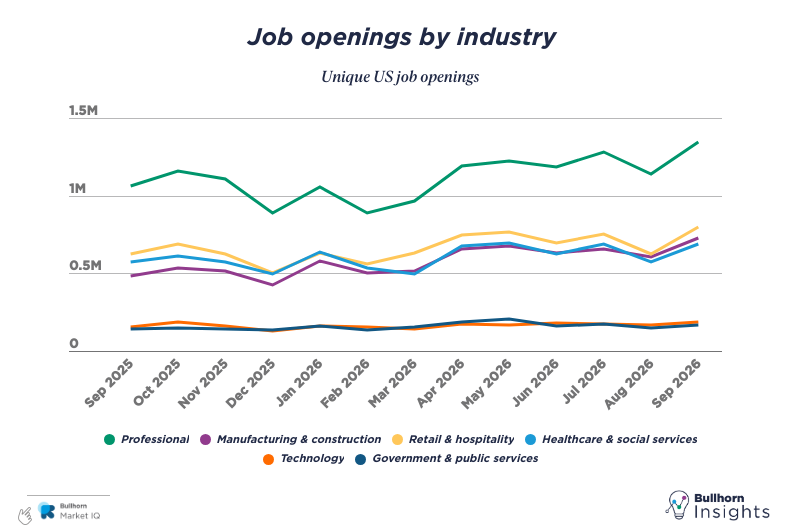
Manufacturing and construction are driving much of that growth, with job openings up 52% year over year. Continued construction spending, including the buildout of data centers across the U.S., is helping drive demand for the workers needed to support these projects.
Technology and other professional roles are also showing signs of recovery. After slowing at the end of the summer, job openings in these areas are up more than 20% year over year in September.
Permanent job orders rise as temporary growth pulls back
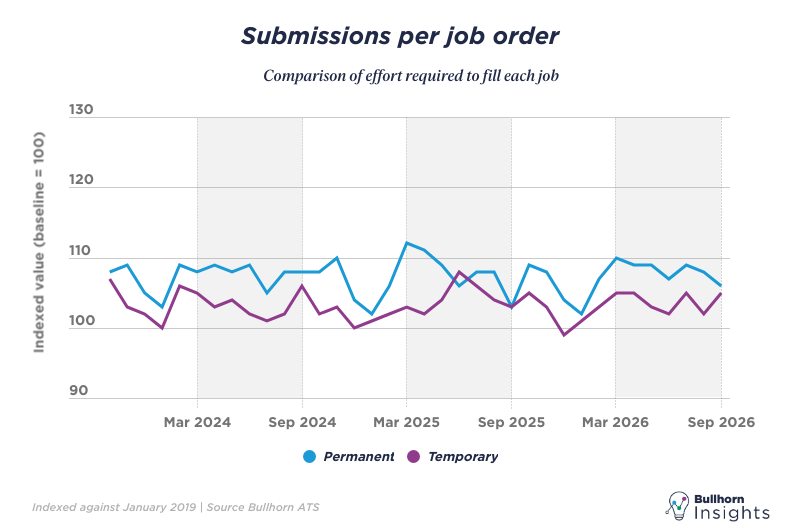
While temporary job orders showed signs of slowing this month, permanent job orders continued to gain momentum in September, rising 3% month over month. That increase outpaced the 2% average monthly growth seen in recent months, signaling that employer demand for permanent talent continues to build.
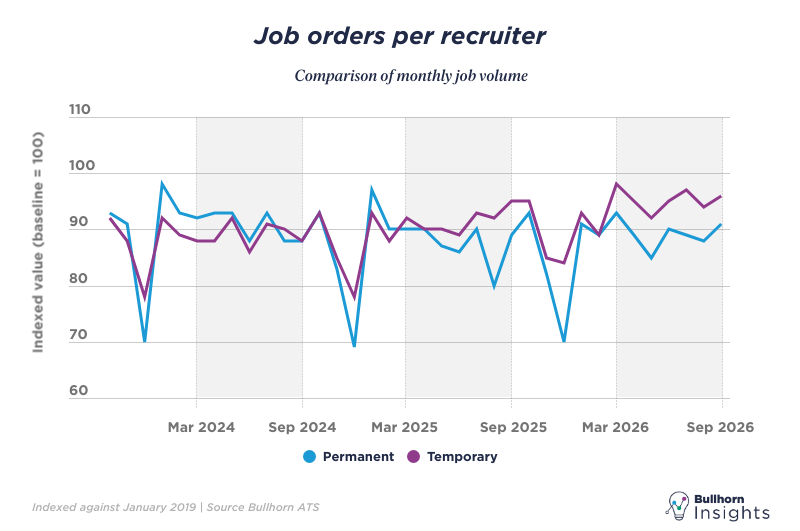
Although submissions per job order declined in September, continuing a six-month trend, they remain slightly above last year’s levels. The permanent fill rate also dipped slightly, but with job orders increasing, the decline appears more likely to reflect recruiters managing higher demand than employers becoming more hesitant to hire. Overall, the data points to continued employer demand for permanent talent, with recruiters facing the challenge of keeping pace.
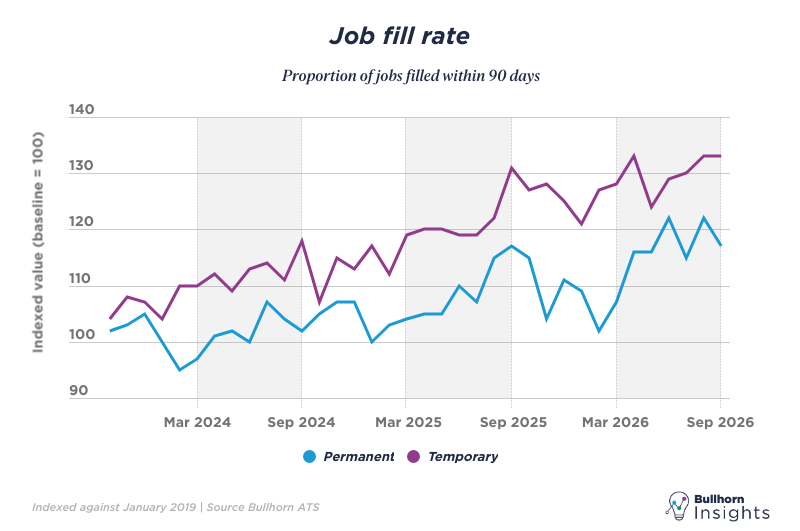
The temporary market tells a different story, with growth showing signs of cooling after a strong run earlier this year. Temporary job orders rose about 2% from August to September, but that was well below the 4% average monthly growth the market had maintained over the past six months. While temporary orders remain about 1% above September of last year, the slowdown is notable given that temporary hiring had been one of the most consistent bright spots in the data throughout 2026.
The shift is also showing up in fill rates and submissions. The temporary fill rate held steady month over month, but growth has slowed considerably from earlier in the year, when fill rates increased by an average of 8% per month. At the same time, submissions are beginning to rise. The takeaway: The temporary market has not deteriorated, but the rapid growth seen earlier in the year is beginning to moderate.
Networking tops the soft skills list for the first time this year
Networking is the skill employers are asking for most in September, rising faster and by a wider margin than any other skill. This is the first time all year that networking has appeared at the top of the list, a meaningful shift from the analytical thinking and leadership skills that dominated recent months.
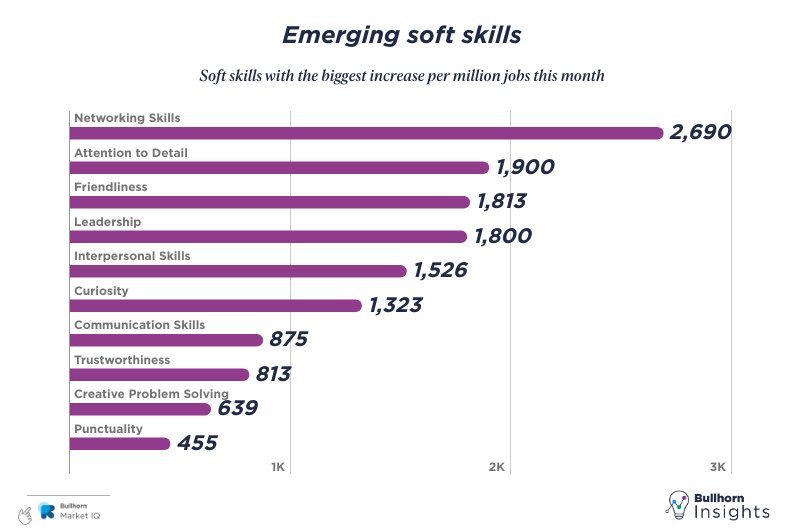
Part of the shift reflects the kinds of roles that are growing fastest right now. As manufacturing, construction, and professional jobs drive the majority of job opening growth, roles that depend on relationship-building and industry connections are growing with them. Modern work, regardless of industry, also increasingly requires the ability to build trust, collaborate across teams, and maintain relationships over time, and September’s data suggests employers are starting to weigh that more heavily.
Experience is opening doors, but early career candidates are being left behind
For experienced candidates, September brought more opportunities. Job openings for candidates with a bachelor’s degree and more than five years of relevant experience were up 25% year over year.
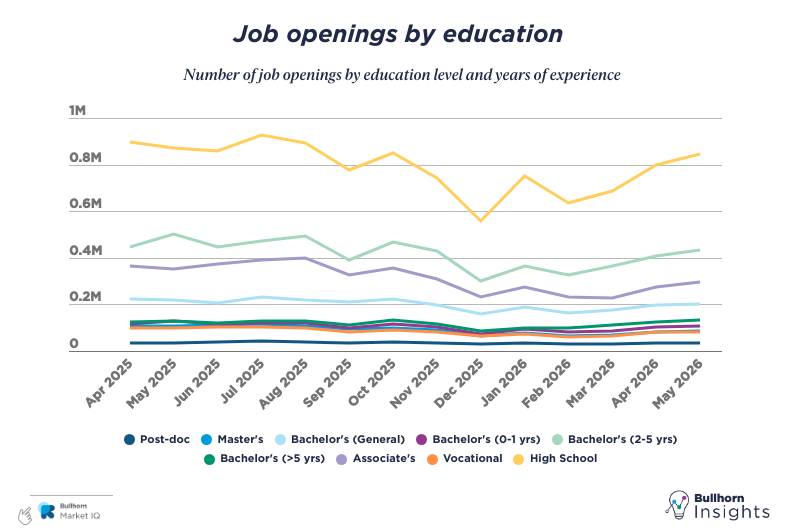
The experience gap, though, is significant. Job openings for candidates with a bachelor’s degree and no practical experience grew just 7% year over year. That difference shows that early career candidates are seeing fewer opportunities than more experienced professionals.
What staffing leaders should watch next
Entering Q4, manufacturing and construction remain the clearest areas of momentum, and the recovery in technology and professional job openings is an encouraging development worth watching closely.
The key question for upcoming months is whether the temporary hiring market finds its footing. The pipeline is still above last year, but the gap is closing. If temporary order growth continues to slow while permanent hiring strengthens, that divergence will be one of the more important things to track as the year closes out.
Check back with Bullhorn Insights at the start of each month for the latest Hiring Outlook and Job Market Trends data to help you stay ahead of the market.